



Gastrointestinal Cancer
Latest News
Advertisement
Latest Videos























































Advertisement
More News
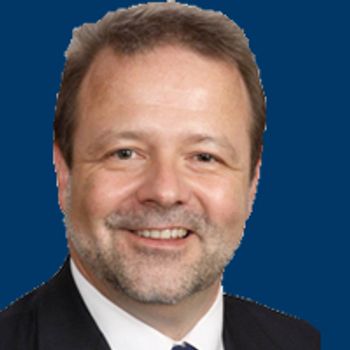
Most patients with low-risk advanced colon cancer would benefit from a 50% reduction in the oxaliplatin-containing chemotherapy they typically receive after surgery without notably increasing their risk of recurrence and while markedly decreasing the likelihood that they will develop neuropathy, according to an analysis that challenges the current standard of care and paves the way for a more personalized approach.

First-line treatment with lenvatinib (Lenvima) improved progression-free survival by 3.7 months and was noninferior for overall survival compared with sorafenib for patients with unresectable hepatocellular carcinoma.

Psychological intervention can substantially lower fear of cancer recurrence in survivors, improving their quality of life, anxiety, and cancer-specific distress, according to a phase II randomized clinical trial presented at the 2017 ASCO Annual Meeting.

Physicians treating hepatocellular carcinoma often have to choose between a tyrosine kinase inhibitor (TKI) and immunotherapy but oncologists need better tools to make an informed choice.

Tomi Jun, MD, Stanford University School of Medicine, discusses cryptogenic hepatocellular carcinoma.
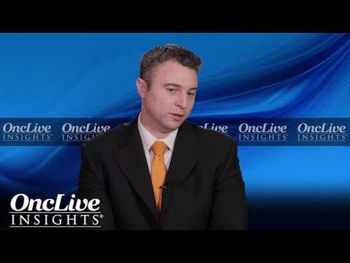
Jonathan R. Strosberg, MD, associate professor, Moffitt Cancer Center, shares his insight on the current field of neuroendocrine tumors (NETs).
The FDA has granted a priority review designation to nivolumab (Opdivo) for use as a treatment for patients with hepatocellular carcinoma following prior sorafenib (Nexavar).

The FDA has granted a priority review to a supplemental Biologics License Application for pembrolizumab (Keytruda) for the treatment of patients who have undergone at least 2 courses of chemotherapy for recurrent or advanced gastric or gastroesophageal junction adenocarcinoma.

Giovan Giuseppe Di Costanzo, MD, Cardarelli Hospital, discusses a scoring system to predict the effectiveness of sorafenib (Nexavar) in hepatocellular carcinoma (HCC).
Axel Grothey, MD, medical oncologist at Mayo Clinic, discusses the FDA approval of pembrolizumab (Keytruda) for the treatment of patients with microsatellite instability-high colorectal cancer (CRC).

Cynthia L. Sears, MD, professor of Medicine, at Johns Hopkins University School of Medicine, member of the Bloomberg-Kimmel Institute for Cancer Immunotherapy, discusses ongoing research of microbiota for patients with colorectal cancer (CRC).

FDA Approves Pembrolizumab for Microsatellite Instability-High and Mismatch Repair Deficient Cancers
The FDA has granted an accelerated approval to pembrolizumab (Keytruda) for the treatment of patients with unresectable or metastatic, microsatellite instability-high (MSI-H) or mismatch repair deficient (dMMR) solid tumors that have progressed after prior treatment and who have no satisfactory alternative treatment options, as well as for patients with MSI-H or dMMR colorectal cancer following progression on a fluoropyrimidine, oxaliplatin, and irinotecan.

Tim F. Greten, MD, senior investigator thoracic and gastrointestinal oncology branch, head, gastrointestinal malignancy section, National Cancer Institute, discusses promising immunotherapy agents being investigated in hepatocellular carcinoma (HCC).

Jesper Andersen, PhD, associate professor, Biotech and Innovation Centre, University of Copenhagen, discusses the challenges facing the future treatment of patients with cholangiocarcinoma.
Patients with stage III colorectal cancer who maintained a healthy body weight, engaged in regular physical activity, and adopted other healthy lifestyle behaviors experienced a 42% lower chance of death and a trend toward reduced cancer recurrence.

Findings of a new prospective study suggest that eating tree nuts like almonds, walnuts, and pecans can improve overall survival and reduce the risk of recurrence in patients with colon cancer.

Treatment with adjuvant capecitabine improved overall survival by 15 months compared with observation alone for patients with macroscopically resected biliary tract cancer, according to findings from the phase III BILCAP study released in advance of the 2017 ASCO Annual Meeting.
Advertisement
Advertisement
Trending on OncLive
1
Epcoritamab Plus R-CHOP Meets PFS End Point in Newly Diagnosed DLBCL
2
INBRX-106 Plus Pembrolizumab Improves Responses and PFS in First-Line PD-L1–Positive HNSCC
3
FDA Approves Pirtobrutinib for Previously Untreated CLL/SLL
4
‘Our Impact Will Be Broad and Transformative’: Wells Messersmith, MD, Takes the Reins at CU Anschutz Cancer Center
5