




Gastrointestinal Cancer
Latest News
Advertisement
Latest Videos




































































Advertisement
More News
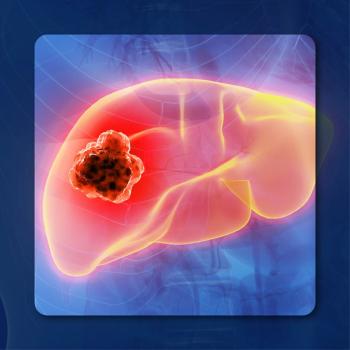
Nivolumab plus ipilimumab was approved by the European Commission for first-line, unresectable or advanced HCC.

Treatment with 177Lu-edotreotide significantly improved PFS and numerically increased OS vs SOC everolimus in grade 1 or 2 SSTR-positive GEP-NETs.
SON-1010 is being investigated for its potential to improve outcomes in solid tumors.

Rachna Shroff, MD, MS, FASCO, discusses the potential role for nab-paclitaxel plus gemcitabine and cisplatin in select patients with biliary tract cancers.

The FDA granted RMAT designation to nogapendekin alfa inbakicept/CAR-NK for lymphopenia reversal in patients with advanced or metastatic pancreatic cancer.

Clinicians parse through the impacts of tumor-agnostic FDA approvals, examining T-DXd and repotrectinib's 2024 approvals in particular.
The FDA has approved tislelizumab-jsgr plus chemotherapy for frontline use in adult patients with advanced esophageal squamous cell carcinoma and PD-L1 expression.

Richard T. Lee, MD, discusses research showing the benefits of acupuncture, ginger, and ginseng for improving symptoms in patients with GI cancers.

Rachna Shroff, MD, MS, FASCO, discusses the efficacy of nab-paclitaxel plus gemcitabine and cisplatin in newly diagnosed, advanced biliary tract cancer.
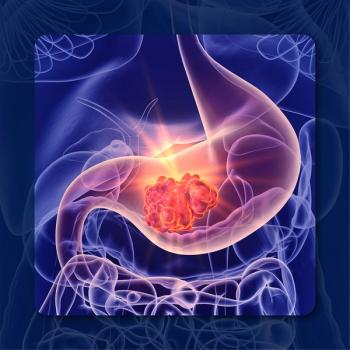
T-DXd improved overall survival in unresectable/metastatic HER2-positive gastric/GEJ adenocarcinoma after a trastuzumab-containing regimen.

Daneng Li, MD, discusses a trial evaluating casdozokitug plus atezolizumab and bevacizumab in unresectable, locally advanced or metastatic HCC.
Mohammed Najeeb Al Hallak, MD, MS explores treatment considerations in advanced pancreatic, colorectal, and neuroendocrine cancers.

Yelena Y. Janjigian, MD, discusses 5-year follow-up findings for nivolumab plus chemotherapy vs chemotherapy alone in gastric/GEJ adenocarcinoma.
RZ-001 has received FDA fast track designation for the treatment of patients with hepatocellular carcinoma.
Mohammed Najeeb Al Hallak, MD, MS, discusses patient-specific factors to consider during the selection of frontline systemic therapy for HCC.

Gentry King, MD, discusses positive and negative outcomes following the phase 3 CELESTIAL and COSMIC-312 trials in patients with hepatocellular carcinoma.
Gentry King, MD, highlights the evolution of treatments in the hepatocellular carcinoma landscape and the impact of the phase 3 HIMALAYA trial.

Susumu Hijioka, MD, PhD, discusses the efficacy of first-line everolimus plus lanreotide in patients with unresectable or recurrent GEP-NETs.
See this full list of regulatory decisions from 2024 regarding withdrawn agents, label updates, and new drug formulations.
The FDA has granted fast track designation to amezalpat for patients with hepatocellular carcinoma.
Experts provide insights on the 2024 FDA approvals in the gastrointestinal and genitourinary fields in this list featuring all the regulatory decisions.

Encorafenib combination boosts survival in BRAF V600E+ mCRC, pertuzumab biosimilar BLA is under review for HER2+ breast cancer, and more from OncLive.
Phase 1 study data demonstrated that ATG-022 has a manageable safety profile and produced activity in patients with gastric cancer and CLDN 18.2 expressions.
Get the inside scoop from Drs Lou, Patel, and Beg on the top takeaways to come out of the 2025 Gastrointestinal Cancers Symposium.
How Texas Colon & Rectal Specialists enhance outcomes, experiences, and efficiency data-driven care to improve patient outcome.
Advertisement
Advertisement
Trending on OncLive
1
INBRX-106 Plus Pembrolizumab Improves Responses and PFS in First-Line PD-L1–Positive HNSCC
2
FDA Approves Pirtobrutinib for Previously Untreated CLL/SLL
3
Five Under 5: Top Oncology Videos for the Week of 9/27
4
AUA Releases Guideline Amendment for NMIBC
5