





Gastrointestinal Cancer
Latest News
Advertisement
Latest Videos






























































Advertisement
More News
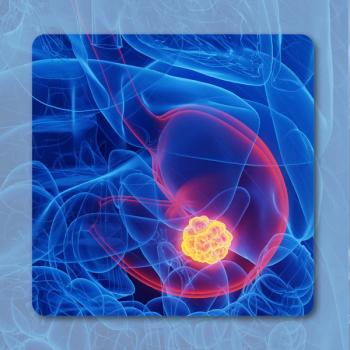
Satri-cel improved PFS vs investigator’s choice of therapy in pretreated CLDN18.2-positive advanced gastric/GEJ cancer.
Experts detail how recent NCCN guideline changes in dozens of tumor types are affecting their practices, and we gather all the NCCN updates in a slideshow.
Here is your snapshot of all therapeutic options greenlit by the FDA in December 2024 spanning tumor types.
The FDA has approved tislelizumab plus chemotherapy for unresectable or metastatic gastric or gastroesophageal junction adenocarcinoma.

Oncology fellows gathered at the OncLive National Fellows Forum to share research findings, network, and join panels on career development strategies.

A series of events took John L. Marshall, MD, down his path of becoming a gastrointestinal oncology leader, with a drive that has also solidified him on the patient journey and enhancing their quality of care.

In a Peer Exchange, HCC experts discussed how new data from the HIMALAYA, LEAP-012, EMERALD-1, and IMbrave050 trials could be used to optimize treatment.

Retifanlimab represents a promising agent in the squamous cell anal carcinoma field and additional research is needed to improve outcomes for patients.
Second-line lenvatinib had clinically meaningful efficacy in patients with advanced HCC after progression on atezolizumab plus bevacizumab.
Dostarlimab received breakthrough therapy designation from the FDA for locally advanced dMMR/MSI-H rectal cancer.

The EMA’s CHMP has recommended the approval of belzutifan monotherapy for patients with select VHL disease–associated cancers.

Experts across the fields of lung and GI cancer share key information and insights from 2 recent OncLive biomarker consortiums.

James J. Harding, MD, details the significance of the approval of zanidatamab and how the agent could fill unmet needs in biliary tract cancers.
The FDA granted accelerated approval to zenocutuzumab for select patients with NSCLC and pancreatic adenocarcinoma with NRG1 fusions.
Here is your snapshot of all treatment options that the FDA cleared in November 2024 spanning tumor types.
In case you missed any, read a recap of every episode of OncLive On Air that aired in November 2024.

Belantamab mafodotin is under FDA review in multiple myeloma, and Suneel Kamath, MD, highlights pancreatic cancer awareness month.

Suneel Kamath, MD, shares insights on targeted therapies in pancreatic cancer after an X Takeover with OncLive during Pancreatic Cancer Awareness Month.
Suneel Kamath, MD, took to the OncLive X (Twitter) account during Pancreatic Cancer Awareness Month to share the importance of recognizing this disease.

Alan P. Venook, MD, describes challenges implementing NCCN guidelines into practice in rectal, colon, and biliary tract cancers, and advancements from 2024.

Nataliya Uboha, MD, PhD, and Robert Albert Anders, MD, PhD, unpack the unfavorable risk-benefit profile of PD-1 inhibitors in patients with certain PD-L1–negative gastrointestinal cancers and discussions from a recent ODAC meeting.

China's NMPA has accepted a sNDA for penpulimab plus anlotinib for the first-line treatment of advanced hepatocellular carcinoma.
The FDA approved the PATHWAY HER2 (4B5) test to identify patients with HER2-positive biliary tract cancer who are eligible for treatment with zanidatamab.
The FDA has approved an oral solution of imatinib for the treatment of certain leukemias and other cancers.
Zanidatamab scores approval for HER2+ biliary tract cancer, Versamune HPV is under exploration in HPV16+ head and neck squamous cell carcinoma, and more.
Advertisement
Advertisement
Trending on OncLive
1
INBRX-106 Plus Pembrolizumab Improves Responses and PFS in First-Line PD-L1–Positive HNSCC
2
FDA Approves Pirtobrutinib for Previously Untreated CLL/SLL
3
Five Under 5: Top Oncology Videos for the Week of 9/27
4
AUA Releases Guideline Amendment for NMIBC
5