


Gastrointestinal Cancer
Latest News
Advertisement
Latest Videos

















































Advertisement
More News
Ryan Hood, BA, discusses a study investigating the association between BRCA1/2 pathogenic variants and primary tumor location in pancreatic cancer.
The acceleration of targeted therapy drug development has led investigators to home in on RAS mutations as agents are approved in colorectal cancer.
Trastuzumab deruxtecan earned conditional approval in China for HER2-positive gastric/gastroesophageal junction cancer after at least 2 lines of therapy.

Samuel Cytryn, MD, and David B. Zhen, MD, discuss how immunotherapy plus chemotherapy has improved the durability of outcomes in advanced GI cancers.
Samuel Cytryn, MD, and David B. Zhen, MD, on factors for selecting nivolumab plus chemotherapy or ipilimumab in esophageal squamous cell carcinoma.
Samuel Cytryn, MD, and David B. Zhen, MD, on long-term data for nivolumab plus chemotherapy or ipilimumab in advanced esophageal squamous cell carcinoma.
Samuel Cytryn, MD, and David B. Zhen, MD, discuss findings from a Q-TWiST analysis of the CheckMate 649 trial in advanced gastric/GEJ cancer.
Samuel Cytryn, MD, and David B. Zhen, MD, on 4-year data from CheckMate 649 for nivolumab plus chemotherapy in first-line advanced gastric/GEJ cancer.
Samuel Cytryn, MD, and David B. Zhen, MD, discuss how immunotherapy has affected the treatment paradigm for upper gastrointestinal cancers.
Michel Ducreux, MD, PhD, discusses findings from the TRANSMET trial of chemotherapy plus liver transplantation in unresectable colorectal liver metastases.
Trastuzumab deruxtecan elicited responses in patients with HER2-positive biliary tract cancer, according to data from a single-arm, phase 2 trial.

Tilak Sundaresan, MD, and Nicole S. Evans, MD, discuss the implications of a study evaluating reasons for non-treatment among patients with PDAC.

Tilak Sundaresan, MD, and Nicole S. Evans, MD, discuss common reasons for nontreatment among patients with pancreatic cancer.
Bite-on-bite biopsies and endoscopic ultrasonography with fine needle aspiration were accurate in detecting MRD after neoadjuvant chemoradiotherapy in ESCC.

Ciara Kelly, MBBCh, BAO, discusses how the heterogeneity of GIST affects treatment decisions and the importance of testing for genetic abnormalities.

Tanios Bekaii-Saab, MD, FACP, discusses the benefits of multidisciplinary conferences within the gastrointestinal cancer treatment field.

EO-3021 was safe and led to responses in advanced, unresectable or metastatic solid tumors likely to express Claudin 18.2.

The FDA has accepted a supplemental new drug application for cabozantinib in advanced pancreatic and extra-pancreatic neuroendocrine tumors.

The FDA granted an orphan drug designation to the combination of avutometinib and defactinib for use as a potential therapeutic option in patients with pancreatic cancer.
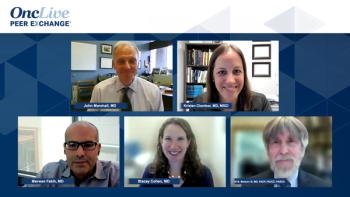
Experts discuss their vision for the future of colorectal cancer treatment and anticipated advancements in the field.
The panel of leading oncologists summarize crucial updates and key insights on colorectal cancer from the ASCO 2024 conference.

Evorpacept plus TRP generated clinically meaningful, robust, and durable responses in patients with previously treated HER2-positive gastric or GEJ cancer.

Tanios Bekaii-Saab, MD, FACP, discusses the future of treatment within the gastrointestinal cancers armamentarium.
The European Medicines Agency has approved Avzivi, a biosimilar referencing bevacizumab.

The EMA's CHMP has recommended zolbetuximab plus chemotherapy in select locally advanced unresectable or metastatic HER2-negative gastric or GEJ cancer.
Advertisement
Advertisement
Trending on OncLive
1
INBRX-106 Plus Pembrolizumab Improves Responses and PFS in First-Line PD-L1–Positive HNSCC
2
FDA Approves Pirtobrutinib for Previously Untreated CLL/SLL
3
Epcoritamab Plus R-CHOP Meets PFS End Point in Newly Diagnosed DLBCL
4
‘Our Impact Will Be Broad and Transformative’: Wells Messersmith, MD, Takes the Reins at CU Anschutz Cancer Center
5