





Gastrointestinal Cancer
Latest News
Advertisement
Latest Videos





















































Advertisement
More News
Turning the focus of the conversation to clinical practice, experts on hepatic artery infusion therapy provide clinical insights on program development and evolution.
Drs Connell and Merkow discuss the current treatment landscape in intrahepatic cholangiocarcinoma and review recent clinical data in that space.
Louise Catherine Connell, MB BCh BAO, BMedSc, and Ryan Merkow, MD, MS, review clinical trial data on resected colorectal cancer liver metastases.
A surgical oncologist and gastrointestinal oncologist review data on hepatic artery infusion therapy in unresectable colorectal cancer liver metastases.
Two experts on gastrointestinal cancers give a broad overview of hepatic artery infusions.
Ryan Merkow, MD, MS, and Louise Catherine Connell, MB BCh BAO, BMedSc, discuss the current treatment landscape in colorectal cancer liver metastases, highlighting unmet needs in the treatment space.

Frontline pembrolizumab plus trastuzumab/chemotherapy improved overall survival in HER2-positive, unresectable or metastatic gastric/GEJ cancer.
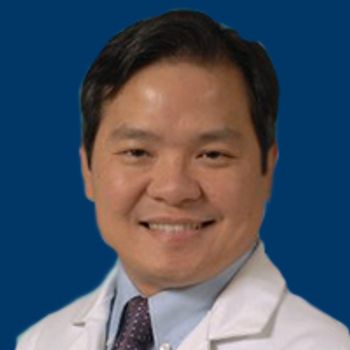
Kian-Huat Lim, MD, PhD, discusses the current treatment landscape for metastatic pancreatic cancer.
The FDA has approved trastuzumab-strf for HER2-overexpressing breast cancer and HER2-overexpressing metastatic gastric or GEJ adenocarcinoma.

Margot O'Neill, PA-C, MHS, and Michael Leung, PharmD, discuss the monitoring and adverse effect management strategies for patients with colorectal cancer who receive fruquintinib.
Arvind N. Dasari, MD, MS, provides a comprehensive overview of the FRESCO-2 trial investigating fruquintinib in patients with refractory metastatic colorectal cancer.
CTX-009 plus paclitaxel has received FDA fast track designation for pretreated metastatic or locally advanced biliary tract cancer.
The FDA has approved lutetium Lu 177 dotatate for pediatric patients 12 years of age and older with SSTR–positive GEP-NETs.

Health Canada has approved subcutaneous atezolizumab for use in patients with lung cancer, breast cancer, and hepatocellular carcinoma.

Although FAK inhibition alone has displayed modest activity to date, there is interest in developing FAK-targeted therapies for combination regimens.

Health Canada has approved pembrolizumab plus chemotherapy for first-line, locally advanced, unresectable, or metastatic, HER2-negative gastric/GEJ cancer.

Durvalumab plus chemotherapy produced superior 3-year survival outcomes vs chemotherapy alone in advanced biliary tract cancer.
The expert panelists provide their final insights surrounding the future of HCC treatment management.
Dr Morse discusses key takeaways from the REGONEXT study presented at ASCO GI 2024.
In case you missed it, these were the key regulatory decisions made by the FDA in March 2024.
John Strickler, MD, presents the case of a 62-year-old woman with rectal cancer, and Arvind N. Dasari, MD, MS, provides clinical insights on his approach to third-line treatment with regorafenib, highlighting dose strategy and patient education.
A panel of experts on colorectal cancer have a comprehensive discussion on adverse events associated with TAS-102 plus bevacizumab and strategies to mitigate them.

Michael J. Overman, MD, discusses future research directions in gastrointestinal cancers.

Experts from across the oncology field highlight their biggest takeaways and the hottest topics from the 2024 AACR Annual Meeting.

CAN-2409 has received orphan drug designation from the FDA for the treatment of patients with pancreatic cancer.
Advertisement
Advertisement
Trending on OncLive
1
INBRX-106 Plus Pembrolizumab Improves Responses and PFS in First-Line PD-L1–Positive HNSCC
2
FDA Approves Pirtobrutinib for Previously Untreated CLL/SLL
3
Epcoritamab Plus R-CHOP Meets PFS End Point in Newly Diagnosed DLBCL
4
‘Our Impact Will Be Broad and Transformative’: Wells Messersmith, MD, Takes the Reins at CU Anschutz Cancer Center
5