
Gastrointestinal Cancer
Latest News

Neoadjuvant Durvalumab Plus Chemo Boosts pCR Vs Chemo Alone in Gastric/GEJ Cancers Regardless of Region
By Kristi Rosa
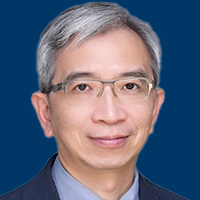
Tiragolumab Plus Atezolizumab and Chemotherapy Offers Survival Benefit Over Chemotherapy Alone in ESCC
By Kyle Doherty
Advertisement
Latest Videos



















































Advertisement
More News
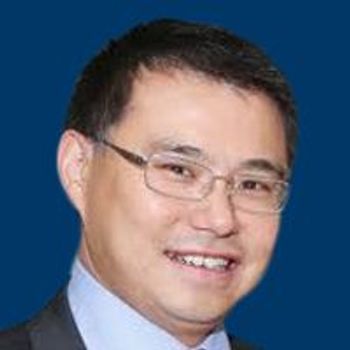
Real-world findings demonstrated a favorable survival benefit with nivolumab plus chemotherapy in advanced gastroesophageal adenocarcinoma.
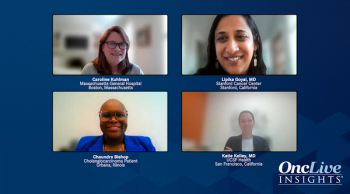
Next-generation FGFR inhibitors show promise in early trials evaluating their efficacy and safety for the treatment of cholangiocarcinoma.
Experts discuss treatment options for cholangiocarinoma and how FGFR inhibitors have changed the treatment landscape in recent years.

Richard Kim, MD, discusses ongoing and planned research at Moffitt Cancer Center in patients with hepatocellular carcinoma.

E. Gabriela Chiorean, MD, highlights the importance of consistently testing for biomarkers with RNA-based tests in addition to DNA-based tests.

Richard Kim, MD, discusses selecting between frontline immunotherapy-based regimens in patients with hepatocellular carcinoma.
Amit Mahipal, MD, discusses clinical outcomes with camrelizumab plus rivoceranib in unresectable HCC, based on data from the phase 3 CARES-310 trial.
Davide Melisi, MD, PhD, discusses the potential of NALIRIFOX as a new first-line standard for patients with metastatic pancreatic ductal adenocarcinoma.

The FDA has accepted the filing of an ANDA for Lutetium Lu 177 Dotatate indicated for patients with gastroenteropancreatic neuroendocrine tumors.
Experts in treating cholangiocarcinoma share insights on when biomarker testing is needed and which biomarkers to test for.
Key opinion leaders illustrate how patients with intrahepatic cholangiocarcinoma present in a clinical setting.
The intricate web of risk factors influencing diverse forms of liver cancers are explored.
Haejin In, MD, MPH, MBA, FACS, FSSO, discusses the importance of identifying individuals at high risk for developing gastric cancer.
The FDA has issued a CRL to the zolbetuximab BLA for patients with HER2- gastric or GEJ junction adenocarcinoma whose tumors are Claudin18.2 positive.

China’s NMPA has accepted the sNDA seeking the approval of cadonilimab plus chemotherapy for use in select patients with gastric or GEJ adenocarcinomas.
Significant tumor necrosis greater than 70% occurred in 3 patients with resectable hepatocellular carcinoma following neoadjuvant treatment with low-dose stereotactic body radiation therapy and cemiplimab-rwlc and adjuvant cemiplimab.
Patient care begins with the patient, and Deb Schrag, MD, MPH, has spent her career keeping them the main focus of improving oncologic outcomes.
Richard Kim, MD, discusses a case study of a patient who presented with hepatocellular carcinoma, detailing the steps that were taken upon diagnosis.
The FDA has granted fast track designation to aglatimagene besadenovec plus valacyclovir for use as a potential therapeutic option in patients with pancreatic ductal adenocarcinoma.
The National Medical Products Administration of China has approved sugemalimab paired with fluorouracil and platinum-based chemotherapy for use in the frontline treatment of patients with unresectable locally advanced, recurrent, or metastatic esophageal squamous cell carcinoma.
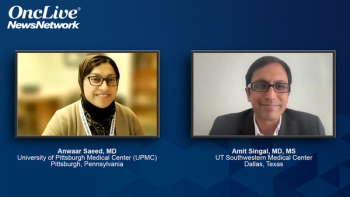
To close, Dr. Saeed and Dr. Singal share their excitement for the future landscape, emerging agents and treatment strategies for patients with HCC.

Eileen M. O’Reilly, MD, traveled a serendipitous journey from Ireland to the United States, where she has made her mark on transforming gastrointestinal cancer treatment.
The 2023 ESMO Congress took place October 20 to 24 in Madrid, Spain, with global perspectives on groundbreaking data. We break down some of the key highlights from the annual meeting that oncology fellows should absorb, and apply to practice, as soon as possible.
Drs Saeed and Singal discuss additional data presented at AASLD 2023 related to frontline systemic therapies and emerging combinations in unresectable HCC.
Expert oncologists review real-world data and discuss the impact on treatment selection in uHCC.
Advertisement
Advertisement
Trending on OncLive
1
INBRX-106 Plus Pembrolizumab Improves Responses and PFS in First-Line PD-L1–Positive HNSCC
2
FDA Approves Pirtobrutinib for Previously Untreated CLL/SLL
3
Epcoritamab Plus R-CHOP Meets PFS End Point in Newly Diagnosed DLBCL
4
‘Our Impact Will Be Broad and Transformative’: Wells Messersmith, MD, Takes the Reins at CU Anschutz Cancer Center
5