



Gastrointestinal Cancer
Latest News
Advertisement
Latest Videos
























































Advertisement
More News
The European Medicines Agency has granted orphan drug designation to mitazalimab for use in patients with pancreatic cancer.
Interim data from the phase 3 CABINET trial demonstrated significant improvement in progression-free survival with cabozantinib vs placebo in patients with advanced pancreatic or extra-pancreatic neuroendocrine tumors following progression on prior systemic therapy.
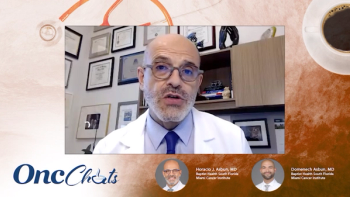
In this third episode of OncChats: Mapping Progress Made in Pancreatic Cancer Surgery, Horacio J. Asbun, MD, and Domenech Asbun, MD, underscore the need for utilizing a multidisciplinary approach to determine the optimal care plan for each patient with pancreatic cancer.

Second-line treatment with GNOS-PV02 plus plasmid-encoded interleukin-12 followed by electroporation elicited complete molecular response detected via circulating tumor DNA in 4 additional patients with advanced hepatocellular carcinoma enrolled in the phase 1b/2a GT-30 study.

Marwan G. Fakih, MD, discusses the main objective and design of the observational BASECAMP-1 study and how it functions alongside the phase 1/2 EVEREST-1 study in patients with solid tumors.

The FDA has granted an orphan drug designation to the IgG1k type murine monoclonal antibody MAb-AR20.5 for the treatment of patients with pancreatic cancer.

Marios Giannakis, MD, PhD, discusses how targeting the WNT signaling pathway could harness a previously underutilized pathway involved in GI tumor development, spotlights the activity and safety of CGX1321 with or without pembrolizumab in phase 1 studies, and emphasizes the need for continued investigation of CGX1321 to further validate this precision medicine approach.

Mariana X. Byndloss, DVM, PhD, discusses how the gut microbiome influences human health, highlighting the relationship between the gut microbiome and a person’s risk for developing gastrointestinal cancers, as well as characteristics of a healthy gut microbiome.
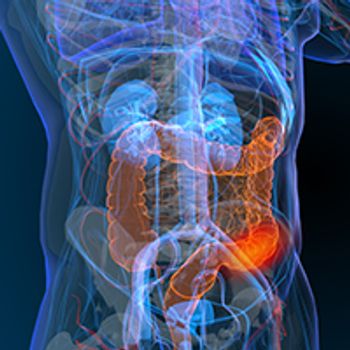
The combination of ociperlimab, tislelizumab, and chemotherapy elicited responses in patients with stage IV gastric or gastroesophageal junction cancer, irrespective of PD-L1 expression.

Deb Schrag, MD, MPH, discusses the rationale for exploring the use of selective preoperative chemoradiation in patients with locally advanced rectal cancer, the safety and efficacy findings from the PROSPECT trial, and the importance of reviewing patient-reported outcomes during clinical trials.
The FDA has granted an orphan drug designation to NXP800 for the treatment of patients with cholangiocarcinoma.
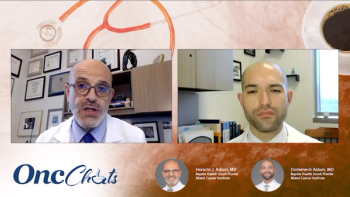
In this second episode of OncChats: Mapping Progress Made in Pancreatic Cancer Surgery, Horacio J. Asbun, MD, and Domenech Asbun, MD, share examples of efforts that have moved the needle forward in pancreatic cancer surgery, and note potential areas of opportunity.
Recent years have brought tremendous progress in demonstrating that there is hope for improving mortality from pancreatic ductal adenocarcinoma through early detection.
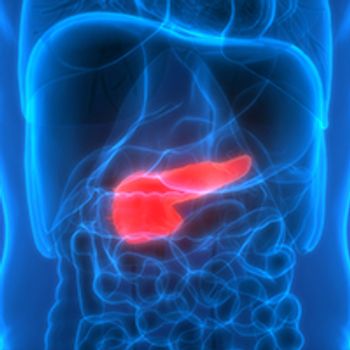
Treatment with the GVAX pancreatic cancer vaccine plus nivolumab and urelumab increased the presence of intratumoral activated cytotoxic T cells and showed early signs of efficacy in patients with resectable pancreatic adenocarcinoma.

The first patients have been dosed in the phase 2 portion of a phase 1/2 trial evaluating BDC-1001 monotherapy in patients with HER2-positive colorectal cancer, endometrial cancer, and gastroesophageal cancer.
China’s Center for Drug Evaluation of the National Medical Products Administration has granted a breakthrough therapy designation to glecirasib for the treatment of patients with pancreatic cancer harboring a KRAS G12C mutation and who have progressed after frontline standard-of-care treatment.
The development of etrumadenant as a potential treatment option for patients with metastatic castration-resistant prostate cancer will be discontinued after data from the phase 1/2 ARC-6 trial did not demonstrate a sufficient clinical benefit for etrumadenant plus zimberelimab and docetaxel compared with docetaxel alone.

Michael Cecchini, MD, discusses the phase 3 PROSPECT trial of neoadjuvant chemoradiation vs neoadjuvant fluorouracil, leucovorin, and oxaliplatin chemotherapy with selective use of chemoradiation, followed by total mesorectal excision in patients with locally advanced rectal cancer, and how this regimen may fit into the current treatment landscape for rectal cancer.
In this first episode of OncChats: Mapping Progress Made in Pancreatic Cancer Surgery, Horacio J. Asbun, MD, and Domenech Asbun, MD, discuss recent advances made in the surgical field and beyond for pancreatic cancer, including the benefits of minimally invasive approaches.

The FDA has granted orphan drug designation to LSTA1 for use as a potential therapeutic option in patients with malignant glioma, according to an announcement from Lisata Therapeutics, Inc.
The FDA has approved the therascreen PDGFRA RGQ PCR kit for use as a companion diagnostic, co-developed by Qiagen and Blueprint Medicines, to assist in the identification of patients with gastrointestinal stromal tumors who may be candidates to receive avapritinib.

Pamela Kunz, MD, details key clinical trial updates across the gastrointestinal cancer arena presented during the 2023 ASCO Annual Meeting, including the phase 3 PROSPECT trial in locally advanced rectal cancer and the phase 3 IMbrave050 trial in patients with resected in hepatocellular carcinoma at high risk of recurrence.

Lionel Kankeu Fonkoua, MD, discusses the need for diverse representation across cancer clinical trials and research, emphasizes some of the disparities in enrollment criteria for these research efforts, and details some of the planned and ongoing initiatives at the Mayo Clinic that seek to facilitate change in the field.

Trastuzumab plus ramucirumab and paclitaxel yielded promising efficacy and a manageable safety profile among patients with previously treated HER2-positive advanced gastric/gastroesophageal junction cancer.

George Lau, MD, FRCP, FAASLD, discusses clinical implications for the use of dual checkpoint inhibition in HCC based on an analysis of immune-related adverse effects seen with the STRIDE regimen in the phase 3 HIMALAYA trial.
Advertisement
Advertisement
Trending on OncLive
1
INBRX-106 Plus Pembrolizumab Improves Responses and PFS in First-Line PD-L1–Positive HNSCC
2
FDA Approves Pirtobrutinib for Previously Untreated CLL/SLL
3
Epcoritamab Plus R-CHOP Meets PFS End Point in Newly Diagnosed DLBCL
4
‘Our Impact Will Be Broad and Transformative’: Wells Messersmith, MD, Takes the Reins at CU Anschutz Cancer Center
5