



Gastrointestinal Cancer
Latest News
Advertisement
Latest Videos




















































Advertisement
More News
The addition of pembrolizumab to trastuzumab and chemotherapy improved progression-free survival over trastuzumab and chemotherapy alone when used as a frontline regimen in patients with HER2-positive advanced gastric or gastroesophageal junction adenocarcinoma.
First-line treatment with toripalimab in combination with gemcitabine and cisplatin resulted in a statistically significant and clinically meaningful improvement in overall survival and progression-free survival vs placebo plus chemotherapy in patients with recurrent or metastatic nasopharyngeal carcinoma.
China’s National Medical Products Administration has granted a breakthrough therapy designation to infigratinib for the treatment of patients with gastric cancer.

The FDA has accepted a supplemental new drug application seeking approval of the NALIRIFOX regimen comprised of irinotecan liposome injection plus 5-fluorouracil, leucovorin, and oxaliplatin as a first-line treatment for patients with metastatic pancreatic ductal adenocarcinoma.

Marios Giannakis, MD, PhD, discusses preliminary efficacy data from a phase 1 study of CGX1321 with or without pembrolizumab in advanced gastrointestinal tumors.

Sanjay Goel, MD, MS, discusses the preliminary efficacy of tinengotinib monotherapy in advanced solid tumors according to data from a phase 1b/2 trial (NCT04742959).
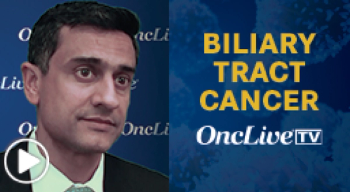
Shubham Pant, MD, MBBS, discusses the rationale for the phase 2b HERIZON-BTC-01 trial and shares the results with zanidatamab in previously treated HER2-amplified biliary tract cancer.
The FDA has accepted for review a supplemental biologics license application seeking the approval of pembrolizumab plus standard chemotherapy comprised of gemcitabine and cisplatin for use in patients with locally advanced unresectable or metastatic biliary tract cancer.
The addition of durvalumab to standard neoadjuvant chemotherapy significantly improved pathologic complete response over neoadjuvant chemotherapy alone in patients with resectable, early-stage and locally advanced gastric and gastroesophageal junction cancers.

OncLive® will be LIVE with OncLive® News Network: On Location at the 2023 ASCO Annual Meeting. Each day, we will broadcast a series of interviews with top thought leaders, to learn their thoughts and reactions to data presented across hematologic oncology during the conference.
Neoadjuvant treatment with fluorouracil, leucovorin, and oxaliplatin proved to be as effective as pelvic chemoradiation with fewer adverse effects in patients with locally advanced rectal cancer who were eligible for sphincter-sparing surgery.
When administered at doses of 90 μg/kg or higher, the novel DLL3-targeting T-cell engager, BI 764532, was found to have an acceptable toxicity profile and to elicit encouraging responses in patients with DLL3-positive small cell lung cancer and neuroendocrine carcinoma.
Zanidatamab generated responses in patients with HER2-amplified, locally advanced, unresectable or metastatic biliary tract cancer who were previously treated with gemcitabine.
Liposomal irinotecan plus 5-fluorouracil/leucovorin and oxaliplatin generated statistically significant and clinically meaningful overall survival and progression-free survival benefits compared with gemcitabine plus nab-paclitaxel in treatment-naïve patients with metastatic pancreatic ductal adenocarcinoma.

Patients with unresectable hepatocellular carcinoma experienced manageable and low-grade immune-related adverse events with single tremelimumab regular interval durvalumab.

Michael K. Gibson MD, PhD, discusses the importance of addressing unmet needs related to treatment for patients with gastrointestinal cancers.
The China National Medical Products Adminstration’s Center for Drug Evaluation has recommended that olverembatinib receive breakthrough therapy designation for the treatment of patients with gastrointestinal stromal tumor that is succinate dehydrogenase deficient.

STAT2 expression in patients with hepatocellular carcinoma increases with tumor grade and cancer stage, with increases occurring at greater rates among Asian and African American patients.
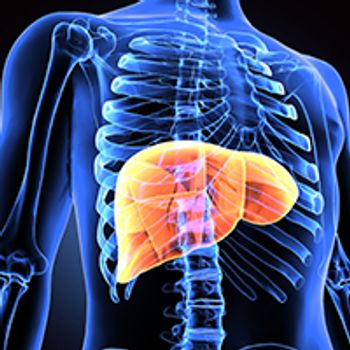
Individuals in Philadelphia and New York City who were screened for the common liver cancer risk factors hepatitis B virus or hepatitis C virus displayed a higher level of knowledge of liver cancer.

Dana B Cardin, MD, MSCI, discusses the importance of identifying comorbidities and high-risk features when determining the optimal treatment approach for patients with pancreatic cancer.
Study findings demonstrated that states that expanded Medicaid had improved survival rates in patients with pancreatic and gastric cancers, with greater improvements in Black patients for some analyses.
Minimally invasive distal pancreatectomy was found to be a safe and effective alternative to that of open distal pancreatectomy in patients with resectable pancreatic cancer, confirmed by a noninferior radical resection rate, lymph node yield, and comparable survival data.
Gastrointestinal oncology experts discuss current strategies and novel developments in gastrointestinal cancers, the role of intestinal dysbiosis and gastrointestinal carcinogenesis, germline genetic features in appendiceal cancer, and the need for anticipatory, multidisciplinary guidance in clinical practice.
CLDN18.2 has become a promising target for the treatment of patients with digestive malignancies, such as gastric cancer, gastroesophageal junction cancer, esophageal cancer, and pancreatic cancer, because of its limited expression in healthy tissues and abnormal overexpression in a range of malignancies.

Dana B Cardin, MD, MSCI, discusses the rationale for exploring KRAS as a therapeutic target in pancreatic cancer.
Advertisement
Advertisement
Trending on OncLive
1
INBRX-106 Plus Pembrolizumab Improves Responses and PFS in First-Line PD-L1–Positive HNSCC
2
Epcoritamab Plus R-CHOP Meets PFS End Point in Newly Diagnosed DLBCL
3
FDA Approves Pirtobrutinib for Previously Untreated CLL/SLL
4
‘Our Impact Will Be Broad and Transformative’: Wells Messersmith, MD, Takes the Reins at CU Anschutz Cancer Center
5