

Gastrointestinal Cancer
Latest News
Advertisement
Latest Videos

















































Advertisement
More News
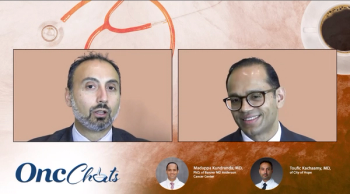
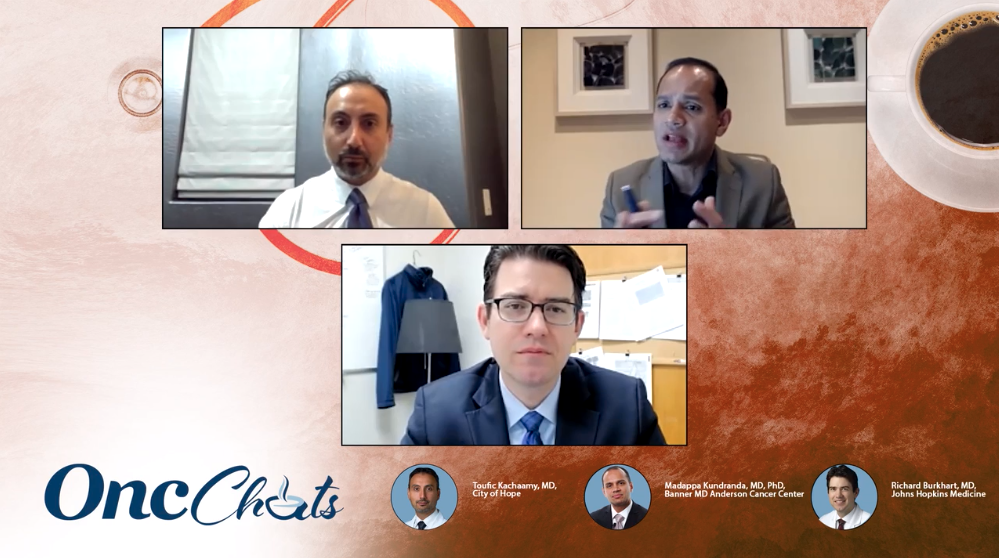
In this seventh episode of OncChats: Understanding Endoscopy in the Realm of GI Cancers, Madappa Kundranda, MD, PhD, and Toufic A. Kachaamy, MD, discuss the convergence of gastroenterology and interventional gastroenterology in gastrointestinal cancer management and the future of interventional endoscopy.
The FDA has accepted a biologics license application for the HLX02, a proposed trastuzumab biosimilar, as adjuvant therapy for patients with HER2-overexpressing breast cancer, HER2-overexpressing metastatic breast cancer, and HER2-overexpressing metastatic gastric or gastroesophageal junction adenocarcinoma
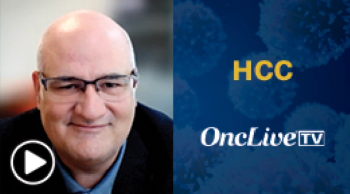
John L. Hays, MD, PhD, discusses the evolution of treating patients with hepatocellular carcinoma.
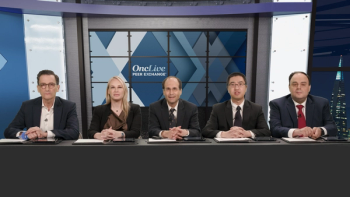
Oncologists provide an overview of the treatment management of Child-Pugh B patients with advanced HCC.
In this discussion, panelists outline treatment considerations for patients with advanced HCC in the 2L setting and beyond.
In this sixth episode of OncChats: Understanding Endoscopy in the Realm of GI Cancers, Madappa Kundranda, MD, PhD, and Toufic A. Kachaamy, MD, share efforts to increase awareness around endoscopy in gastrointestinal cancer.
The FDA has granted a fast track designation to PBP1510 (ulenistamab) for the treatment of patients with unresectable or metastatic pancreatic adenocarcinoma that has relapsed following and/or is refractory to at least 1 prior line therapy.

Pannaga G. Malalur, MBBS, discusses the implications of the findings for the use of liposomal irinotecan plus 5-fluorouracil, leucovorin, and oxaliplatin in the frontline setting for patients with metastatic pancreatic ductal adenocarcinoma.
In this fifth episode of OncChats: Understanding Endoscopy in the Realm of GI Cancers, Madappa Kundranda, MD, PhD, and Toufic A. Kachaamy, MD, review the potential role for endoscopic ablation in gastrointestinal cancer.
In the context of frontline treatment strategies in advanced HCC, expert oncologists review clinical research in systemic immunotherapy approaches.
Expert panelists highlight anti-angiogenic systemic therapies under investigation for advanced HCC in second line and beyond.
Joshua Hill, MD, MS, discussed the early efficacy of dostarlimab in mismatch repair–deficient locally advanced rectal cancer.
In this fourth episode of OncChats: Understanding Endoscopy in the Realm of GI Cancers, Madappa Kundranda, MD, PhD, and Toufic A. Kachaamy, MD, provide insight on the use of endoscopic submucosal resection and endoscopic evaluation for tumor response as it pertains to organ preservation in gastrointestinal cancer.
Jimmy Hwang, MD, discusses findings supporting the use of immunotherapy in hepatocellular carcinoma and biliary tract cancer, the potential benefits of antibody-drug conjugates in metastatic colorectal cancer, and unmet needs in esophageal squamous cell carcinoma and rectal cancer.

The addition of zolbetuximab to CAPOX led to a statistically significant improvement in progression-free survival and overall survival compared with placebo plus CAPOX for patients with Claudin-18.2–positive/HER2-negative, unresectable, locally advanced or metastatic gastric or gastroesophageal junction adenocarcinoma.
Closing out their discussion on biliary tract cancers, expert panelists share key takeaways and excitement for the evolving treatment paradigm.
Comprehensive insight on novel targeted agents under investigation in the setting of biliary tract cancers.
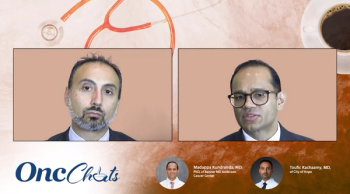
In this third episode of OncChats: Understanding Endoscopy in the Realm of GI Cancers, Madappa Kundranda, MD, PhD, and Toufic A. Kachaamy, MD, highlight the advantages and scope of endoscopic procedures in gastrointestinal cancer.
Oncologists review a patient profile, evaluating treatment approaches for patients with advanced HCC that have progressed beyond 1L treatment.
Experts discuss treatment options for patients unsuitable for atezolizumab plus bevacizumab in advanced hepatocellular carcinoma.
In this second episode of OncChats: Understanding Endoscopy in the Realm of GI Cancers, Madappa Kundranda, MD, PhD, and Toufic A. Kachaamy, MD, explain the evolution of minimally invasive surgery and the emergence of interventional radiology in gastrointestinal cancer.
Christos Fountzilas, MD, FACP, discusses findings from a study of molecular characterization in patients with colorectal cancer treated with cetuximab, an EGFR inhibitor, and pembrolizumab, a PD-1 inhibitor.

Investigators are unclear about the factors driving the explosive growth in incidence of appendiceal cancer over the past 2 decades.
An overview on novel treatment strategies in biliary tract cancers combining immune checkpoint inhibitors with various targeted agents.
Centering discussion on the TOPAZ-1 trial of chemotherapy in combination with durvalumab, panelists consider how this regimen has impacted clinical practice.
Advertisement
Advertisement
Trending on OncLive
1
INBRX-106 Plus Pembrolizumab Improves Responses and PFS in First-Line PD-L1–Positive HNSCC
2
Epcoritamab Plus R-CHOP Meets PFS End Point in Newly Diagnosed DLBCL
3
FDA Approves Pirtobrutinib for Previously Untreated CLL/SLL
4
‘Our Impact Will Be Broad and Transformative’: Wells Messersmith, MD, Takes the Reins at CU Anschutz Cancer Center
5