



Gastrointestinal Cancer
Latest News
Advertisement
Latest Videos


















































Advertisement
More News
Laura Goff, MD, discusses the investigation of adjuvant atezolizumab plus bevacizumab in hepatocellular carcinoma.

Mariana X. Byndloss, DVM, PhD, discusses the relationship between the gut microbiome and the risk of developing cancers such as colorectal cancer.

Michael K. Gibson MD, PhD, discusses advancements in the identification of key biomarkers for patients with gastric or gastroesophageal junction adenocarcinoma, and the subsequent development of biomarker-driven therapeutics in this disease space.
Laura Goff, MD, discusses the key takeaways from results of the phase 3 SWOG 1815 trial in newly diagnosed patients with advanced biliary tract cancers.
Adjuvant treatment with the individualized RNA neoantigen vaccine autogene cevumeran in combination with atezolizumab and chemotherapy induced notable T-cell activity that could be correlated with delayed recurrence in patients with pancreatic ductal adenocarcinoma.
The FDA has granted an orphan drug designation to PYX-201 for the treatment of patients with pancreatic cancer.
Michael K. Gibson MD, PhD, discusses current and emerging biomarkers in the treatment of patients with gastric or gastroesophageal junction adenocarcinoma.
Ahmed O. Kaseb, MD, discusses how the previous approval of atezolizumab and bevacizumab in hepatocellular carcinoma provided the impetus for the IMBrave050 study, how data from this study could support the regimen’s approval in the adjuvant setting, and how this approval could substantially improve the treatment landscape for early-stage disease.
The FDA has granted an orphan drug designation to RAD 301 for the imaging of patients with pancreatic ductal adenocarcinoma.

Dr Holowatyj on the Potential Role of Germline Genetic Features in Appendiceal Cancer Susceptibility
Andreana N. Holowatyj, PhD, MSCI, discusses results from an investigation of germline genetic features that may confer cancer susceptibility in patients with appendiceal cancer.

Pannaga G. Malalur, MBBS, discusses several unmet needs within pancreatic cancer, including the implementation of updated germline genetic testing guidelines, increased screening of high-risk patients, and improved sequencing of available therapeutics.

Anne M. Noonan, MBBCh, discusses unmet needs that remain to be addressed in hepatocellular carcinoma, including challenges regarding the navigation and sequencing of treatment options
Anne M. Noonan, MBBCh, discusses recent practice-changing trials for the treatment of patients with hepatocellular carcinoma.
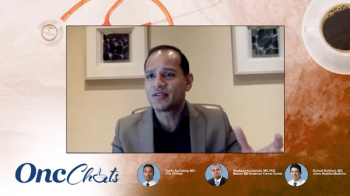
In this seventh episode of OncChats: Taking Organoids From Bench to Bedside Through Endoscopy in Pancreatic Cancer, Toufic A. Kachaamy, MD, Madappa Kundranda, MD, PhD, and Richard Burkhart, MD, discuss ongoing research such as the PASS-01 trial (NCT04469556) in pancreatic cancer and ways to translate advances in the metastatic setting to the curative setting.
Ahmed O. Kaseb, MD, discusses the significance of results from the phase 3 IMbrave050 trial of adjuvant atezolizumab and bevacizumab for patients with early-stage hepatocellular carcinoma.
In this fifth episode of OncChats: Taking Organoids From Bench to Bedside Through Endoscopy in Pancreatic Cancer, Toufic A. Kachaamy, MD, Madappa Kundranda, MD, PhD, and Richard Burkhart, MD, provide insight into some of the regulatory challenges of organoid development and share expectations for the future of pharmacotyping in treatment selection.
The combination of tislelizumab plus chemotherapy elicited a statistically significant and clinically meaningful improvement in overall survival compared with chemotherapy plus placebo in patients with advanced unresectable or metastatic gastric or gastroesophageal junction adenocarcinoma.
In pancreatic cancer, the role of the endoscopist continues to evolve as technologies like endoscopic ultrasound–guided biopsies present clinicians with increasingly accurate information to characterize the tumor microenvironments of individual patients and determine effective targeted therapies.
In this fifth episode of OncChats: Taking Organoids From Bench to Bedside Through Endoscopy in Pancreatic Cancer, Toufic A. Kachaamy, MD, Madappa Kundranda, MD, PhD, and Richard Burkhart, MD, review the potential advantages of using endoscopic ultrasound to enhance current molecular diagnostic techniques in pancreatic cancer.

Hemostatic radiation is a method of managing bleeding in patients with gastrointestinal cancers or GI metastases from other primary tumors; however, a multidisciplinary team is required to implement this method, according to Marnee M. Spierer, MD, MBA.
Pembrolizumab plus cisplatin and gemcitabine produced a statistically significant and clinically meaningful improvement in overall survival vs placebo plus cisplatin and gemcitabine in previously untreated patients with advanced biliary tract cancer, according to data from the phase 3 KEYNOTE-966 trial.
Adjuvant treatment with the combination of atezolizumab (Tecentriq) and bevacizumab (Avastin) resulted in a statistically significant and clinically meaningful improvement in recurrence-free survival vs active surveillance in patients with a high risk of hepatocellular carcinoma recurrence following curative-intent resection or ablation.
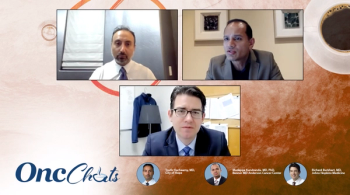
In this fourth episode of OncChats: Taking Organoids From Bench to Bedside Through Endoscopy in Pancreatic Cancer, Toufic A. Kachaamy, MD, Madappa Kundranda, MD, PhD, and Richard Burkhart, MD, shed light on the process of obtaining sufficient tissue through endoscopic ultrasound–guided biopsies to generate organoids.
In this third episode of OncChats: Taking Organoids From Bench to Bedside Through Endoscopy in Pancreatic Cancer, Toufic A. Kachaamy, MD, Madappa Kundranda, MD, PhD, and Richard Burkhart, MD, highlight the three ways in which an organoid can be used to aid clinical sequencing and treatment selection in pancreatic cancer.
The FDA has accepted for review a supplemental biologics license application for pembrolizumab plus fluoropyrimidine- and platinum-containing chemotherapy for the first-line treatment of patients with locally advanced unresectable or metastatic gastric or gastroesophageal junction adenocarcinoma.
Advertisement
Advertisement
Trending on OncLive
1
INBRX-106 Plus Pembrolizumab Improves Responses and PFS in First-Line PD-L1–Positive HNSCC
2
Epcoritamab Plus R-CHOP Meets PFS End Point in Newly Diagnosed DLBCL
3
FDA Approves Pirtobrutinib for Previously Untreated CLL/SLL
4
‘Our Impact Will Be Broad and Transformative’: Wells Messersmith, MD, Takes the Reins at CU Anschutz Cancer Center
5