




Gastrointestinal Cancer
Latest News

Expanding Immunotherapy Armamentarium Propels Personalized HCC Treatment Approaches
Advertisement
Latest Videos


















































Advertisement
More News
A medical oncologist reviews the antibody-drug conjugate landscape in lung cancer.
OncLive® will be LIVE with OncLive® News Network: On Location at the 2023 ESMO Congress. Each day, we will broadcast a series of interviews with top thought leaders, to learn their thoughts and reactions to data presented across oncology during the conference.

The combination of lenvatinib, pembrolizumab, and chemotherapy had a manageable safety profile and elicited preliminary antitumor activity in patients with metastatic esophageal squamous cell carcinoma.
OncLive® will be LIVE with OncLive® News Network: On Location at the 2023 ESMO Congress. Each day, we will broadcast a series of interviews with top thought leaders, to learn their thoughts and reactions to data presented across oncology during the conference.

The addition of pembrolizumab to combination of trastuzumab and chemotherapy led to an improvement in progression-free survival vs placebo plus trastuzumab and chemotherapy in the first-line treatment of patients with metastatic HER2-positive gastric or gastroesophageal junction cancer, particularly in those whose tumors had a PD-L1 combined positive score.

The addition of durvalumab to 5-fluorouracil, leucovorin, oxaliplatin, and docetaxel produced statistically significant and clinically meaningful improvements in pathological complete response rates vs placebo plus FLOT in patients with resectable gastric cancer or gastroesophageal junction cancer.

Specialists in breast cancer review toxicity management practices for T-DM1 and trastuzumab deruxtecan [T-DXd].
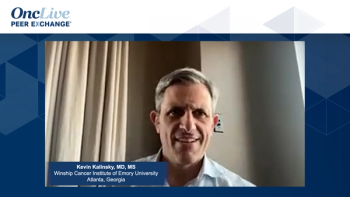
A breast medical oncologist provides insights on antibody-drug conjugates in the breast cancer space and discusses ongoing research.
OncLive® and The Ruesch Center for the Cure of Gastrointestinal Cancers at Georgetown Lombardi Comprehensive Cancer Center in Washington, DC, have announced the winners of the 2023 Luminary Award in GI cancers.

The European Medicines Agency’s Committee for Orphan Medical Products has granted orphan drug designation to LSTA1 for the treatment of patients with pancreatic cancer.

The Committee for Medicinal Products for Human Use of the European Medicines Agency has adopted a positive opinion for pembrolizumab plus fluoropyrimidine- and platinum-containing chemotherapy for the frontline treatment of adult patients with HER2-negative gastric or gastroesophageal junction adenocarcinoma.
The expert panel has a comprehensive discussion about best practices for patient education and the barriers to effective testing.
Medical oncologists review the complexities of molecular testing, including tissue exhaustion, and discuss management approaches.

Lynn G. Feun, MD, discusses the evolution of treatment approaches in hepatoceullar carcinoma, the influence of immunotherapies on patient outcomes in this armamentarium, and ongoing avenues of investigation within in the field of HCC management.

Treatment with intratumoral large surface area microparticle paclitaxel led to disease control and was well tolerated in patients with locally advanced pancreatic cancer.
The addition of TPST-1120 to the combination of atezolizumab and bevacizumab led to improved responses vs atezolizumab plus bevacizumab alone in the first-line treatment of patients with unresectable or metastatic hepatocellular carcinoma.

Stacey Stein, MD, discusses key considerations when selecting a first-line treatment approach for higher-risk patients with hepatocellular carcinoma, and in what scenarios the combination of atezolizumab and bevacizumab is a viable approach in this population.

In this final episode of OncChats: Leveraging Endoscopic Ultrasound in Pancreatic Cancer, Toufic A. Kachaamy, MD, Madappa Kundranda, MD, PhD, and Tamas A. Gonda, MD, reiterate that the role of endoscopic therapies in pancreatic cancer continues to evolve.
Comprehensive insights on biomarker testing practices for patients with lung or gastrointestinal cancers.
A breast medical oncologist and nurse practitioner review molecular testing practices for patients with breast cancer.
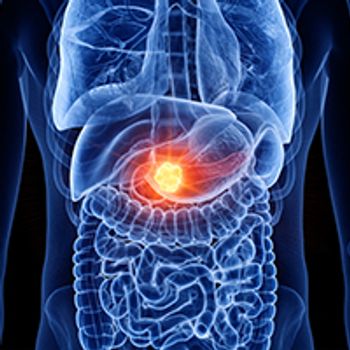
First-line treatment with the combination of motixafortide, cemiplimab-rwlc, gemcitabine, and nab-paclitaxel elicited responses in patients with metastatic pancreatic adenocarcinoma, according to initial data from the pilot portion of a phase 2 trial.
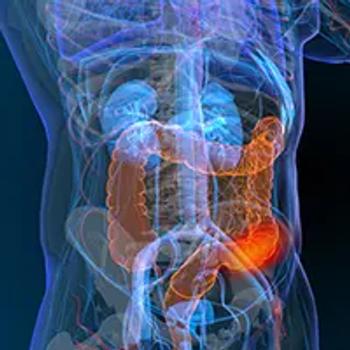
Second- or third-line treatment with the CD47 blocker evorpacept in combination with trastuzumab, ramucirumab, and paclitaxel improved responses vs trastuzumab/ramucirumab/paclitaxel alone in patients with HER2-positive, advanced gastric and gastroesophageal junction cancer.

The FDA has granted a fast track designation to BI 764532 for the treatment of patients with extensive-stage small cell lung cancer that has progressed following at least 2 prior lines of treatment, and for patients with advanced or metastatic extrapulmonary neuroendocrine carcinoma that has progressed following at least 1 prior line of treatment.
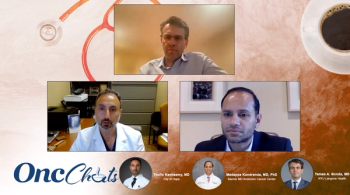
In this sixth episode of OncChats: Leveraging Endoscopic Ultrasound in Pancreatic Cancer, Toufic A. Kachaamy, MD, Madappa Kundranda, MD, PhD, and Tamas A. Gonda, MD, briefly discuss pancreatic cancer ablation and immune modulation.
The FDA has given an orphan drug designation to BDC-1001 for the treatment of patients with gastric cancers, including gastroesophageal junction cancer.
Advertisement
Advertisement
Trending on OncLive
1
INBRX-106 Plus Pembrolizumab Improves Responses and PFS in First-Line PD-L1–Positive HNSCC
2
FDA Approves Pirtobrutinib for Previously Untreated CLL/SLL
3
Epcoritamab Plus R-CHOP Meets PFS End Point in Newly Diagnosed DLBCL
4
‘Our Impact Will Be Broad and Transformative’: Wells Messersmith, MD, Takes the Reins at CU Anschutz Cancer Center
5