




Gastrointestinal Cancer
Latest News

Advertisement
Latest Videos

















































Advertisement
More News
Medical experts discuss the pathology of intrahepatic cholangiocarcinoma.
A comprehensive review of clinical data of atezolizumab plus bevacizumab for the treatment of unresectable HCC.
Anwaar Saeed, MD, and Amit Singal, MD, discuss the evolving treatment landscape for hepatocellular carcinoma, highlighting FDA approvals and the utility of clinical biomarkers.
The expert panel concludes the program with key takeaways and closing thoughts on the evolving antibody-drug conjugate space.
Experts in breast, lung, and gastric malignancies provide insights on multidisciplinary care in oncology and educating community specialists.
Medical oncologists discuss prospects and challenges in the breast and lung cancer treatment landscapes.

Haejin In, MD, MPH, MBA, FACS, FSSO, discusses the increased incidence of gastric cancer in minority patient populations, highlighting the disparities that lead to these patient outcomes in the United States.
Specialists in gastric cancer look to the future treatment landscape and review ongoing research in the disease space.
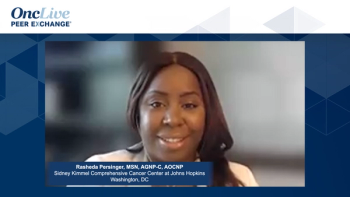
Clinical insights on best practices for treating patients with TROP2-targeted therapy.
The FDA has approved pembrolizumab in combination with fluoropyrimidine- and platinum-containing chemotherapy for the first-line treatment of adult patients with locally advanced unresectable or metastatic, HER2-negative gastric or gastroesophageal junction adenocarcinoma.

China’s National Medical Products Administration has approved durvalumab plus gemcitabine and cisplatin for frontline use in adult patients with locally advanced or metastatic biliary tract cancer.
The FDA has approved the PD-L1 IHC 22C3 pharmDx diagnostic tool to aid clinicians in identifying patients with gastric or gastroesophageal junction adenocarcinoma who may be eligible for treatment with the PD-1 inhibitor pembrolizumab.

The European Medicines Agency’s Committee for Medicinal Products for Human Use (CHMP) has recommended the approval of pembrolizumab (Keytruda) combined with gemcitabine and cisplatin in the frontline treatment of adult patients with locally advanced unresectable or metastatic biliary tract cancer
The expert panel discusses TROP2 as a target for patients with cancer who are receiving antibody-drug conjugates.
A review of antibody-drug conjugates approved for treatment of patients with breast, lung, or gastrointestinal cancers.
Unique Molecular Profiles of Biliary Tract Cancers Drive Continued Development of Targeted Therapies
The mitigation and management of toxicities is a key component of treating patients with biliary tract cancers with targeted therapies.
Durvalumab plus concurrent transarterial chemoembolization followed by durvalumab with bevacizumab resulted in a significant improvement in PFS over TACE alone in patients with hepatocellular carcinoma who are eligible for embolization, meeting the primary end point of the phase 3 EMERALD-1 trial.
The FDA has updated the current indication for pembrolizumab plus trastuzumab, fluoropyrimidine, and platinum-containing chemotherapy for the frontline treatment of patients with locally advanced unresectable or metastatic HER2-positive gastric or GEJ adenocarcinoma to those whose tumors express PD-L1 with a CPS of 1 or more.
CMG901 induced responses with a manageable toxicity profile in patients with CLDN18.2-positive gastric or gastroesophageal junction cancer, according to updated data from the dose-expansion phase of the phase 1 KYM901 study.

The combination of domvanalimab, zimberelimab, and FOLFOX elicited responses in patients with locally advanced unresectable or metastatic gastric, gastroesophageal junction, or esophageal adenocarcinoma, irrespective of PD-L1 status.
First-line treatment with the PD-1/CTLA-4 bispecific antibody cadonilimab in combination with oxaliplatin and capecitabine led to a statistically significant improvement in overall survival vs placebo plus oxaliplatin and capecitabine in patients with unresectable locally advanced or metastatic gastric or gastroesophageal junction adenocarcinoma, meeting the primary end point of the phase 3 AK104-302 trial.
The FDA has cleared the investigational new drug application for CHM 2101, a novel CDH17-targeted CAR T-cell therapy, for the treatment of patients with gastrointestinal cancers.
In this second episode of OncChats: Assessing the Promise of AI in Oncology, Toufic A. Kachaamy, MD, and Douglas Flora, MD, LSSBB, FACCC, explain how artificial intelligence tools may be leveraged in the oncology field to provide personalized care.
Insights on managing antibody-drug conjugate toxicities for patients with gastric cancer.

A GI medical oncologist discusses the role of trastuzumab deruxtecan in the gastric cancer treatment space.
Advertisement
Advertisement
Trending on OncLive
1
INBRX-106 Plus Pembrolizumab Improves Responses and PFS in First-Line PD-L1–Positive HNSCC
2
FDA Approves Pirtobrutinib for Previously Untreated CLL/SLL
3
Epcoritamab Plus R-CHOP Meets PFS End Point in Newly Diagnosed DLBCL
4
‘Our Impact Will Be Broad and Transformative’: Wells Messersmith, MD, Takes the Reins at CU Anschutz Cancer Center
5