


Gastrointestinal Cancer
Latest News


Perioperative Chemotherapy Prolongs OS vs Neoadjuvant Chemoradiation in Esophageal Cancer
By Kyle Doherty

FDA Accepts BLA Resubmission for Zolbetuximab in CLDN18.2+ Advanced Gastric/GEJ Adenocarcinoma
By Chris Ryan
Advertisement
Latest Videos





















































Advertisement
More News
In case you missed any, below is a recap of every OncLive On Air episode that aired in May 2024.

Haeseong Park, MD, MPH, discusses the rationale for combining epacadostat with preoperative chemoradiation in locally advanced rectal cancer.
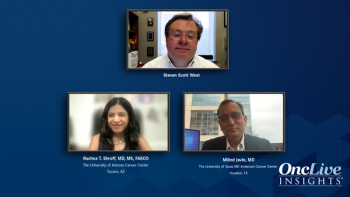
Milind Javle, MD; Rachna Shroff, MD, MS, FASCO; and a patient discuss ongoing research efforts in advanced biliary tract cancer.
Milind Javle, MD; Rachna Shroff, MD, MS, FASCO; and a patient discuss how to factor in trastuzumab deruxtecan in advanced biliary tract cancer.
Milind Javle, MD; Rachna Shroff, MD, MS, FASCO; and a patient discuss considering factors for immunotherapy agents in advanced biliary tract cancer.
Milind Javle, MD; Rachna Shroff, MD, MS, FASCO; and a patient discuss the clinical implications of 3-year survival data from TOPAZ-1 in advanced biliary tract cancer.
Milind Javle, MD; Rachna Shroff, MD, MS, FASCO; and a patient put the TOPAZ-1 data into context for patients with advanced biliary tract cancer.
Milind Javle, MD; Rachna Shroff, MD, MS, FASCO; and a patient discuss the phase 3 TOPAZ-1 trial in advanced biliary tract cancer.
Milind Javle, MD, and Rachna Shroff, MD, MS, FASCO, discuss a case of advanced biliary tract cancer with a patient.
Milind Javle, MD, and Rachna Shroff, MD, MS, FASCO, and a patient discuss prognosis and standard-of-care treatment for patients with advanced biliary tract cancer.
Zanidatamab has received priority review from the FDA for the treatment of patients with HER2-positive metastatic biliary tract cancer.
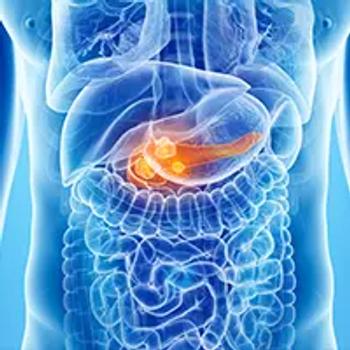
CT041 was safe and showcased early signals of antitumor activity in heavily pretreated patients with metastatic pancreatic cancer.
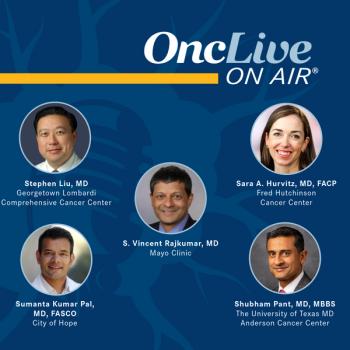
Experts from across oncology specialties discuss the abstracts and presentations they are most looking forward to seeing at the 2024 ASCO Annual Meeting.

Kohei Shitara, MD, discusses the background of the phase 3 CheckMate 649 study in advanced gastric cancer, GEJ cancer, and esophageal adenocarcinoma.
Haeseong Park, MD, MPH, discusses findings from a phase 1 study of epacadostat with preoperative chemoradiation in locally advanced rectal cancer.

Kara N. Maxwell, MD, PhD, discusses the accessibility of genetic testing in the community setting for patients with metastatic prostate cancer.
Kian-Huat Lim, MD, PhD, discusses the current standard of care for patients with resectable or borderline resectable pancreatic cancer.
The FDA has withdrawn the approval of infigratinib for previously treated, FGFR2-positive, advanced cholangiocarcinoma.
Pertuzumab plus trastuzumab produced antitumor activity and a mild adverse effect profile in patients with pretreated biliary tract cancer with ERBB2/3 alterations.

Michael Iglesia, MD, PhD, discusses uncertainties surrounding the selection of second-line treatment approaches in hepatocellular carcinoma.
In case you missed it, below is your guide to the important regulatory approvals made by the FDA in April 2024.

Relatlimab plus nivolumab and chemotherapy did not improve responses in untreated advanced gastric or GEJ cancer with a LAG-3 expression of at least 1%.

Jin Qian, PhD, discusses preclinical findings for CXCR4 partial agonist in combination with anti–PD-1 therapy in advanced gastric cancer.

Prolonged administration of imatinib maintenance therapy for 6 years improved disease-free survival in patients with gastrointestinal stromal tumors.

China's NMPA has granted breakthrough therapy designation to IBI343 for use in select patients with claudin 18.2–positive gastric or GEJ adenocarcinoma.
Advertisement
Advertisement
Trending on OncLive
1
INBRX-106 Plus Pembrolizumab Improves Responses and PFS in First-Line PD-L1–Positive HNSCC
2
FDA Approves Pirtobrutinib for Previously Untreated CLL/SLL
3
Epcoritamab Plus R-CHOP Meets PFS End Point in Newly Diagnosed DLBCL
4
‘Our Impact Will Be Broad and Transformative’: Wells Messersmith, MD, Takes the Reins at CU Anschutz Cancer Center
5