

Genitourinary Cancers
Latest News
Advertisement
Latest Videos
































































Advertisement
More News
Robert G. Uzzo, MD, chair, Surgical Oncology, G. Willing "Wing" Pepper Chair in Cancer Research, senior vice-president, Physician Services, president, Fox Chase Cancer Center Medical Group, Inc., professor of surgery, Temple University Health System, Fox Chase Cancer Center, discusses trials investigating immunotherapy in kidney cancer.

As manufacturers charge increasingly higher prices for new therapies and even well-established agents, payers have responded with pressure on practices to justify every cost, and Urology Clinics of North Texas, like many other independent practices, is caught in the middle.

Peter Black, MD, senior research scientist, Vancouver Prostate Center, associate professor, Department of Urologic Sciences, University of British Columbia, discusses sequencing of immunotherapy for patients with bladder cancer.

Results from a blinded, independent data review confirmed previous results from the CABOSUN trial showing that treatment with cabozantinib (Cabometyx) extended progression-free survival compared with sunitinib (Sutent) for patients with previously untreated, intermediate- or poor-risk advanced renal cell carcinoma.

Christophe Massard, MD, PhD, discusses the latest developments with durvalumab (Imfinzi) in urothelial carcinoma.

Daniel P. Petrylak, MD, discusses the KEYNOTE-045 results and the next steps with pembrolizumab (Keytruda) in urothelial carcinoma.
Michael B. Atkins, MD, deputy director, Georgetown-Lombardi Comprehensive Cancer Center, professor of oncology and medicine, Georgetown University School of Medicine, discusses the IMmotion150 trial in renal cell carcinoma.
Simon Chowdhury, MD, consultant medical oncologist specializing in urological cancer, Sarah Cannon Research Institute, United Kingdom, discusses the combination of pembrolizumab (Keytruda) and pazopanib (Votrient) in patients with renal cell carcinoma (RCC).

Surgical resection, including cytoreductive nephrectomy, remains the standard of care for most patients with renal cell carcinoma, but many patients will have a recurrence, and could benefit from additional therapy.
Brian I. Rini, MD, professor of medicine, Cleveland Clinic, discusses a phase I study of pembrolizumab (Keytruda) plus axitinib (Inlyta) in patients with renal cell carcinoma (RCC).
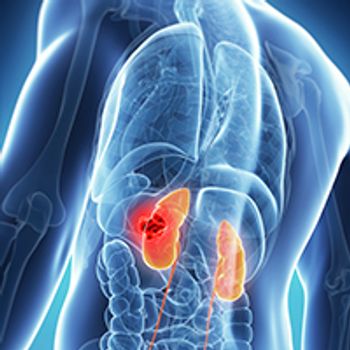
The combination of dalantercept plus axitinib (Inlyta) failed to significantly improve progression-free survival in patients with advanced renal cell carcinoma compared with placebo.
Andrea Apolo, MD, medical oncologist, chief of the bladder cancer section of the Genitourinary Malignancies Branch, National Cancer Institute, discusses immunotherapy combinations with cabozantinib (Cometriq) in genitourinary tumors.
Daniel P. Petrylak, MD, professor of Medicine (Medical Oncology) and Urology, co-director, Signal Transduction Research Program, Yale Cancer Center, 2017 Giant of Cancer Care in Genitourinary Cancer, discusses the KEYNOTE-045 trial investigating pembrolizumab (Keytruda) versus physician’s choice of chemotherapy for patients with urothelial carcinoma.

Renal medullary carcinoma is a rare but devastating tumor type almost exclusively affecting young adults carrying 1 copy of hemoglobin beta (HBB) harboring the A17T mutation (HbS).
Toni K. Choueiri, MD, clinical director, Lank Center for Genitourinary Oncology, director, Kidney Cancer Center, senior physician, Dana-Farber Cancer Institute, discusses phase I results of axitinib (Inlyta) plus avelumab (Bavencio) for the treatment of patients with metastatic renal cell carcinoma (RCC).

The pharmacologic treatment for advanced renal cell carcinoma has evolved considerably since the FDA approved interleukin-2 as the first systemic therapy for the tumor type in 1992. Since then, the FDA has approved more than 20 drugs for RCC in the past 12 years.
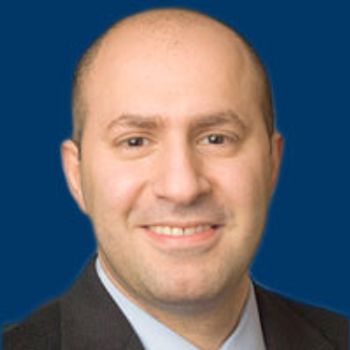
Combining the PD-L1 inhibitor avelumab (Bavencio) with the VEGF inhibitor axitinib (Inlyta) as a frontline regimen induced a response rate of 58.2% in patients with advanced renal cell carcinoma, according to findings from the phase Ib JAVELIN Renal 100 trial presented at the 2017 ASCO Annual Meeting.
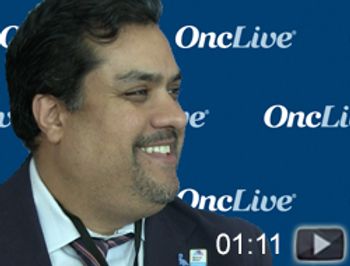
Ketan K. Badani, MD, professor of Urology at Mount Sinai Hospital, discusses the future of robotic surgery for patients with kidney cancer.

Combining the PD-1­ inhibitor pembrolizumab with the IDO1 inhibitor epacadostat led to an overall response rate of 35% in patients with advanced urothelial carcinoma.

Jihad Kaouk, MD, urologist, Cleveland Clinic, discusses the results of a study of robot-assisted partial nephrectomy for selected renal mass using an off-clamp approach compared to an on-clamp approach for patients with renal cell carcinoma (RCC).

Andrea B. Apolo, MD, principal investigator and the head of the Bladder Cancer Section in the Genitourinary Malignancies Branch at the National Cancer Institute’s Center for Cancer Research, discusses the updated findings of the phase Ib JAVELIN trial exploring avelumab (Bavencio) for the treatment of patients with metastatic urothelial carcinoma.

Arjun V. Balar, MD, assistant professor of medicine, Division of Hematology and Oncology, New York University Cancer Institute, NYU Langone Medical Center, discusses the mature clinical trial results and biomarker findings of KEYNOTE-052, first-line pembrolizumab (Keytruda) in patients with cisplatin-ineligible advanced urothelial cancer, during the 2017 ASCO Annual Meeting.

The FDA has granted a priority review designation to sunitinib (Sutent) for use as an adjuvant therapy in patients with renal cell carcinoma who have received nephrectomy and are high risk for recurrence.

Adding ramucirumab (Cyramza) to docetaxel led to a statistically significant improvement in progression-free survival (PFS) versus docetaxel alone in previously treated patients with locally advanced or unresectable or metastatic urothelial carcinoma.
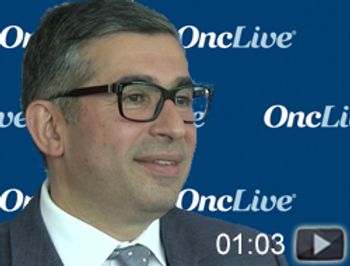
Jihad Kaouk, MD, urologist, Cleveland Clinic, discusses how robot-assisted partial nephrectomy for selected renal mass using off-clamp approach offered renal functional advantage over on-clamp approach.
Advertisement
Advertisement
Trending on OncLive
1
Savolitinib Plus Osimertinib NDA Submitted to FDA for MET-Driven, EGFR-Mutated NSCLC After EGFR TKI
2
FDA Grants Priority Review to Elinzanetant for Endocrine Therapy–Associated Vasomotor Symptoms in HR+ Breast Cancer
3
Calculating the Real Cost of False Positive Findings in Cancer Screening
4
China's NMPA Approves Pirtobrutinib Across CLL
5