

Genitourinary Cancers
Latest News
Advertisement
Latest Videos



























































Advertisement
More News
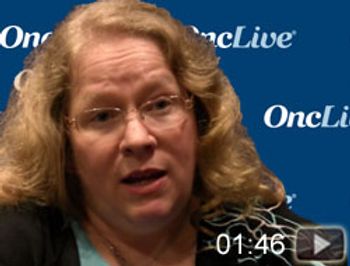
Arlene O. Siefker-Radtke, MD, associate professor, Department of Genitourinary Medical Oncology, Division of Cancer Medicine, The University of Texas MD Anderson Cancer Center, clinical co-leader, Bladder SPORE Executive Committee, discusses why researchers and physicians should reconsider the utility of PD-L1 as a biomarker for patients with bladder cancer.
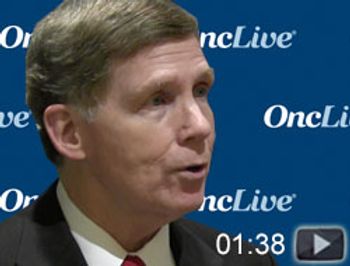
W. Marston Linehan, MD, chief, Urologic Oncology Branch, National Cancer Institute, discusses gene mutations in papillary kidney cancer.
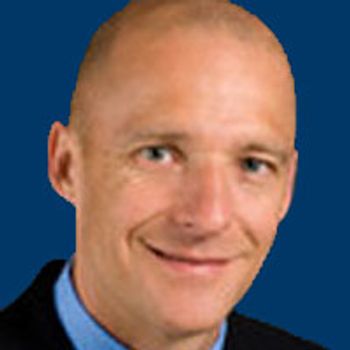
Eric Jonasch, MD, speaks on the evolving choices for patients with renal cell carcinoma in the first- and second-line settings, as well as the remaining challenges in the field.
David F. McDermott, MD, Beth Israel Deaconess Medical Center, discusses lessons learned from the recent IMmotion150 trial in renal cell carcinoma (RCC). The open-label, randomized study examined the PD-L1 inhibitor atezolizumab (Tecentriq) alone or in combination with bevacizumab (Avastin) versus sunitinib (Sutent) in patients with untreated advanced RCC.
Daniel Petrylak, MD, discusses the significance of genetics in the future of prostate cancer care and highlights emerging treatments and challenges in the field.
Eric Jonasch, MD, professor, Department of Genitourinary Medical Oncology, Division of Cancer Medicine, The University of Texas MD Anderson Cancer Center, discusses the advancements in the first- and second-line settings for treating patients with renal cell carcinoma (RCC). Jonasch shared this insight during the 2017 OncLive® State of the Science Summit on Genitourinary Cancers.

Charles Drake, MD, PhD, discusses pairing immunotherapy with chemotherapy, the efficacy of current immunotherapy agents, and the future use of immunotherapy in the treatment of genitourinary cancers.
Thomas Powles, MD, Barts Cancer Institute, discusses the future of durvalumab in the treatment of bladder cancer.
Toni Choueiri, MD, discusses a study of the MET inhibitor savolitinib in papillary renal cell cancer as well as other exciting findings in kidney cancer.

Phil Febbo, MD, chief medical officer, Genomic Health, explains the Oncotype DX Genomic Prostate Score (GPS) for patients with clinically low-risk prostate cancer.
Raoul S. Concepcion, MD, calls for increased oncology education and information sharing among the urology community across the globe, as urologists play a critical role in delivering and managing cancer treatment.

Charles G. Drake, MD, PhD, director of Genitourinary Oncology, NewYork-Presbyterian/Columbia University Medical Center and co-director of Columbia’s Cancer Immunotherapy Programs, discusses the side effects associated with immunotherapy in genitourinary cancers.

Hans J. Hammers, MD, PhD, discusses early promising data for HyperAcute Renal immunotherapy in renal cell carcinoma and the overall potential for vaccines in the field.

Hans J. Hammers, MD, PhD, associate professor, Internal Medicine, UT Southwestern Medical Center, discusses immunotherapy in renal cell carcinoma (RCC).

The FDA has granted a priority review to a biologics license application for avelumab for the treatment of patients with locally advanced or metastatic urothelial carcinoma whose disease has progressed after platinum-based therapy.
Michael J. Morris, MD, discusses a phase I/II trial in which the combination of radium-223 (Xofigo) and docetaxel had a greater effect than docetaxel alone on bone biomarkers in patients with bone-metastatic castration-resistant prostate cancer.
Toni Choueiri, MD, clinical director, Lank Center for Genitourinary Oncology, director, Kidney Cancer Center, senior physician, Dana-Farber Cancer Institute, discusses the role of traditional agents in the treatment of patients with kidney cancer.

Andrea Apolo, MD, discusses positive early trials exploring various regimens of nivolumab (Opdivo), ipilimumab (Yervoy), and avelumab in bladder cancer.
Daniel P. Petrylak, MD, professor of Medicine (Medical Oncology) and Urology, co-director, Signal Transduction Research Program, Yale School of Medicine, discusses the updates of a study of atezolizumab in patients with metastatic urothelial carcinoma (mUC).
W. Marston Linehan, MD, chief, Urologic Oncology Branch, National Cancer Institute, discusses genetic conditions with predisposition for patients with kidney cancer.

Charles G. Drake, MD, PhD, director of Genitourinary Oncology, NewYork-Presbyterian/Columbia University Medical Center and co-director of Columbia’s Cancer Immunotherapy Programs, discusses the potential of combinations between immunotherapy and conventional therapies in genitourinary cancers.
David McDermott, MD, discusses the results and the significance of the IMmotion 150 trial in metastatic renal cell carcinoma.

An Independent Data Monitoring Committee has recommended halting the phase III ADAPT trial exploring rocapuldencel-T (AGS-003) for the frontline treatment of metastatic renal cell carcinoma.
David F. McDermott, MD, Beth Israel Deaconess Medical Center, discusses the recent IMmotion150 trial in Renal Cell Carcinoma (RCC).
New guidelines involving the immunotherapies nivolumab (Opdivo) and interleukin-2 inhibitors have been issued by The Society for Immunotherapy of Cancer to help practicing clinicians manage patients with renal cell carcinoma.
Advertisement
Advertisement
Trending on OncLive
1
Savolitinib Plus Osimertinib NDA Submitted to FDA for MET-Driven, EGFR-Mutated NSCLC After EGFR TKI
2
FDA Grants Priority Review to Elinzanetant for Endocrine Therapy–Associated Vasomotor Symptoms in HR+ Breast Cancer
3
Calculating the Real Cost of False Positive Findings in Cancer Screening
4
China's NMPA Approves Pirtobrutinib Across CLL
5