






Genitourinary Cancers
Latest News
Advertisement
Latest Videos


































































Advertisement
More News

Jonathan E. Rosenberg, medical oncologist at Memorial Sloan Kettering Cancer Center, discusses the emergence of immunotherapies in the field of bladder cancer, including atezolizumab (Tecentriq), nivolumab (Opdivo), and pembrolizumab (Keytruda). Rosenberg shared this at the 2016 OncLive State of the Science Summit on Genitourinary Cancers.

Vitaly Margulis, MD, assistant professor of Urologic Oncology, UT Southwestern Medical Center, discusses 2 different approaches to administering adjuvant therapy for patients with renal cell carcinoma.

In the past decade, the addition of tyrosine kinase inhibitors has had a huge impact on the treatment of renal cell carcinoma in the first- and second-line settings. Currently available agents include sorafenib, sunitinib, pazopanib, axitinib, and the recently-added cabozantinib, and lenvatinib.

If any doubts remained that oncology practices were not going to be specific targets in the hacking of medical data, a breach at Central Ohio Urology Group has set the record straight.

The FDA has issued a complete response letter to Spectrum Pharmaceuticals informing the company that its new drug application for apaziquone in bladder cancer would not be approved.

The PD-1/PD-L1 inhibitors moving through the pipeline in bladder cancer will have a lasting impact on the armamentarium in the field, explains Jonathan E. Rosenberg, MD.

Gopa Iyer, MD, assistant attending physician, Memorial Sloan Kettering Cancer Center, discusses significant points for community oncologists to be aware of when treating patients with bladder cancer with immunotherapy agents.

Therapeutic options for patients with renal cell carcinoma have increased rapidly in the past decade, yet the field is still poised to expand significantly in the coming years, said Robert S. Alter, MD.
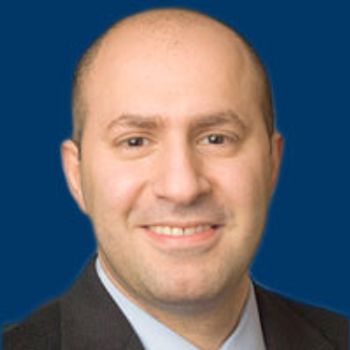
Cabozantinib reduced the risk of progression or death by 34% versus sunitinib as a first-line treatment for patients with metastatic renal cell carcinoma, according to results from the phase II CABOSUN trial.

While immunotherapy continues to make headway in various malignancies, the chemotherapy docetaxel maintains a key role in the treatment of patients with metastatic prostate cancer.

The combination of nivolumab and ipilimumab led to a high response rate and improved overall survival versus historical controls for patients with pretreated metastatic urothelial carcinoma.

Pembrolizumab monotherapy reduced the risk of death by 27% compared with chemotherapy for patients with advanced urothelial carcinoma whose disease progressed after prior treatment.

Joaquim Bellmunt, MD, PhD, attending physician of Solid Tumor Oncology at Dana-Farber Cancer Institute, discusses findings from the phase III KEYNOTE-045 study, which compared second- or third-line pembrolizumab with investigator-choice chemotherapy as a treatment for patients with metastatic or locally advanced, unresectable urothelial carcinoma.

Karim A. Touijer, MD, MPH, surgeon, Memorial Sloan Kettering Cancer Center, discusses the considering factors for surgical options for patients with renal cell carcinoma (RCC).

To best treat patients with clear cell renal cell carcinoma, incorporating precision biomarkers into the current nomogram is essential.

James J. Hsieh, MD, medical oncologist, physician-scientist, Memorial Sloan Kettering Cancer Center, discusses overall survival results in the RECORD-3 study based on 3 distinct clear cell metastatic renal cell carcinoma molecular subgroups.

Robert G. Uzzo, MD, chair, Surgical Oncology, G. Willing "Wing" Pepper Chair in Cancer Research, senior vice-president, Physician Services, president, Fox Chase Cancer Center Medical Group, Inc., professor of Surgery, Temple University Health System, Fox Chase Cancer Center, discusses recent outcomes of adjuvant therapy as seen in clinical trials for patients with renal cell carcinoma (RCC).

With immunotherapy agents showing significant promise in bladder cancer, the potential for these agents in the neoadjuvant setting is wide open.

Whatever the result of the US presidential election, the era ahead will continue to be one of unprecedented change in healthcare, according to Robert Laszewski.

Following a long drought in the development of bladder cancer treatments, the field is now poised to benefit from a series of rapid advances ushered in by highly effective immunotherapies.

The dual inhibitor combination of lenvatinib and everolimus is becoming an essential second-line treatment option in advanced renal cell carcinoma, and research to move the regimen into frontline settings is underway.

A window of opportunity exists in which some patients with non–muscle-invasive bladder cancer could benefit from trying novel second-line therapies prior to surgery.

Looking ahead to 2020, most participants on an expert panel projected that immunotherapy will be critical to optimizing outcomes in the adjuvant setting for patients with renal cell carcinoma.

When it comes to the burgeoning arena of biomarkers in bladder cancer, the value proposition is compelling, although the utility and costs need to be better defined, according to Badrinath Konety, MD, MBA.

Cabozantinib demonstrated consistent benefits compared with everolimus for patients with advanced, pretreated renal cell carcinoma in a subgroup analysis of the phase III METEOR trial that explored MET expression.
Advertisement
Advertisement
Trending on OncLive
1
Savolitinib Plus Osimertinib NDA Submitted to FDA for MET-Driven, EGFR-Mutated NSCLC After EGFR TKI
2
FDA Grants Priority Review to Elinzanetant for Endocrine Therapy–Associated Vasomotor Symptoms in HR+ Breast Cancer
3
Calculating the Real Cost of False Positive Findings in Cancer Screening
4
China's NMPA Approves Pirtobrutinib Across CLL
5