






Genitourinary Cancers
Latest News
Advertisement
Latest Videos


































































Advertisement
More News

The PD-L1 inhibitor atezolizumab has been found to be non-toxic and has demonstrated a major survival advantage in patients with metastatic urothelial bladder cancer.

The European Commission has approved cabozantinib for the treatment of patients with advanced renal cell carcinoma after the failure of VEGF-targeted therapy, according to Exelixis and Ipsen, the manufacturers of the multikinase inhibitor.

The FDA’s Oncologic Drugs Advisory Committee voted 14-0 against approving apaziquone (EOquin; Qapzola) for intravesical instillation immediately following transurethral resection in patients with non-muscle invasive bladder cancer.

Mark A. Rubin, MD, is an expert in prostate cancer genomics and pathology who has led key discoveries in the distinction between indolent and aggressive types of the malignancy.
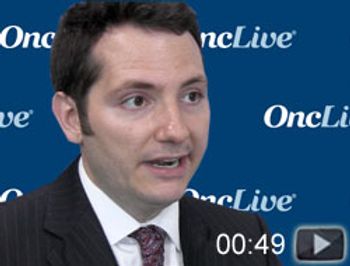
Mark Ball, MD, chief urology resident, Johns Hopkins University School of Medicine, discusses the eventual role that immunotherapy will play in the treatment landscape of renal cell carcinoma (RCC), as well as patient selection to receive immunotherapy as a single agent or in combination.
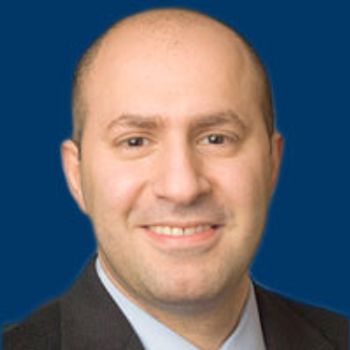
Evidence has demonstrated that obesity is a risk factor for clear cell renal cell carcinoma; however, a new report suggests that a high body mass index is a prognostic factor for improved survival in patients with metastatic RCC who have received targeted therapy.
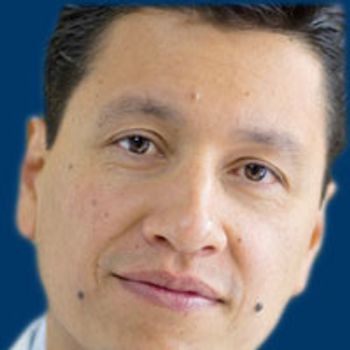
Jorge A. Garcia, MD, discusses the final survival data from the phase III METEOR trial, which was the basis for cabozantinib's (Cabometyx's) FDA approval, as well as the role the agent will now play along with nivolumab (Opdivo) in advanced RCC.
David F. McDermott, MD, director of the Biologic Therapy Program at Beth Israel Deaconess Medical Center, discusses the findings of the phase III CheckMate-025 trial of nivolumab (Opdivo) versus everolimus (Afinitor) in renal cell carcinoma (RCC).

Saeed Rafii, MD, PhD, medical director, Sarah Cannon Research Institute, United Kingdom, discusses novel immunotherapy approaches for the treatment of patients with bladder cancer.

Michael L. Blute, MD, chair of Department of Urology, Massachusetts General Hospital, discusses the differences between kidney-sparing surgery and radical nephrectomy for patients with renal cell carcinoma (RCC).

David M. Nanus, MD, medical oncologist, Weill Cornell Medicine and NewYork-Presbyterian Hospital, discusses ongoing clinical trials exploring immunotherapy agents for the treatment of patients with bladder cancer.

Michael A. Poch, MD, urologist and assistant member at Moffitt Cancer Center, discusses the potential of nivolumab (Opdivo) as a treatment for patients with metastatic bladder cancer.

Benjamin R. Lee, MD, chief, Division of Urology, University of Arizona College of Medicine-Tucson Department of Surgery, and director of the Genitourinary Cancer and Disease Oriented Strategic Planning Team, University of Arizona Cancer Center, discusses nanotechnology combination therapy for patients with renal cell carcinoma (RCC).

Michael Poch, MD, provides deeper insight into how immunotherapy has propelled the field of bladder cancer forward, as well as the research that still needs to be done.
Mayer Fishman, MD, discusses the therapeutic landscape in renal cell carcinoma and the next steps needed to further advance the field.


Approximately 4 years after the FDA approval of 2 powerful new oral androgen-targeting agents for metastatic castration-resistant prostate cancer, an analysis raised issues complicating treatment with the 2 drugs, as well as what oncologists do not yet know.



Mayer Fishman, MD, PhD, medical oncologist, Chemical Biology and Molecular Medicine Program, Moffitt Cancer Center, professor, Department of Oncologic Sciences and of Internal Medicine, University of South Florida Morsani College of Medicine, discusses the available agents to treat patients with renal cell carcinoma.

As a group, Rio Grande Urology shares a sense of obligation and culture. Its leaders have embraced an integrative model approach and sees the advantages of it.
Patients with renal cancer who underwent cytoreductive nephrectomy and targeted therapy had improved survival compared with patients who did not undergo the surgery.

Gary D. Steinberg, MD, discusses the impact of atezolizumab (Tecentriq) on the treatment landscape of bladder cancer, the resistance to finding effective therapies for the disease, and what potential role immunotherapy may have in the field going forward.

Randy F. Sweis, MD, covers the immunotherapy advancements in prostate cancer, renal cell carcinoma, and bladder cancer, and what refinement lies ahead in each of these areas.
The lack of cooperation and inability to compromise, at the expense of our country’s best interests, has resulted in gridlock.
Advertisement
Advertisement
Trending on OncLive
1
Savolitinib Plus Osimertinib NDA Submitted to FDA for MET-Driven, EGFR-Mutated NSCLC After EGFR TKI
2
FDA Grants Priority Review to Elinzanetant for Endocrine Therapy–Associated Vasomotor Symptoms in HR+ Breast Cancer
3
Calculating the Real Cost of False Positive Findings in Cancer Screening
4
China's NMPA Approves Pirtobrutinib Across CLL
5