Genitourinary Cancers
Latest News
Advertisement
Latest Videos





























































Advertisement
More News


The FDA has granted nivolumab (Opdivo) a breakthrough therapy designation for the treatment of patients with unresectable locally advanced or metastatic urothelial carcinoma after the failure of a platinum-containing regimen.

Over the past few months, an alarming number of events have surfaced that we, as providers of oncologic urology care, should take notice.

Thomas E. Hutson, DO, PharmD, discusses how nivolumab, cabozantinib, and lenvatinib/everolimus have significantly impacted the management of patients with renal cell carcinoma and promising combination regimens on the horizon to propel the field forward.

David F. McDermott, MD, provides further insight on the long-term efficacy and safety of nivolumab and its role in renal cell carcinoma, as well as potential combination regimens and challenges with sequencing nivolumab.
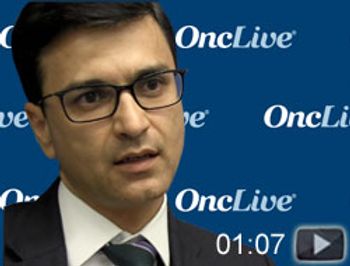
Saeed Rafii, MD, PhD, medical director, Sarah Cannon Research Institute, United Kingdom, discusses a phase I/II dose-escalation study examining the efficacy and safety of the PD-1 antibody durvalumab in patients with metastatic urothelial bladder cancer.
Cabozantinib reduced the risk of death by 34% compared with everolimus in patients with previously treated advanced renal cell carcinoma, according to updated data from the phase III METEOR trial.
About one third of patients with advanced renal cell carcinoma who were treated with single-agent nivolumab in the second-line setting or later were still alive at 4 and 5 years in long-term follow-up data from phase I and phase II clinical trials.

Patients with metastatic urothelial carcinoma who were ineligible for standard cisplatin-based chemotherapy achieved a 24% reduction in tumor size and had a median survival of 14.8 months after taking the immunotherapy agent atezolizumab (Tecentriq).

Arjun V. Balar, MD, assistant professor, Department of Medicine, co-leader of the Genitourinary Cancers Program, discusses updated results of cohort 1 of the IMvigor 210 study, which examined the efficacy of atezolizumab as first-line therapy in patients with cisplatin-ineligible locally advanced/metastatic urothelial carcinoma.





Advertisement
Advertisement
Trending on OncLive
1
Savolitinib Plus Osimertinib NDA Submitted to FDA for MET-Driven, EGFR-Mutated NSCLC After EGFR TKI
2
FDA Grants Priority Review to Elinzanetant for Endocrine Therapy–Associated Vasomotor Symptoms in HR+ Breast Cancer
3
Calculating the Real Cost of False Positive Findings in Cancer Screening
4
China's NMPA Approves Pirtobrutinib Across CLL
5