




Genitourinary Cancers
Latest News
Advertisement
Latest Videos


































































Advertisement
More News

Michael Fabrizio, MD, and Dana Adams, COO, provide their perspective on the challenges that urology practices face today.

Cabozantinib (Cabometyx) has received a positive recommendation from the EMA's Committee for Medicinal Products for Human Use for use as treatment for patients with advanced renal cell carcinoma after the failure of VEGF-targeted therapy.

The CHMP has recommended the approval of lenvatinib in combination with everolimus for patients with advanced renal cell carcinoma following one prior VEGF-targeted therapy.
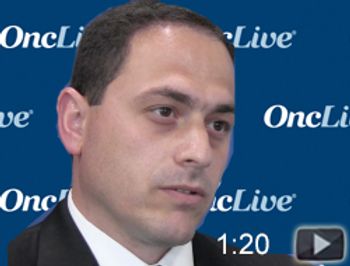

Mohammed Haseebuddin, MD, a fellow in Urologic Oncology at Fox Chase Cancer Center, discusses the overall significance of a study examining an elevated preoperative classical monocyte PD-1 mean fluorescence intensity level in patients with clear cell renal cell carcinoma.
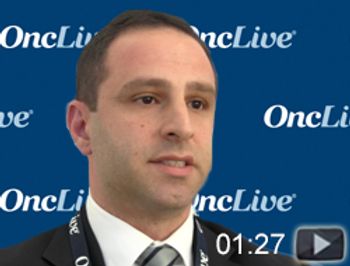
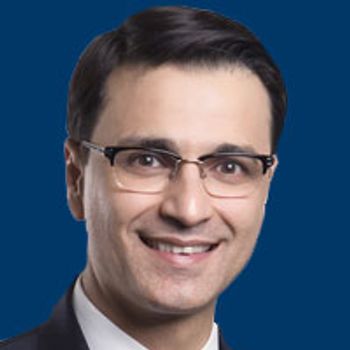
Saeed Rafii, MD, PhD, MRCP, discusses the PD-L1 inhibitor durvalumab, the encouraging findings of it in Study 1108, and the evolving landscape of bladder cancer.

Sumanta Kumar Pal, MD, assistant clinical professor, Department of Medical Oncology and Therapeutics Research, co-director, Kidney Cancer Program, City of Hope, discusses biomarker development in the field of renal cell carcinoma (RCC).


Peter O'Donnell, MD, discusses the encouraging IMvigor 210 results, the impact of atezolizumab (Tecentriq) in the treatment landscape, and the role of immunotherapy in metastatic urothelial carcinoma.

Jonathan E. Rosenberg, MD, medical oncologist, Memorial Sloan Kettering Cancer, discusses ongoing research of and next steps with atezolizumab (Tecentriq) for the treatment of patients with metastatic urothelial carcinoma.
David F. McDermott, MD, associate professor of Medicine, Harvard Medical School, staff physician, director, Biologic Therapy and Cutaneous Oncology Programs, Hematology/Oncology, Beth Israel Deaconess Medical Center, discusses long-term follow-up results of treatment with nivolumab (Opdivo) for patients with renal cell carcinoma (RCC).

Sunitinib (Sutent) extended disease-free survival versus placebo as an adjuvant therapy for patients with renal cell carcinoma at high risk of recurrence in the phase III S-TRAC trial.
Jorge A. Garcia, MD, Department of Hematology and Oncology, discusses the results of the phase III METEOR trial, which compared the efficacy of cabozantinib (Cabometyx) versus everolimus (Afinitor) in patients with advanced renal cell carcinoma.
David M. Nanus, MD, medical oncologist, Weill Cornell Medicine and NewYork-Presbyterian Hospital, discusses the unanswered questions that remain with atezolizumab (Tecentriq) in patients with metastatic urothelial carcinoma (mUC).
Even as our understanding of the biology of prostate and bladder cancers improves and treatment protocols are refined, there remain many clinical scenarios in which no clear-cut answers are available.


Advertisement
Advertisement
Trending on OncLive
1
Savolitinib Plus Osimertinib NDA Submitted to FDA for MET-Driven, EGFR-Mutated NSCLC After EGFR TKI
2
FDA Grants Priority Review to Elinzanetant for Endocrine Therapy–Associated Vasomotor Symptoms in HR+ Breast Cancer
3
Calculating the Real Cost of False Positive Findings in Cancer Screening
4
China's NMPA Approves Pirtobrutinib Across CLL
5