





Gynecologic Oncology
Latest News
Advertisement
Video Series

Latest Videos



Shorts
4:19
OncLive News Roundup for the Week of 4/5
6 months ago
by
Chris Ryan(+1 more)

1:20
Clinical Equipose When Recommending Individual Clinical Trials
6 months ago
by
Maurie Markman, MD
1:11
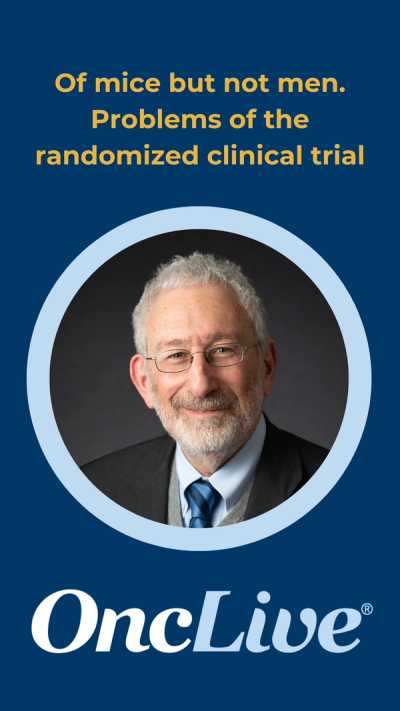
Of mice but not men. Problems of the randomized clinical trial
7 months ago
by
Maurie Markman, MD
1:46
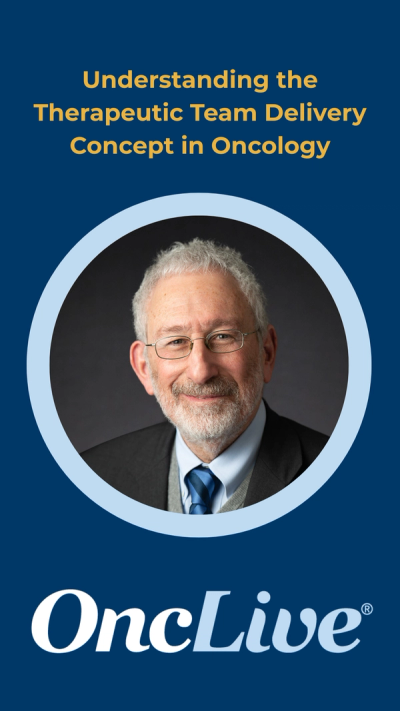
Understanding the Therapeutic Team Delivery Concept in Oncology
8 months ago
by
Maurie Markman, MD

1:42
Tracing the Evolution of Multidisciplinary Cancer Care
8 months ago
by
Maurie Markman, MD

0:55
Tackling the Barriers to Cervical Cancer Screening
8 months ago
by
Robert Neff, MD

1:43
Optimizing HPV Vaccination for Cancer Prevention
8 months ago
by
Maurie Markman, MD

0:54
Increasing Clinical Trial Access in Gynecologic Oncology
8 months ago
by
Katherine Kurnit, MD, MPH

0:38
The Role of Clinical Trials in Gynecologic Oncology
8 months ago
by
John Moroney, MD

0:1.44
How HPV Testing Can Fall Through the Cracks in Cervical Cancer
8 months ago
by
Dana Chase, MD
Podcasts

































































Advertisement
More News
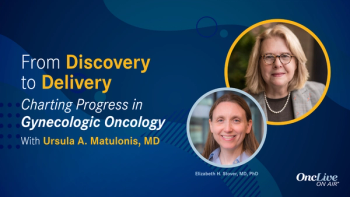
Drs Matulonis and Stover explore the biology and therapeutic relevance of the RAS/MAP kinase pathway in gynecologic cancers.

Early evidence suggests a dual bispecific strategy may be able to move the needle forward for patients with platinum-resistant ovarian cancer or endometrial cancer.

Maurie Markman, MD, highlights the frequently complex arena of goals of care discussions in oncology.

The top 5 OncLive TV videos of the week cover insights in mantle cell lymphoma, endometrial cancer, salivary gland cancer, myeloproliferative neoplasms, and renal cell carcinoma.

Tisotumab vedotin plus carboplatin & pembrolizumab ± bevacizumab achieved 65.8% ORR and 28-month median OS in first-line recurrent/metastatic cervical cancer.

The novel ADC DB-1311/BNT324 was effective in cervical cancer and PROC, regardless of prior treatment or histology

Sun Yang, MD, discusses the activity of frontline cadonilimab plus chemotherapy in patients with recurrent/advanced endometrial carcinoma.

Bhavana Pothuri, MD, discusses phase 2 data with trastuzumab pamirtecan (DB-1303/BNT323) in pretreated patients with HER2-expressing endometrial cancer.

A significant increase in treatment completion was observed among Black women with high-risk endometrial cancer who received 1:1 peer support.
Trastuzumab pamirtecan achieved ~50% ORR in pretreated HER2-expressing endometrial cancer, earning FDA breakthrough designation per phase 1/2 trial data.
Abemaciclib plus letrozole was safe and active in advanced/recurrent endometrioid endometrial carcinoma.

The FDA issued a CRL to RP1 plus nivolumab in advanced melanoma, accepted a NDA for the TLX101-Px imaging agent in glioma, and more.
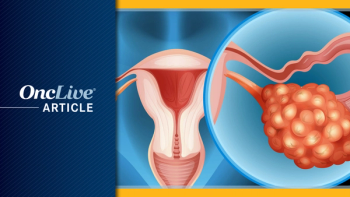
Read below to hear from Drs Markman and Slomovitz on the sessions and abstracts they’re looking forward to at this year’s SGO Annual Meeting on Women’s Cancer.

In case you missed any, check out our recap of the episodes of OncLive On Air that aired in March 2026.
Drs Matulonis and Esselen explore the growing effect of financial toxicity in gynecologic oncology, emphasizing how economic burden can influence access to care, treatment adherence, and patient outcomes.

The regulatory agency green lit the use of MyChoice CDx as a companion diagnostic for niraparib in advanced ovarian cancer

Maurie Markman, MD, discusses ethical dilemmas in oncology trials, balancing patient welfare with research integrity and regulatory goals.

In case you missed any, read a recap of the episodes of OncLive On Air that aired in February 2026.
Drs Matulonis and Campos discuss the evolving landscape of newly diagnosed cervical cancer, from epidemiologic trends to emerging therapeutic strategies.

At The University of Texas MD Anderson Cancer Center, research breakthroughs are made through collaboration between leading clinicians and scientists.

The FDA has approved pembrolizumab plus paclitaxel with/without bevacizumab for PD-L1–positive platinum-resistant ovarian cancer.

In case you missed any, read a recap of the episodes of OncLive On Air that aired in January 2026.
The top 5 OncLive TV videos of the week cover insights in multiple myeloma, myelodysplastic syndrome, breast cancer, colorectal cancer, and cervical cancer.

Dana M. Chase, MD, Robert Neff, MD, and Maurie Markman, MD, comment on the current state of HPV vaccination and screening during cervical cancer awareness month.

OncLive spoke to 4 experts in order to unpack the top data presented during oncology conferences over the course of 2025.
Advertisement
Advertisement
Trending on OncLive
1
The OncFive: Top Oncology Articles for the Week of 10/4/2026
2
FDA Grants Breakthrough Device Designation to Natera’s Multi-Cancer Early Detection Assay
3
FDA Approves Atezolizumab Plus Chemo for Stage III dMMR Colon Cancer
4
FDA Flashback: Hematologic Cancer Decisions and News From September 2026
5