



Gynecologic Oncology
Latest News
Advertisement
Video Series



Latest Videos



Shorts
1:34
The Importance of HPV Vaccination in Oncology
9 months ago
by
Maurie Markman, MD

0:45
The Use of Measurements in Oncology to Define Clinical Utility
9 months ago
by
Maurie Markman, MD
1:32
Breaking Down the Surgical Management of Known Metastatic Cancer
a year ago
by
Maurie Markman, MD

1:03
The Multidisciplinary Use of Radiation, Systemic Therapy, and Surgery in Oncology
a year ago
by
Maurie Markman, MD

1:30
Decision Support in Oncology
a year ago
by
Maurie Markman, MD
1:30
Making the Case for PFS Over OS in Clinical Trials
a year ago
by
Maurie Markman, MD

0:53
Don't Ignore the Signs: Why Increased Awareness of Early Endometrial Cancer Symptoms Is Critical
a year ago
by
Dana Chase, MD
0:34
The Role of Minimally Invasive Surgery in Uterine Cancer
a year ago
by
John Paul Diaz, MD
Podcasts






























































Advertisement
More News

OncLive spoke to 4 experts in order to unpack the top data presented during oncology conferences over the course of 2025.
Robert Neff, MD, discusses the potential benefits of self-collected HPV testing and the challenges of implementing this screening method in practice.
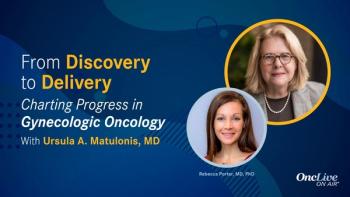
Drs Matulonis and Porter discuss the role of immunotherapy in gynecologic cancer management, focusing on clinical breakthroughs and future directions.

Maurie Markman, MD, discusses the essential yet often complex role associated with interpreting numbers and measurements in oncology.

Interim phase 2 data show nab-sirolimus plus letrozole produced an ORR of 41% and 13.6-month PFS with manageable safety in endometrioid endometrial cancer.

Ten-year data from the PORTEC-3 trial show that adjuvant chemoradiotherapy improves OS and RFS vs radiotherapy alone in high-risk endometrial cancer.
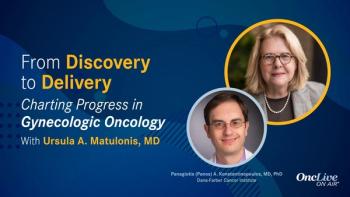
Drs Matulonis and Konstantinopoulos discuss the different subtypes of endometrial cancer and treatment developments for this disease.

In case you missed any, read a recap of every episode of OncLive On Air that aired in November 2025.
Here is your cheat sheet to all therapeutic options that were cleared by the FDA in November 2025 spanning tumor types.

Vicky Makker, MD, discusses the DESTINY-Endometrial01 trial of T-DXd plus rilvegostomig or pembrolizumab in HER2+ pMMR endometrial cancer.
OncLive has launched a new podcast series, From Discovery to Delivery: Charting Progress in Gynecologic Oncology, hosted by Ursula A. Matulonis, MD.

The FDA has approved ziftomenib for NPM1-positive acute myeloid leukemia, has accepted a NDA for 177Lu-edotreotide for GEP-NETs, and more.

OncoMate MSI Dx was approved by the FDA to identify patients with MSS endometrial cancer who may be eligible for pembrolizumab plus lenvatinib.
Experts reflect on pivotal data, emerging agents, and notable advancements in gynecologic cancer spotlighted during the 2025 ESMO Congress.
WES-aneuploidy scores may identify patients with dMMR endometrial cancer who do not benefit from the addition of immunotherapy to chemotherapy.
Camrelizumab plus famitinib led to superior PFS and OS outcomes vs chemotherapy in frontline recurrent/metastatic cervical cancer.

The addition of atezolizumab to chemotherapy demonstrated noninferior survival vs chemotherapy alone in advanced or recurrent endometrial cancer.

Toripalimab plus CCRT produced a 100% ORR in locally advanced cervical cancer, although the regimen was associated with radiation-related AEs and irAEs.
Chemoradiotherapy improved survival vs radiotherapy alone in the adjuvant setting in high-risk endometrial cancer, particularly in p53-abnormal disease.
Maintenance rucaparib showed efficacy in recurrent/metastatic endometrial cancer after the completion of first- or second-line chemotherapy.

Leading experts across oncology specialties preview the key studies and data they are most anticipating ahead of the 2025 ESMO Congress.

Preview the top lung, breast, GI, GU, gynecologic, and hematologic oncology abstracts and topics ahead of the 2025 ESMO Congress.
See poll results highlighting the top gynecologic oncology abstracts and subtypes to watch at the 2025 ESMO Congress.

Vote on the top abstracts and topics to watch in gynecologic and gastrointestinal oncology during the 2025 ESMO Congress.
The FDA clears maintenance lurbinectedin combination in lung cancer, T-DxD sBLA in HER2-positive breast cancer is accepted for review, and more.
Advertisement
Advertisement
Trending on OncLive
1
The OncFive: Top Oncology Articles for the Week of 10/4/2026
2
FDA Grants Breakthrough Device Designation to Natera’s Multi-Cancer Early Detection Assay
3
FDA Approves Atezolizumab Plus Chemo for Stage III dMMR Colon Cancer
4
FDA Flashback: Hematologic Cancer Decisions and News From September 2026
5