




Gynecologic Oncology
Latest News
Advertisement
Latest Videos


































































Advertisement
More News

Jonathan A. Ledermann, BSc, MD, FRCP, professor of medical oncology, UCL Cancer Institute, University College London, and an honorary consultant medical oncologist, UCL Hospitals, discusses responses to rucaparib (Rubraca) maintenance in ovarian cancer.

Claire Manuszak, BS, discusses a phase I study (NCT03495323) with prexasertib (LY2606368) and LY3300054 in ovarian cancer.
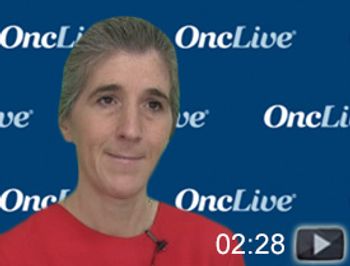
Kathleen Moore, MD, director, Oklahoma TSET Phase I Clinical Trials Program, and associate professor, Section of Gynecologic Oncology, Jim and Christy Everest Endowed Chair in Cancer Research, director, Gynecologic Oncology Fellowship Program, associate director of Clinical Research, and medical director of the Clinical Trials Office, at Stephenson Cancer Center, discusses the role of mirvetuximab soravtansine in platinum-resistant ovarian cancer.
Routine cervical screening, conducted every 3 years, was found to reduce the incidence of stage I and stage II+ cervical cancers by 48% and 83%, respectively.

In an effort to make the use of laparoscopic power morcellators a safer and more effective choice in gynecologic surgeries, the FDA has released a statement that it will be putting a handful of strategies and recommendations in place.

The European Medicines Agency has validated a Type II Variation for niraparib as a first-line maintenance treatment for patients with advanced ovarian cancer who have responded to platinum-based chemotherapy, regardless of biomarker status.
Ian S. Hagemann, MD, PhD, discusses identifying resectable lymph nodes via ultrastaging and the importance of multidisciplinary treatment in patients with endometrial cancer.
Richard T. Penson, MD, MRCP, associate professor of medicine, Harvard Medical School, and clinical director of Medical Gynecologic Oncology, in the Department of Medicine, Massachusetts General Hospital, discusses the eligibility criteria for PARP inhibitors in advanced ovarian cancer.
Mitchel Hoffman, MD, gynecologic oncologist, Moffitt Cancer Center, discusses ongoing research regarding neoadjuvant chemotherapy and primary debulking surgery in advanced ovarian cancer.
Robert M. Wenham, MD, gynecologic oncologist and chair of the Gynecologic Oncology Program at Moffitt Cancer Center, discusses data with intraperitoneal (IP) chemotherapy, dose-dense chemotherapy, and intravenous (IV) chemotherapy in patients with advanced ovarian cancer.
Larry J. Copeland, MD, discusses the prevalence of ovarian cancer in the United States.
John T. Comerci, MD, discusses the utility of primary debulking surgery in ovarian cancer.
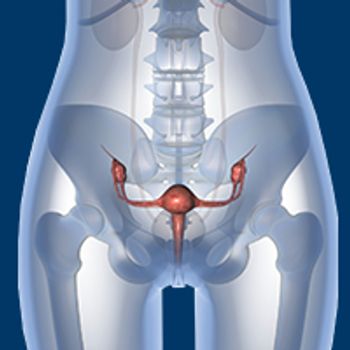
Patients with early-stage cervical cancer who undergo minimally invasive radical hysterectomy have an inferior rate of disease-free survival compared to women who undergo open abdominal radical hysterectomy.
The FDA has accepted a supplemental New Drug Application for niraparib for use as a frontline maintenance treatment for women with advanced ovarian cancer who responded to platinum-based chemotherapy regardless of biomarker status.

Immune checkpoint blockade with ipilimumab, combined with radiation therapy, is tolerable and effective in patients with node-positive, stage Ib2 to IV cervical cancer.
Leisha A. Emens, MD, PhD, discusses the combination of checkpoint inhibitors and PARP inhibitors in ovarian cancer.

Hye Sook Chon, MD, gynecologic oncologist, Moffitt Cancer Center, discusses challenges that are still faced in the maintenance setting in advanced ovarian cancer.
Richard T. Penson, MD, MRCP, associate professor, Harvard Medical School, and clinical director, Medical Gynecologic Oncology, Medicine, Massachusetts General Hospital, discusses prospective biomarkers that may predict response to PARP inhibitors in advanced ovarian cancer.
Mitchel Hoffman, MD, gynecologic oncologist, Moffitt Cancer Center, discusses eligibility criteria for primary debulking surgery versus neoadjuvant chemotherapy in advanced ovarian cancer.
The cancer treatment community's ultimate perception of a successfully completed phase III randomized trial depends in large part on how well the trial was conceived and structured. To permit adequate accrual in a timely manner and optimize the chances for a study to achieve success, the question it poses must be relevant to ensure interest by clinical investigators, referring clinicians, and potential research subjects. Further, the initiative must have adequate funding for data collection and analysis, translational laboratory investigations, and other trial components.
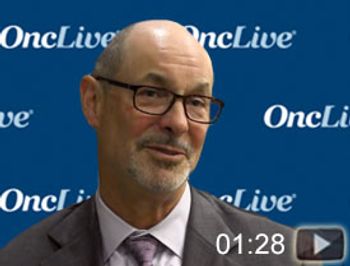
Jeffrey M. Fowler, MD, discusses patient eligibility for cytoreductive surgery in newly diagnosed ovarian cancer.
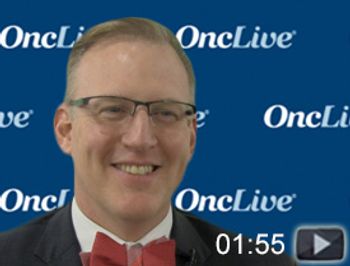
Robert M. Wenham, MD, gynecologic oncologist and chair of the Department of Gynecologic Oncology at Moffitt Cancer Center, sheds light on the debate between neoadjuvant chemotherapy and primary debulking surgery in patients with newly diagnosed, advanced ovarian cancer.
Julia Fehniger, MD, discusses emerging strategies in the treatment paradigm for patients with BRCA1/2-mutant endometrial cancer.
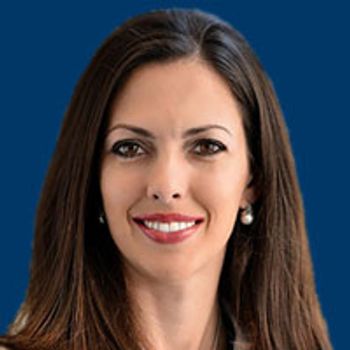
Investigators are exploring concurrent PARP inhibition and definitive regional radiotherapy in patients with metastatic invasive cervical cancer in an ongoing phase I/II study.
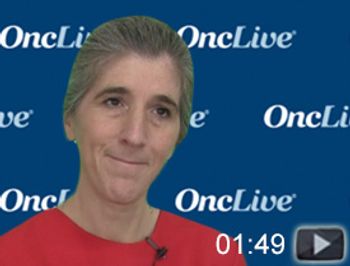
Kathleen Moore, MD, discusses topline findings from the phase III FORWARD I/GOG 3011 trial in ovarian cancer.
Advertisement
Advertisement
Trending on OncLive
1
The OncFive: Top Oncology Articles for the Week of 10/4/2026
2
FDA Approves Atezolizumab Plus Chemo for Stage III dMMR Colon Cancer
3
FDA Grants Breakthrough Device Designation to Natera’s Multi-Cancer Early Detection Assay
4
VIR-5500 Receives FDA Fast Track Designation in mCRPC
5