



Gynecologic Oncology
Latest News
Advertisement
Latest Videos



































































Advertisement
More News

Sarah Ferguson, MD, FRCSC, associate professor of gynecologic oncology, University of Toronto, Princess Margaret Cancer Centre, discusses a population-based study of women with cervical cancer undergoing radical hysterectomy.
An updated guideline (version 1.2019) from the NCCN for the management of ovarian cancer recommends specific PARP inhibitors for the treatment of recurrent disease, describes patient selection criteria for each agent, and establishes criteria for PARP inhibitor maintenance therapy.

Ana Oaknin, MD, principal investigator, Vall d’Hebron Institute of Oncology, Gynecological Malignancies Group, head of Gynecologic Tumors Unit, Medical Oncology Department, Vall d’Hebron University Hospital, discusses the phase I/II GARNET trial in patients with endometrial cancer.
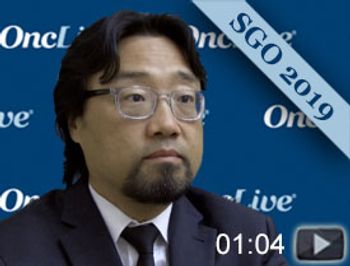
David S. Hong, MD, deputy director of the Department of investigational Cancer Therapeutics and associate vice president of clinical research at The University of Texas MD Anderson Cancer Center, discusses the promising results of the phase II innovaTV 201 study, in which tisotumab vedotin was used to treat patients with previously treated recurrent or metastatic cervical cancer.

Treatment with neratinib led to a clinical benefit rate of 54.5% in patients with HER2-mutant cervical cancer.
Lenvatinib in combination with weekly paclitaxel induced activity among those with recurrent endometrial and platinum-resistant epithelial ovarian cancer, resulting in a 65% overall response rate.

Emese Zsiros, MD, PhD, discusses the results of her recent phase II trial that set out to evaluate the use of pembrolizumab in combination with bevacizumab and oral metronomic cyclophosphamide in the treatment of patients with recurrent epithelial ovarian, fallopian tube, or primary peritoneal cancer.
Although the therapeutic utility of lymphadenectomy is uncertain, it continues to provide information for staging and helps to guide postoperative adjuvant treatment for patients with endometrial cancer.
The immediate future of clinical investigation in ovarian cancer is remarkably exciting, with a number of novel agents and combination strategies currently being examined in multiple clinical trials.

Susana Campos, MD, MPH, assistant professor of medicine, Harvard Medical School, and Dana-Farber Cancer Institute, discusses differences between PARP inhibitors in recurrent ovarian cancer.

Kristen N. Ganjoo, MD, associate professor of medicine, Stanford University Medical Center, Stanford Medicine, discusses the treatment of patients with metastatic uterine leiomyosarcoma.
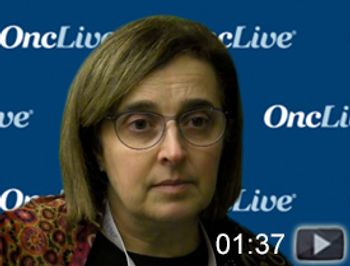
Suzanne George, MD, director of Clinical Research, Center for Sarcoma and Bone Oncology, Dana-Farber Cancer Institute, and an associate professor of Medicine, Harvard Medical School, discusses ongoing trials in soft tissue sarcoma (STS).

Although there have been numerous studies evaluating the role of different therapy schedules, cytotoxic agents, and routes of administration in ovarian cancer, the backbone of therapy remains a combination of a platinum and a taxane.
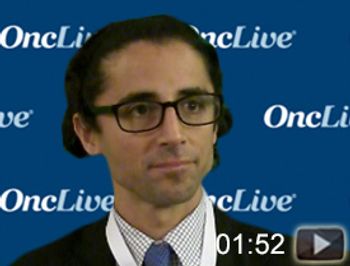
Amer Karam, MD, associate clinical professor of Gynecologic Oncology at Stanford Hospital and director of Robotic Surgery and Outreach in the Division of Gynecologic Oncology at Stanford Medicine, discusses the use of laparoscopy in advanced ovarian cancer.

Huma Q. Rana, MD, discusses the evolution of genetic testing in ovarian cancer and the genes that are associated with an increased risk of subsequent cancer development.

Ursula A. Matulonis, MD, highlights available and emerging treatment options and strategies for patients with recurrent ovarian cancer.
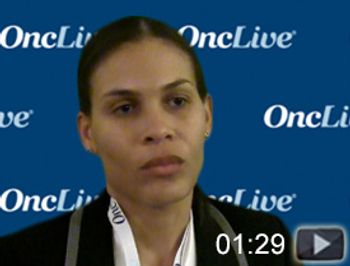
Diana P. English, MD, a gynecologic oncologist at Stanford Hospital and Clinics, discusses an investigational antibody-drug conjugate (ADC) in ovarian cancer.

The FDA has placed a partial clinical hold on the phase III AIM2CERV trial evaluating the use of axalimogene filolisbac in patients with high-risk locally advanced cervical cancer.
Successful application of immunotherapy in endometrial cancer means identifying the patients with inflamed tumors who will respond to treatment and those who will not, and finding ways to treat noninflamed tumors with immunotherapy agents.
Robert Coleman, MD, highlights recent advances made in gynecologic cancers and provide insight into ongoing research to move the needle forward.

Charles A. Leath III, MD, gyn oncologist at the University of Alabama at Birmingham, discusses the glaring unmet need in cervical cancer.

Shannon Westin, MD, discusses the evolving role of PARP inhibitors in ovarian cancer, novel investigational agents, and the importance of molecular testing.

Adria Suarez Mora, MD, second-year fellow at UPMC Magee-Womens Hospital, discusses how sequential sampling of intraperitoneal fluid during chemotherapy help better define the immunogenic effects of the treatment.
Kathleen G. Essel, MD, gynecologic oncology fellow at the University of Oklahoma Health Science Center with the Stephenson Cancer Center, discusses the benefits of using quantitative computed tomography image feature analysis to predict response to immune checkpoint inhibitors in patients with gynecologic cancers.
Targeted therapy is effectively established as an option for patients with ovarian cancers. However, beyond PARP inhibition in the BRCA-mutated or homologous recombination deficient population, questions remain about how to best treat these patients.
Advertisement
Advertisement
Trending on OncLive
1
The OncFive: Top Oncology Articles for the Week of 10/4/2026
2
FDA Approves Atezolizumab Plus Chemo for Stage III dMMR Colon Cancer
3
FDA Grants Breakthrough Device Designation to Natera’s Multi-Cancer Early Detection Assay
4
FDA Flashback: Hematologic Cancer Decisions and News From September 2026
5