




Gynecologic Oncology
Latest News
Advertisement
Latest Videos







































































Advertisement
More News
Nearly 1 IN 5 women who undergoes ovarian cancer surgery is readmitted for complications, but a web-based app may improve patient monitoring so complications and adverse events can be addressed quickly by the patient’s care team.

Ursula A. Matulonis, MD, director, Gynecologic Oncology, Dana-Farber Cancer Institute, professor of medicine, Harvard Medical School, discusses the use of immunotherapy in patients with recurrent ovarian cancer.

Huma Q. Rana, MD, clinical director, Cancer Genetics and Prevention, instructor of medicine, Harvard Medical School, Dana-Farber Cancer Institute, discusses genetic testing guidelines for patients with ovarian cancer.

Joyce F. Liu, MD, MPH, assistant professor of medicine and director of clinical research for gynecologic oncology at Dana-Farber Cancer Institute, discusses the use of bevacizumab (Avastin) in the treatment of patients with newly diagnosed advanced ovarian cancer.

The presence of specific subtypes of HPV, namely HPV-16 and -18, were found to be associated with a higher risk of developing high-grade cervical intraepithelial neoplasia in women under the age of 30.
The impact of subsequent lines of treatment on trial outcomes can be substantial, seriously challenging the relevance of OS as an objectively meaningful study endpoint.
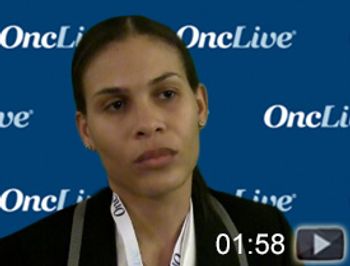
Diana P. English, MD, a gynecologic oncologist at Stanford Hospital and Clinics, discusses the development of the antibody drug conjugate (ADC) mirvetuximab soravtansine in ovarian cancer.

Peter Levonian, MS, senior genetic counselor, Stanford Medicine, discusses the potential risks of genetic testing in ovarian cancer.

The European Medicines Agency’s Committee for Medicinal Products for Human Use recommended to expand the approval of single-agent rucaparib as a maintenance therapy in adult patients with platinum-sensitive relapsed high-grade epithelial ovarian, fallopian tube, or primary peritoneal cancer who are in complete or partial response to platinum-based chemotherapy.
Since the introduction of platinum agents in ovarian cancer, it is reasonable to suggest there have been only limited changes in the basic paradigm of ovarian cancer management over the past several decades.
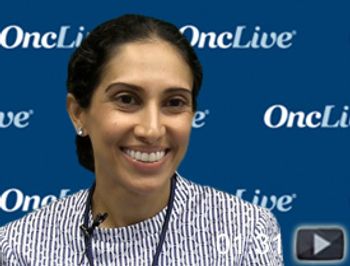
Vicky Makker, MD, medical oncologist, Memorial Sloan Kettering Cancer Center, discusses safety signals with the combination of lenvatinib (Lenvima) and pembrolizumab (Keytruda) in endometrial cancer.

Oliver Dorigo, MD, PhD, discusses the promise of immunotherapy in ovarian cancer.
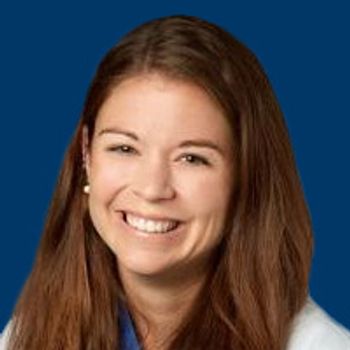
Elisabeth Diver, MD, discusses ongoing advances with PARP inhibitors in ovarian cancer.
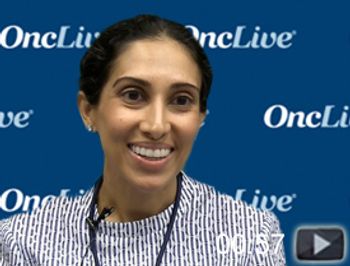
Vicky Makker, MD, medical oncologist, Memorial Sloan Kettering Cancer Center, discusses combination approaches garnering interest in endometrial cancer.
Trung Nguyen, DO, MBA, clinical assistant professor, Obstetrics and Gynecology, Gynecologic Oncology, Stanford Medicine, discusses treatment approaches for patients with advanced ovarian cancer.

Oliver Dorigo, MD, PhD, associate professor of Obstetrics and Gynecology, Stanford University Medical Center, Stanford Medicine, discusses the use of immunotherapy in the treatment of patients with ovarian cancer.
Danny Rischin, MD, director, Division of Cancer Medicine, head, Department of Medical Oncology, Peter MacCallum Cancer Centre, discusses the next steps with cemiplimab (Libtayo) in the treatment landscape of cervical cancer.
Results of the phase III CORAIL trial demonstrated that the marine-derived treatment lurbinectedin did not improve progression-free survival compared with pegylated liposomal doxorubicin or topotecan in patients with platinum-resistant ovarian cancer.

Kristen N. Ganjoo, MD, associate professor of medicine, Stanford University Medical Center, Stanford Medicine, discusses therapies for patients with uterine leiomyosarcomas.
Real-world incidences of nausea, thrombocytopenia, and fatigue were markedly lower in patients with platinum-sensitive, recurrent ovarian cancer receiving a starting 200-mg daily dose of niraparib versus those enrolled on the phase III ENGOT-OV6/NOVA trial.

In patients with platinum-sensitive recurrent ovarian cancer, the PARP inhibitor rucaparib as maintenance treatment improved progression-free survival versus placebo, despite the number of chemotherapy regimens.

Kristen N. Ganjoo, MD, associate professor of medicine, Stanford University Medical Center, Stanford Medicine, discusses the rarity and diagnosis of uterine sarcomas.
Ophira Ginsburg, MD, director of the High Risk/Cancer Genetics Program at NYU Langone's Perlmutter Cancer Center, discusses cervical cancer screening techniques.
Danny Rischin, MD, director, Division of Cancer Medicine, head, Department of Medical Oncology, Peter MacCallum Cancer Centre, discusses the use of cemiplimab (Libtayo) in patients with cervical cancer.

Matthew Powell, MD, associate professor, Obstetrics and Gynecology, Division of Gynecologic Oncology, Washington University School of Medicine, discusses tumor mutational burden (TMB) in ovarian cancer.
Advertisement
Advertisement
Trending on OncLive
1
The OncFive: Top Oncology Articles for the Week of 10/4/2026
2
FDA Approves Atezolizumab Plus Chemo for Stage III dMMR Colon Cancer
3
FDA Grants Breakthrough Device Designation to Natera’s Multi-Cancer Early Detection Assay
4
FDA Flashback: Hematologic Cancer Decisions and News From September 2026
5