

Gynecologic Oncology
Latest News
Advertisement
Latest Videos






























































Advertisement
More News
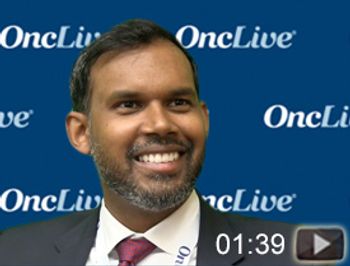
Arun S. Singh, MD, associate professor, Department of Medicine, Division of Hematology/Oncology, University of California, Los Angeles, discusses treatment for patients with uterine leiomyosarcoma.
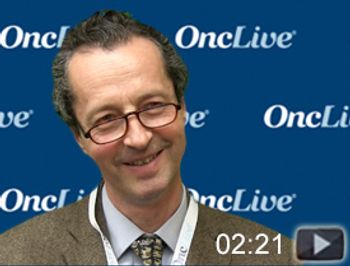
Gottfried E. Konecny, MD, associate professor of medicine, University of California, Los Angeles, discusses studies that demonstrate the value of PARP inhibitors in the treatment of patients with ovarian cancer.
Richard F. Riedel, MD, associate professor of medicine, Duke Cancer Institute, discusses the emerging role of immunotherapy in uterine sarcoma.
Matthew Powell, MD, discusses the promise of immunotherapy in ovarian cancer despite its challenges.
Robert L. Coleman, MD, FACOG, FACS, discusses the evolution of treatment for patients with ovarian cancer, the therapies with the most potential, and the importance of classification schemes in directing treatment in recurrent disease.
Angeles Alvarez Secord, MD, gynecologic cancers specialist, Duke Cancer Center, discusses the growing potential for personalized treatment in ovarian cancer.
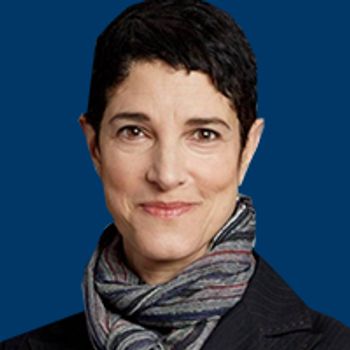
Ophira Ginsburg, MD, discusses cervical cancer prevention, screening, and elimination on a global scale.
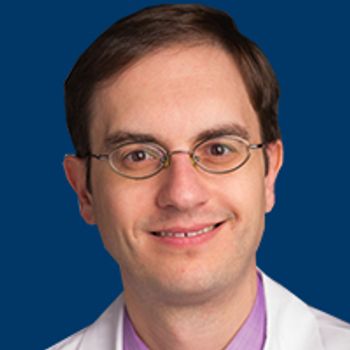
Panagiotis A. Konstantinopoulos, MD, PhD, discusses the findings of the TOPACIO/KEYNOTE-162 study and the future for PARP inhibitor combinations and immunotherapy overall in ovarian cancer.

Robert Coleman, MD, professor in the department of Gynecologic Oncology and Reproductive Medicine, The University of Texas MD Anderson Cancer Center, discusses the classification of patients with ovarian cancer.
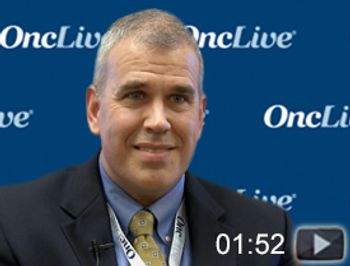
Richard F. Riedel, MD, associate professor of medicine, Duke Cancer Institute, discusses the treatment landscape of uterine sarcomas.
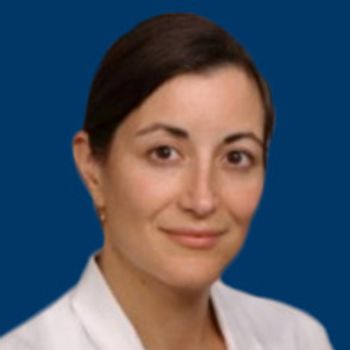
Angeles Alvarez Secord, MD, discusses recent updates in ovarian cancer, with an emphasis on the clinical significance of genetic testing.
Angeles Alvarez Secord, MD, gynecologic cancers specialist, Duke Cancer Center, discusses the management of patients with sarcoma.
Thomas Herzog, MD, professor of obstetrics and gynecology, deputy director, University of Cincinnati Cancer Institute, discusses novel therapies in ovarian cancer.
R. Wendel Naumann, MD, gynecologic oncologist, Levine Cancer Institute, Carolinas HealthCare System, discusses the use of neoadjuvant chemotherapy in patients with ovarian cancer.
Matthew Powell, MD, associate professor, Obstetrics and Gynecology, Division of Gynecologic Oncology, Washington University School of Medicine, discusses microsatellite instability and mismatch repair deficiency as potential biomarkers in endometrial cancer.

Robert Coleman, MD, professor in the department of Gynecologic Oncology and Reproductive Medicine, The University of Texas MD Anderson Cancer Center, discusses ongoing research with immunotherapy in ovarian cancer.
The US Preventive Services Task Force issued new guidelines recommending that women aged 30 to 65 years at average risk for cervical cancer can choose to receive a Pap smear alone every 3 years or screening with the high-risk human papillomavirus test alone or cotesting every 5 years.
Angeles Alvarez Secord, MD, gynecologic cancers specialist, Duke Cancer Center, discusses the use of biomarkers to guide treatment decisions in patients with ovarian cancer.
Thomas Herzog, MD, professor of obstetrics and gynecology, deputy director, University of Cincinnati Cancer Institute, discusses the optimal use of bevacizumab (Avastin) in patients with ovarian cancer.
Ursula A. Matulonis, MD, director, Gynecologic Oncology, Dana-Farber Cancer Institute, professor of medicine, Harvard Medical School, discusses the quality-of-life outcomes from the GOG-258 trial in patients with endometrial cancer.
Vicky Makker, MD, medical oncologist, Memorial Sloan Kettering Cancer Center, discusses the synergy between lenvatinib and pembrolizumab in the treatment of patients with endometrial cancer.

In combination with weekly paclitaxel, tumor treating fields, an antimitotic therapy that delivers continuous low-intensity electrical fields to the tumor region, has been found safe in platinum-resistant ovarian cancer.
Gottfried E. Konecny, MD, associate professor of medicine, University of California, Los Angeles, discusses response to PARP inhibitors in ovarian cancer.
Krishnansu Tewari, MD, associate professor, Division of Gynecologic Oncology, University of California, Irvine, discusses immunotherapeutic strategies in cervical cancer.
The FDA has granted a breakthrough therapy designation to the combination of lenvatinib (Lenvima) and pembrolizumab (Keytruda) for the treatment of patients with advanced and/or metastatic non–microsatellite instability high/proficient mismatch repair endometrial carcinoma who have progressed after ≥1 prior systemic therapy.
Advertisement
Advertisement
Trending on OncLive
1
The OncFive: Top Oncology Articles for the Week of 10/4/2026
2
FDA Approves Atezolizumab Plus Chemo for Stage III dMMR Colon Cancer
3
FDA Grants Breakthrough Device Designation to Natera’s Multi-Cancer Early Detection Assay
4
VIR-5500 Receives FDA Fast Track Designation in mCRPC
5