

Hematologic Oncology
Latest News
Advertisement
Latest Videos
















































Advertisement
More News

Monica Balzarotti, MD, discusses the current treatment landscape of DLBCL, including the recent FDA approval of selinexor for the treatment of adult patients with relapsed/refractory disease.

Shambavi Richard, MD, discusses the benefit of adding daratumumab to lenalidomide and dexamethasone in patients with newly diagnosed multiple myeloma.
Basiliximab proved to be an effective second-line treatment option for pediatric patients with steroid-refractory acute graft-versus-host disease that developed following haploidentical hematopoietic stem cell transplantation.

Chetasi Talati, MD, discusses early results from a multicenter chart review examining treatment patterns and outcomes of patients with newly diagnosed AML who received venetoclax/HMA combinations in the real-world setting and the next phase of the ongoing research initiative.
Joshua Brody, MD, discusses recent developments in DLBCL treatment, the role of selinexor, and the need for effective biomarkers of response in the space.

Ruxolitinib continued to elicit a significantly higher overall response rate compared with best available therapy at day 28 in patients with steroid-refractory acute graft-versus-host disease.
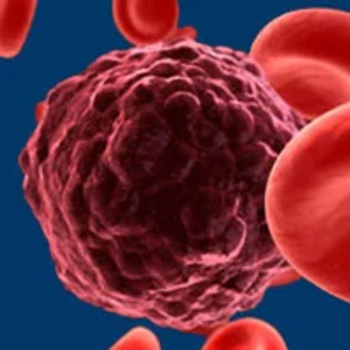
Blinatumomab monotherapy as consolidation therapy prior to allogeneic hematopoietic stem cell transplant resulted a significant improvement in event-free survival and a lower risk of recurrence in children with high-risk B-cell precursor–acute lymphoblastic leukemia.

Brian T. Hill, MD, PhD, discusses the challenges of managing heavily pretreated patients with diffuse large B-cell lymphoma.

The orally available ROCK2 selective inhibitor belumosudil continues to elicit clinically meaningful overall response rates in patients with chronic graft-versus-host disease (cGVHD) who have received ≥2 prior lines of systemic therapy

Kami J. Maddocks, MD, discusses emerging therapies in follicular lymphoma.

The FDA has approved oral azacitidine for the continued treatment of adult patients with acute myeloid leukemia who achieved first complete remission (CR) or CR with incomplete blood count recovery following intensive induction chemotherapy who are not able to complete intensive curative therapy.

Courtney DiNardo, MD, MSCE, discusses the FDA approval of oral azacitidine (CC-486) in acute myeloid leukemia (AML).

Venetoclax plus azacitidine led to a statistically significant prolongation of overall survival with a higher incidence of remission in treatment-naïve older patients with acute myeloid leukemia.
Biomarkers predictive of risk in hematopoietic stem cell transplantation–associated thrombotic microangiopathy have undergone a recent evolution, with several new markers under exploration and many efforts focused on making current markers more precise and accurate to strengthen diagnostic criteria.

Catherine Lai, MD, MPH, discusses the potential benefits of venetoclax in acute myeloid leukemia.

Rafael F. Duarte, MD, PhD, FRCP, presents 2 real-world clinical cases in which the investigational monoclonal antibody narsoplimab demonstrated clinical benefit in patients with hematopoietic stem cell transplantation-associated thrombotic microangiopathy.

Eleni Gavriilaki, MD, PhD, discusses the rationale for the lectin pathway as a therapeutic target in hematopoietic stem cell transplantation–associated thrombotic microangiopathy.

Joshua Richter, MD, discusses the utility of isatuximab in relapsed/refractory multiple myeloma.

Brian T. Hill, MD, PhD, sheds light on XPO1 as a target in diffuse large B-cell lymphoma, the emergence of selinexor in the treatment landscape, and exciting agents in the pipeline.

Sandy Wong, MD, discusses the ANDROMEDA trial, the need for further investigation of venetoclax, and research with anti-amyloid fibril drugs in light chain amyloidosis.

Meletios A. Dimopoulos, MD, discusses the goal of the phase 3 ASPEN trial in Waldenström macroglobulinemia.

Naval G. Daver, MD, discusses the tolerability of magrolimab plus azacitidine in patients with acute myeloid leukemia and myelodysplastic syndrome.

Srdan Verstovsek, MD, PhD, discusses the phase 2 MANIFEST study, which examined CPI-0610 as an “add-on” to ruxolitinib in patients with myelofibrosis.

Lori A. Leslie discusses several key studies evaluating emerging approaches in the relapsed/refractory follicular lymphoma paradigm.

Pashna N. Munshi, MD, discusses the CAR T-cell therapies that have emerged in the lymphoma space and highlights the next steps for research with these products.
Advertisement
Advertisement
Trending on OncLive
1
FDA Approves Zidesamtinib in Pretreated ROS1+ NSCLC
2
Ivonescimab Plus Chemotherapy Sustains OS Benefit Across Western and Asian Patients in Pretreated EGFR-Mutated NSCLC
3
NMPA Accepts Toripalimab Plus Chemotherapy Application for Expanded Stage II-III NSCLC Use
4
Dr Patel on the Unmet Need in EGFR+ Transformed Small Cell Lung Cancer
5