



Hematologic Oncology
Latest News

June 10th 2014
By Silas Inman
The frontline treatment of patients with Philadelphia chromosome–positive (Ph+) chronic myelogenous leukemia (CML) continues to be debated as imatinib (Gleevec) rapidly approaches the end of its patent protection and next-generation agents continue to show efficacy in clinical trials.
Advertisement
Latest Videos


















































Advertisement
More News

Having a robust armamentarium to treat childhood acute lymphoblastic leukemia (ALL) is a major triumph in oncology.

Although many patients with cancer now receive chemotherapy as outpatients, most cancer treatment centers do not extend this practice to patients with acute myeloid leukemia (AML) or advanced myelodysplastic syndromes (MDS) who are receiving initial intensive induction therapy.

Two recently published clinical studies demonstrated a strong association between higher levels of vitamin D and improved outcomes among patients with various cancers.
A phase III study exploring the chemotherapy regimen DHAP plus ofatumumab failed to meet its primary endpoint of prolongation in PFS when compared with DHAP plus rituximab for patients with relapsed or refractory DLBCL.
Over the course of only a few days, two drugs that will be commercialized by Bristol-Myers Squibb (BMS), nivolumab and elotuzumab, have each been granted breakthrough therapy designations by the FDA for the treatment of two different types of blood cancers.
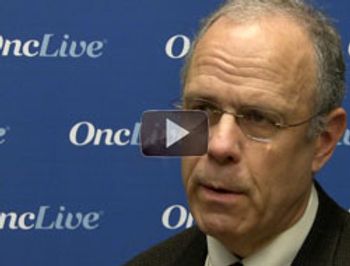
Mark R. Litzow, MD, a professor of Medicine in the Division of Hematology at the Mayo Clinic in Rochester, Minnesota, discusses novel immunologic therapies for the treatment of patients with acute lymphoblastic leukemia (ALL).

Joshua Richter, MD, hematologist/oncologist, multiple myeloma, John Theurer Cancer Center, discusses using the FDA-approved multiple myeloma drug pomalidomide to treat patients with sickle cell disease.

An interview with Renier J. Brentjens, MD, PhD, on new therapies for patients with acute and chronic leukemias, in particular novel immunotherapies such as chimeric antigen receptor T cells.
James R. Berenson, MD, discusses a phase I study presented at the 2013 ASH meeting that analyzed the use weekly carfilzomib for patients with R/R multiple myeloma.
For the past two decades, researchers have been exploring B-cell specific antigens in hopes of developing a new anticancer target that would mirror the success of the CD20-targeting rituximab (Rituxan). Now, strategies aimed at CD19 are proving particularly promising.
Anas Younes, MD, chief, Lymphoma Service, Memorial Sloan Kettering Cancer Center, discusses the future of treating lymphoid malignancies.

The FDA has approved subcutaneous omacetaxine mepesuccinate injection for home administration in patients with chronic or accelerated phase CML who are resistant or intolerant to treatment with TKIs.
Andre Goy, MD, MS, chairman, director, and chief of the Lymphoma Division at the John Theurer Cancer Center, discusses NCCN guidelines for the treatment of lymphomas.

At the 18th Annual International Congress on Hematologic Malignancies, Anas Younes, MD, sat down with Oncology & Biotech News to discuss trends in the management of hematologic malignances.
John F. Seymour, MBBS, FRACP, PhD, from the Department of Hematology at the Peter MacCallum Cancer Centre in East Melbourne, Australia, discusses the results of the PRIMA study, which evaluated the benefit of maintenance therapy with rituximab after induction of response with chemotherapy plus rituximab in comparison with no maintenance therapy in patients with advanced follicular lymphoma.
Renier J. Brentjens, MD, PhD, associate professor, chief, Cellular Therapeutics Center, Memorial Sloan Kettering Cancer Center, discusses the potential application of CAR-modified T cell technology.
The FDA has approved the anti-IL-6 chimeric monoclonal antibody siltuximab as a treatment for HIV- and HHV-8-negative patients with multicentric Castleman's disease.
Rami S. Komrokji, MD, clinical director, Hematologic Malignancies, Moffitt Cancer Center, discusses an analysis of pacritinib for the treatment of myelofibrosis.

The FDA has approved ofatumumab plus chlorambucil for previously untreated patients with chronic lymphocytic leukemia who are considered inappropriate for treatment with fludarabine therapy.
William G. Wierda, MD, PhD, professor, Department of Leukemia, Division of Cancer Medicine, The University of Texas MD Anderson Cancer Center, discusses treatment options for patients with CLL who harbor the 17p deletion.

Lymphoma expert Andre Goy, MD, provides insight into the rapidly changing treatment landscape for patients with mantle cell lymphoma.
Stefan Faderl, MD, chief, Leukemia Division, John Theurer Cancer Center, discusses combining and sequencing chemotherapy and FLT3 inhibitors for the treatment of patients with acute myeloid leukemia (AML).

Ari Melnick, MD, a professor of medicine at the Weill Cornell Medical College, discusses EZH2 and its potential as a target in diffuse large B-cell lymphoma.

Take a prognosis of three years, multiply it by 10, and what do you get? A staggering improvement in the survival of patients with chronic myeloid leukemia (CML), and a crucial steppingstone on the road to the targeted treatment of cancer.
Michele L. Donato, MD, medical director, Blood and Marrow Collection Facility, John Theurer Cancer Center, discusses advances in the prevention of graft-versus-host disease (GVHD).
Advertisement
Advertisement
Trending on OncLive
1
FDA Approves Zidesamtinib in Pretreated ROS1+ NSCLC
2
FDA Accepts NDA for Daraxonrasib in Previously Treated Metastatic Pancreatic Cancer
3
Dr Patel on the Unmet Need in EGFR+ Transformed Small Cell Lung Cancer
4
Dr Galsky on Systemic Therapy Advances in Muscle-Invasive Bladder Cancer
5