


Hematologic Oncology
Latest News

Advertisement
Latest Videos

























































Advertisement
More News
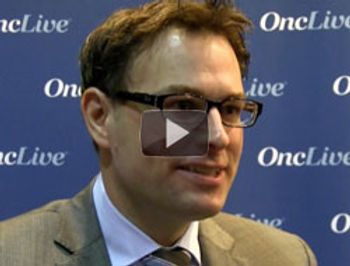
Valentin Goede, MD, from the University Hospital Cologne, discusses the efficacy findings from the stage 2 CLL11 study that examined obinutuzumab plus chlorambucil in patients with chronic lymphocytic leukemia with comorbidities.
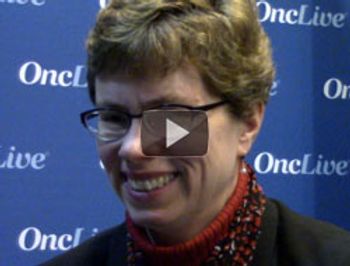
Jennifer Brown, MD, PhD, from the Dana-Farber Cancer Institute, discusses the development of the novel PI3K-delta inhibitor idelalisib as a treatment for patients with chronic lymphocytic leukemia.

John F. Seymour, MBBS, FRACP, PhD, discusses the efficacy of single-agent ABT-199 (GDC-0199), a novel Bcl-2 inhibitor, in high-risk relapsed or refractory chronic lymphocytic leukemia and small lymphocytic lymphoma.

To gain insight into the studies being presented at the ASH Annual Meeting, we interviewed Marcel R.M. van den Brink, MD, PhD, on abstracts being presented by faculty at Memorial Sloan-Kettering Cancer Center.
Marcel R.M. van den Brink, MD, PhD, Head, discusses a trial being presented at the 2013 ASH Annual Meeting, analyzing the addition of ibrutinib to R-CHOP in patients with non-Hodgkin's lymphoma (NHL).

During the past three decades, our treatment approach to lymphoma has been based on the underlying histological and clinical features of the disease.
Mark J. Levis, MD, PhD, Department of Oncology, Sidney Kimmel Comprehensive Cancer Center, Johns Hopkins University, discusses the difficulty of treating a patient with a FLT3-ITD mutation in acute myeloid leukemia (AML).

Immunotherapy can induce regressions of even advanced stage cancers, and many of these patients can have prolonged disease remissions.
Jae Park, MD, attending physician, Leukemia Service, Memorial Sloan-Kettering Memorial Hospital, discusses vemurafenib in hairy cell leukemia.

Vincent T. DeVita, Jr, MD, Lymphoma: Giant of Cancer Care, Yale Cancer Center, discusses the use of chemotherapy for patients with Hodgkin's lymphoma.

Infinity Pharmaceuticals of Cambridge, Massachusetts, began its efforts to produce innovative cancer treatments 12 years ago.

Headlines from the June meeting of the American Society of Clinical Oncology (ASCO) in Chicago announced to the general public what oncologists and hematologists have known for more than two years: sporadic shortages of cancer drugs are forcing suboptimal treatment plans for patients, and government efforts have not filled the void.

The FDA has approved obinutuzumab plus chlorambucil as a first-line treatment for patients with chronic lymphocytic leukemia, based on clinical trial data demonstrating that the combination more than doubled median PFS over the chemotherapy agent alone.

Marketing and commercial distribution of ponatinib has been temporarily suspended, following an ongoing FDA investigation that revealed an increased frequency of arterial thrombosis and severe narrowing of the blood vessels.











Advertisement
Advertisement
Trending on OncLive
1
FDA Approves Zidesamtinib in Pretreated ROS1+ NSCLC
2
FDA Accepts NDA for Daraxonrasib in Previously Treated Metastatic Pancreatic Cancer
3
Dr Patel on the Unmet Need in EGFR+ Transformed Small Cell Lung Cancer
4
Dr Galsky on Systemic Therapy Advances in Muscle-Invasive Bladder Cancer
5