

HER2+ Breast Cancer
Latest News
Advertisement
Latest Videos


































































Advertisement
More News
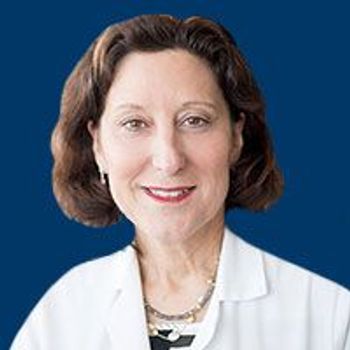
Findings from recent analyses have kindled hope that novel agents with manageable toxicity profiles may begin to bridge the gap for patients with HER2-positive metastatic breast cancer.
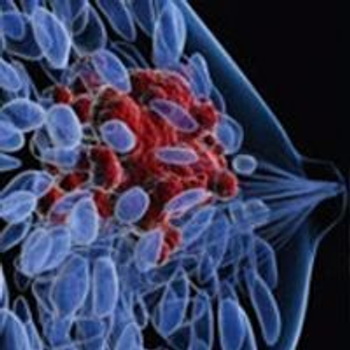
Experts highlight the risk factors, comorbidities, diagnosis, economic burden, and treatments for brain metastasis in metastatic breast cancer based on data presented at the 2020 San Antonio Breast Cancer Symposium.
Debu Tripathy, MD, discusses some of the unanswered clinical questions that remain for patients with HER2-positive disease and some strategies for personalizing treatment in the neoadjuvant and adjuvant settings.

With the identification of numerous molecular abnormalities that can affect treatment and the course of disease in patients with breast cancer, it’s become understood that genetic profiling can define clinical trial eligibility, the presence or absence of aberrations help to drive treatment decisions, and variants can be predictive for response or resistance.
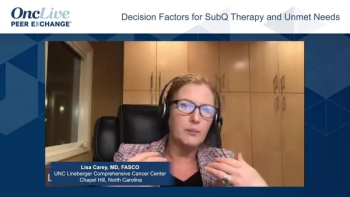
Decision Factors for SubQ Therapy and Unmet Needs
ByJoyce A. O'Shaughnessy, MD, Baylor Charles A. Sammons Cancer Center,Lisa Carey, MD, FASCO, UNC Lineberger Comprehensive Cancer Center,Vijayakrishna Gadi, MD, University of Illinois College of Medicine,William Gradishar, MD, Northwestern Medicine,Claudine Isaacs, MD, Lombardi Comprehensive Cancer Center
The KATHERINE, FeDeriCa, DESTINY-Breast01, and HER2CLIMB trials have changed practice for patients with HER2-positive breast cancer for the better.
James R. Waisman, MD, shares his process for matching patients with the right treatment in the metastatic setting and areas for future exploration.

Mei Wei, MD, discusses the benefits of subcutaneous administration of pertuzumab and trastuzumab in patients with HER2-positive early breast cancer.

The practice-changing treatment regimens that were evaluated in the pivotal KATHERINE, HER2CLIMB, and DESTINY-Breast01 trials in women with HER2-positive breast cancer are pushing the needle forward in making this breast cancer subtype a chronic disease.
Phase 3 FeDeriCa and PHranceSCa Trial Overviews
ByJoyce A. O'Shaughnessy, MD, Baylor Charles A. Sammons Cancer Center,Lisa Carey, MD, FASCO, UNC Lineberger Comprehensive Cancer Center,Vijayakrishna Gadi, MD, University of Illinois College of Medicine,William Gradishar, MD, Northwestern Medicine,Claudine Isaacs, MD, Lombardi Comprehensive Cancer Center
Novel Agents for Late-Stage HER2+ MBC
ByJoyce A. O'Shaughnessy, MD, Baylor Charles A. Sammons Cancer Center,Lisa Carey, MD, FASCO, UNC Lineberger Comprehensive Cancer Center,Vijayakrishna Gadi, MD, University of Illinois College of Medicine,William Gradishar, MD, Northwestern Medicine,Claudine Isaacs, MD, Lombardi Comprehensive Cancer Center
Practical Advice for Toxicity Management in HER2+ MBC
ByJoyce A. O'Shaughnessy, MD, Baylor Charles A. Sammons Cancer Center,Lisa Carey, MD, FASCO, UNC Lineberger Comprehensive Cancer Center,Vijayakrishna Gadi, MD, University of Illinois College of Medicine,William Gradishar, MD, Northwestern Medicine,Claudine Isaacs, MD, Lombardi Comprehensive Cancer Center
Brain Metastases Therapy in Second-Line HER2+ MBC
ByJoyce A. O'Shaughnessy, MD, Baylor Charles A. Sammons Cancer Center,Lisa Carey, MD, FASCO, UNC Lineberger Comprehensive Cancer Center,Vijayakrishna Gadi, MD, University of Illinois College of Medicine,William Gradishar, MD, Northwestern Medicine,Claudine Isaacs, MD, Lombardi Comprehensive Cancer Center
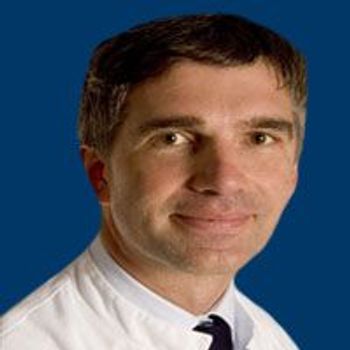
February 12, 2021 - The European Commission has granted marketing authorization to tucatinib for use in combination with trastuzumab and capecitabine in the treatment of adult patients with HER2-positive, locally advanced or metastatic breast cancer who have previously received at least 2 HER2-targeted regimens
Sequencing Therapy in R/R HER2+ MBC
ByJoyce A. O'Shaughnessy, MD, Baylor Charles A. Sammons Cancer Center,Lisa Carey, MD, FASCO, UNC Lineberger Comprehensive Cancer Center,Vijayakrishna Gadi, MD, University of Illinois College of Medicine,William Gradishar, MD, Northwestern Medicine,Claudine Isaacs, MD, Lombardi Comprehensive Cancer Center
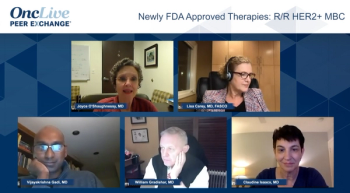
Newly FDA Approved Therapies: R/R HER2+ MBC
ByJoyce A. O'Shaughnessy, MD, Baylor Charles A. Sammons Cancer Center,Lisa Carey, MD, FASCO, UNC Lineberger Comprehensive Cancer Center,Vijayakrishna Gadi, MD, University of Illinois College of Medicine,William Gradishar, MD, Northwestern Medicine,Claudine Isaacs, MD, Lombardi Comprehensive Cancer Center
Dennis J. Slamon, MD, PhD, discusses how his passion for medicine stemmed from a high school biology class, the struggle to develop trastuzumab as a viable drug in HER2-positive breast cancer, and the movie about his research that he didn’t want to see made.
Moving Metastatic Therapy to Early Stage Setting
ByJoyce A. O'Shaughnessy, MD, Baylor Charles A. Sammons Cancer Center,Lisa Carey, MD, FASCO, UNC Lineberger Comprehensive Cancer Center,Vijayakrishna Gadi, MD, University of Illinois College of Medicine,William Gradishar, MD, Northwestern Medicine,Claudine Isaacs, MD, Lombardi Comprehensive Cancer Center
Hormone Therapy in HER2+ Breast Cancer
ByJoyce A. O'Shaughnessy, MD, Baylor Charles A. Sammons Cancer Center,Lisa Carey, MD, FASCO, UNC Lineberger Comprehensive Cancer Center,Vijayakrishna Gadi, MD, University of Illinois College of Medicine,William Gradishar, MD, Northwestern Medicine,Claudine Isaacs, MD, Lombardi Comprehensive Cancer Center
Jane L. Meisel, MD, discusses sequencing considerations in the first- and second-line settings of HER2-positive breast cancer.
De-Escalation of Adjuvant Anti-HER2 Therapy and Chemo
ByJoyce A. O'Shaughnessy, MD, Baylor Charles A. Sammons Cancer Center,Lisa Carey, MD, FASCO, UNC Lineberger Comprehensive Cancer Center,Vijayakrishna Gadi, MD, University of Illinois College of Medicine,William Gradishar, MD, Northwestern Medicine,Claudine Isaacs, MD, Lombardi Comprehensive Cancer Center
Adjuvant Systemic Therapy Data Updates
ByJoyce A. O'Shaughnessy, MD, Baylor Charles A. Sammons Cancer Center,Lisa Carey, MD, FASCO, UNC Lineberger Comprehensive Cancer Center,Vijayakrishna Gadi, MD, University of Illinois College of Medicine,William Gradishar, MD, Northwestern Medicine,Claudine Isaacs, MD, Lombardi Comprehensive Cancer Center
Advertisement
Advertisement
Trending on OncLive
1
FDA Approves Tucatinib Plus Trastuzumab/Pertuzumab as First-Line Maintenance in Advanced HER2+ Breast Cancer
2
VIR-5500 Receives FDA Fast Track Designation in mCRPC
3
Iberdomide Plus Daratumumab/Dexamethasone Yields Significant PFS Benefit in R/R Myeloma
4
FDA Approves Atezolizumab Plus Chemo for Stage III dMMR Colon Cancer
5