




Lung Cancer
Latest News
Advertisement
Latest Videos
































































Advertisement
More News
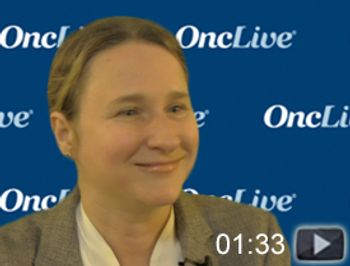
Mary J. Fidler, MD, discusses the utility of dacomitinib (Vizimpro) in patients with EGFR-mutant non–small cell lung cancer.

Ashish Saxena, MD, PhD, discusses the treatment landscape of ALK-positive non–small cell lung cancer.
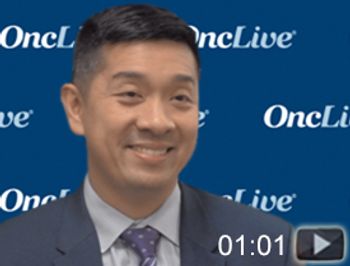
Alexander Drilon, MD, discusses what factors he considers when selecting treatment for patients with ALK fusion-positive non–small cell lung cancer.

Investigators are attempting to advance the late-stage non–small cell lung cancer treatment paradigm by combining an emerging antimitotic modality with standard-of-care therapies in the phase III LUNAR trial.

Kaushal Parikh, MD, MBBS, discusses the KRAS inhibitors AMG 510 and MRTX849 in lung cancer.

Nabil P. Rizk, MD, MS, MPH, discusses criteria for surgical resection in lung cancer.

Kathryn E. Hudson, MD, discusses the utility of liquid biopsies in metastatic lung cancer.

We traveled to Chicago, Illinois, for a State of the Science Summit™ on Lung Cancer, which featured insights from the University of Chicago faculty.
The FDA has approved atezolizumab in combination with carboplatin and nab-paclitaxel for the first-line treatment of adult patients with metastatic nonsquamous non–small cell lung cancer who do not harbor EGFR or ALK molecular aberrations.

The proliferation of targeted therapies in non–small cell lung cancer has helped improve overall survival for patients with metastatic disease and illustrates the importance of molecular testing,
Innovative clinical trials designed to exploit the explosion of data on the drivers of cancer are demonstrating value as tools to explore potential signals of efficacy across tumor types, according to oncology experts. These studies have become a feature of the drug discovery landscape in oncology and are likely to remain part of the fabric of clinical research in the genomic era.
The FDA has granted a priority review designation to a supplemental Biologics License Application for durvalumab for the frontline treatment of patients with extensive-stage small cell lung cancer.

Liquid biopsy technologies have made substantial headway in recent years, sparking booming commercial interest in the development of potential clinical applications.
Benjamin P. Levy, MD, discusses first-line treatment for patients with nondriver non–small cell lung cancer.
Mary J. Fidler, MD, discusses how recent research has impacted the EGFR-mutant non–small cell lung cancer landscape.

Roman Perez-Soler, MD, discusses the utility of liquid biopsy in lung cancer.

China’s National Medical Products Administration has approved the combination of pembrolizumab plus carboplatin and paclitaxel for the first-line treatment of patients with metastatic squamous non–small cell lung cancer.

Immunotherapy prescriptions for patients with metastatic bladder cancer declined rapidly after the FDA altered the indications of 2 drugs, suggesting that oncologists can keep pace with changes associated with the agency’s accelerated approval program.
Alexander Drilon, MD, discusses performing comprehensive sequencing in lung cancer.

Treatment with brigatinib demonstrated a 57% reduction in the risk of disease progression or death compared with crizotinib in patients with advanced ALK-positive non–small cell lung cancer who had not received a prior ALK inhibitor.

Jamie E. Chaft, MD, explains how the PACIFIC trial has impacted the treatment of patients with stage III unresectable non–small cell lung cancer and the research being done to move immunotherapy into the neoadjuvant setting.

Nisha A. Mohindra, MD, detailed current treatment strategies and some of the next-generation inhibitors that could shift sequencing approaches in ALK-positive and ROS1-positive non–small cell lung cancer.
Mary J. Fidler, MD, discusses overall survival data of the phase III FLAURA trial looking at frontline osimertinib in EGFR-mutant non–small cell lung cancer.
Everett E. Vokes, MD, discusses remaining questions in stage III non–small cell lung cancer following the PACIFIC results.
Allison Campbell, MD, PhD, discusses the synergy between immune checkpoint inhibitors and radiation therapy and the challenges facing ongoing clinical development.
Advertisement
Advertisement
Trending on OncLive
1
Five Under 5: Top Oncology Videos for the Week of 10/5/2026
2
Guardant360 CDx Receives European Approval as Companion Diagnostic for Camizestrant in ESR1-Mutated Advanced Breast Cancer
3
GI Cancer Monthly Rewind: Key News and Expert Insights You May Have Missed in September 2026
4
The OncFive: Top Oncology Articles for the Week of 10/4/2026
5