



Lung Cancer
Latest News
Advertisement
Latest Videos
































































Advertisement
More News
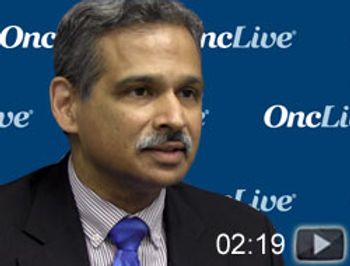
Shirish Gadgeel, MD, medical oncologist, leader of the Thoracic Oncology Multidisciplinary Team at Karmanos Cancer Institute, Wayne State University, discusses the KEYNOTE-021 study, which is examining the combination of pembrolizumab (Keytruda) and chemotherapy as a potential treatment for patients with non–small cell lung cancer.
In patients with EGFR-mutant non–small cell lung cancer, the incidence of leptomeningeal metastases is found to be common; moreover, the optimal treatment for this occurrence was determined to be tyrosine kinase inhibitors.
Paul Baas, MD, professor, Department of Thoracic Oncology, Netherlands Cancer Institute, discusses the future of treatment in mesothelioma.
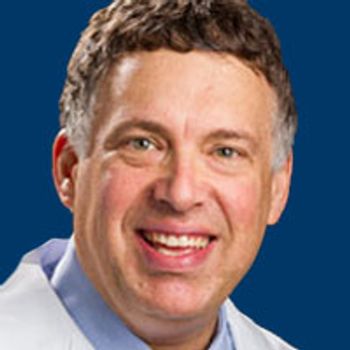
Biomarkers, such as immune cell PD-L1 expression, mutational burden, and immune system activation should be investigated further to clarify the mechanisms behind response and nonresponse to immunotherapy in patients with lung cancer.

Paul A. Bunn Jr, MD, discusses the meaning of the CheckMate-026 results with frontline nivolumab in NSCLC and issues with the trial's primary endpoint of progression-free survival.
Biomarker-driven trials that include multiple substudies represent a new approach for investigating which patients with lung cancer are more likely to respond to different targeted therapies and are helping to set the pace throughout the oncology field.
The past few years have seen rapid evolution in the treatment and handling of advanced non–small cell lung cancer, prompting questions on how to optimize immunotherapies and targeted agents as well as incorporate biomarker testing.
The optimal use of emerging assays that characterize molecular abnormalities from plasma in late-stage non–small cell lung cancer will be to augment tissue biopsies at initial diagnosis and to evaluate patients for second- and third-line therapies.

The combination of selumetinib and docetaxel failed to improve survival compared with docetaxel alone as a second-line treatment for patients with KRAS-mutant locally advanced or metastatic non–small cell lung cancer.
Paul A. Bunn Jr, MD, discussed how combining immunotherapy with chemotherapy, molecular therapy, or anti-angiogenic therapy has shown promising results in recent randomized trials of patients with lung cancer, although the combinations have yet to demonstrate clear superiority.

The value of PD-L1 expression when using checkpoint inhibitors in non–small cell lung cancer is underscored by the just-announced disappointing progression-free survival findings from the phase III CheckMate-026 study of frontline nivolumab (Opdivo) versus physician's choice of combination chemotherapy.
Howard L. (Jack) West, MD, medical oncologist, director, Thoracic Oncology Program, Swedish Cancer Institute, discusses recent advancements for patients with T790M-mutant non–small cell lung cancer.
Roy S. Herbst, MD, PhD, Ensign Professor of Medicine (Medical Oncology), professor of Pharmacology, chief of Medical Oncology, Yale Cancer Center and Smilow Cancer Hospital, associate director for Translational Research, Disease Alligned Research Team Leader, Thoracic Oncology Program, Yale Cancer Center, discusses the next generation of agents coming down the pipeline in non–small cell lung cancer.
David R. Gandara, MD, director, Thoracic Oncology Program, professor, senior advisor to director, UC Davis Comprehensive Cancer Center, UC Davis Health System, discusses the most recent—and significant—advancements in the field of lung cancer.

ROS1 and TRK are two emerging targets that have significant therapeutic promise for patients with non–small cell lung cancer, although they are not commonly considered while doing mutation testing.

Tony Mok, MD, discussed translational advances on the horizon in non-small cell lung cancer during a presentation at the 2016 International Lung Cancer Congress.
Paul A. Bunn Jr, MD, Distinguished Professor, Division of Medical Oncology/University of Colorado, James Dudley Chair in Lung Cancer Research, University of Colorado Denver, 2014 Giant of Cancer Care in Lung Cancer, discusses the phase III results from CheckMate-026, which explored nivolumab (Opdivo) monotherapy in treatment-naïve patients with advanced non–small cell lung cancer.
Tony Mok, MD, professor of Medicine, Department of Clinical Oncology, Chinese University of Hong Kong, Prince of Wales Hospital, Hong Kong, discusses breakthrough therapies and ongoing trials for patients with ALK-positive non–small cell lung cancer.
Monotherapy with nivolumab failed to improve progression-free survival compared with physician's choice of combination chemotherapy for patients with PD-L1–positive non–small cell lung cancer.
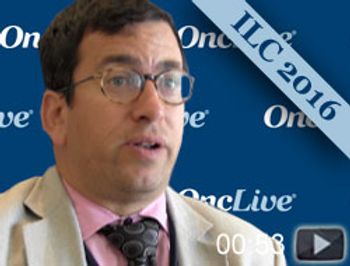
Edward B Garon, MD, director, Thoracic Oncology, Jonnson Comprehensive Cancer Center, UCLA, discusses the evolution of immunotherapy for the treatment of patients with non–small cell lung cancer.

Fred R. Hirsch, MD, PhD, professor of Medicine, University of Colorado Denver, CEO, the International Association for the Study of Lung Cancer, discusses the importance of molecular testing for patients with lung cancer.
New classes of immunotherapies emerging in lung cancer are building on previous success with PD-1/PD-L1 inhibitors.
The European Commission has approved pembrolizumab (Keytruda) as a treatment for patients with locally advanced or metastatic PD-L1–positive non–small cell lung cancer following at least 1 chemotherapy regimen.
Advertisement
Advertisement
Trending on OncLive
1
FDA Approves Tucatinib Plus Trastuzumab/Pertuzumab as First-Line Maintenance in Advanced HER2+ Breast Cancer
2
Iberdomide Plus Daratumumab/Dexamethasone Yields Significant PFS Benefit in R/R Myeloma
3
FDA Approves Atezolizumab Plus Chemo for Stage III dMMR Colon Cancer
4
VIR-5500 Receives FDA Fast Track Designation in mCRPC
5