
Lung Cancer
Latest News
Advertisement
Latest Videos






























































Advertisement
More News
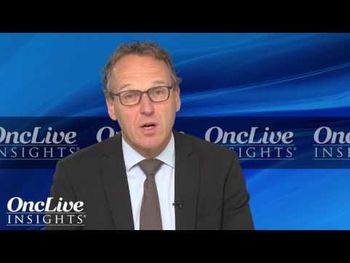
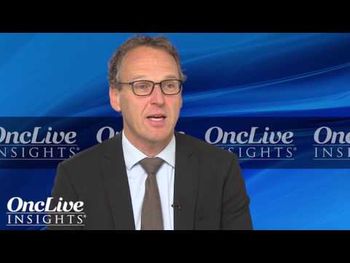

Patrick M. Forde, MBBCh, assistant professor of oncology, Johns Hopkins Hospital, discusses the CheckMate-026 study, which demonstrated that first-line therapy with nivolumab failed to improve progression-free survival (PFS) in PD-L1–positive non-small cell lung cancer (NSCLC) compared with standard chemotherapy.

Alice T. Shaw, MD, PhD, thoracic oncologist at the Massachusetts General Hospital Cancer Center, discusses ceritinib in newly diagnosed patients with ALK-positive non-small cell lung cancer (NSCLC) and brain metastases.

David L. Rimm, MD, PhD, professor of pathology and of medicine, director of pathology tissue services, director of translational pathology, Yale Cancer Center, discusses the continued role for PD-L1 testing to predict response with checkpoint inhibitors in non­–small cell lung cancer (NSCLC).

Malcolm McAvoy DeCamp, Jr, MD, chief of Thoracic Surgery in the Department of Surgery, Northwestern University Feinberg School of Medicine, discusses different platforms of surgical management in the treatment of patients with lung cancer.




The FDA has has granted a priority review to a new drug application for brigatinib for patients with metastatic ALK-positive non–small cell lung cancer who are resistant to prior crizotinib.


Although nivolumab has demonstrated a clear survival advantage compared with chemotherapy in patients with progressive non–small cell lung cancer who express PD-L1 in their tumor cells, the same cannot be said for those who are PD-L1–negative.

Joel Neal, MD, PhD, assistant professor of Medicine (Oncology), Stanford University Medical Center, discusses what immunotherapy combinations oncologists are currently using in the treatment of patients with lung cancer.
Advertisement
Advertisement
Trending on OncLive
1
FDA Approves Tucatinib Plus Trastuzumab/Pertuzumab as First-Line Maintenance in Advanced HER2+ Breast Cancer
2
Iberdomide Plus Daratumumab/Dexamethasone Yields Significant PFS Benefit in R/R Myeloma
3
FDA Approves Atezolizumab Plus Chemo for Stage III dMMR Colon Cancer
4
VIR-5500 Receives FDA Fast Track Designation in mCRPC
5