
Lung Cancer
Latest News
Advertisement
Latest Videos































































Advertisement
More News
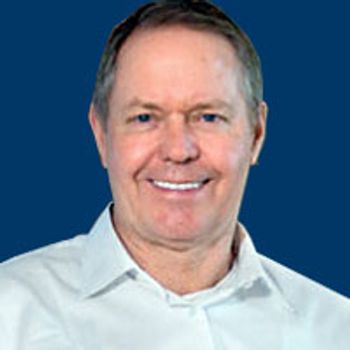
The FDA has granted a priority review to a supplemental biologics license application for pembrolizumab in combination with pemetrexed plus carboplatin as a treatment for patients with metastatic or advanced non-squamous non–small cell lung cancer, regardless of PD-L1 expression and without EGFR or ALK mutations.
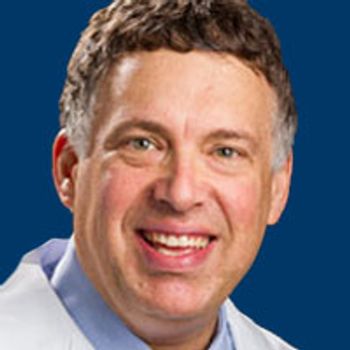
Roy Herbst, MD, PhD, discusses the next steps with pembrolizumab in NSCLC, PD-L1 testing, and managing increased toxicities with combination regimens.
Scott J. Swanson, MD, co-director of Minimally Invasive Surgery and chief surgical officer at Brigham and Women’s Hospital, professor of Surgery at Harvard Medical School, discusses surgical choices for patients with multifocal lung cancer.
Raphael Bueno, MD, chief, Division of Thoracic Surgery co-director, Brigham and Women’s Lung Center, vice chairman of Surgery for Cancer and Translational Research, professor at Harvard Medical School, discusses gene expression signatures for squamous cell lung carcinoma.
Farhad Kosari, PhD, assistant professor of Biochemistry and Molecular Biology, discusses anti-tumor immunity as a key determinant for small-cell lung cancer (SCLC) survivorship.
Raffit Hassan, MD, head of Thoracic and Solid Tumor Immunotherapy Section at the National Cancer Institute Center for Cancer Research discusses immunotherapy in malignant pleural mesothelioma.
Roy S. Herbst, MD, PhD, professor of Medicine, chief of Medical Oncology, Yale Cancer Center and Smilow Cancer Hospital, discusses the impact that immunotherapy has had on the frontline treatment of patients with lung cancer.
Paul A. Bunn, Jr, MD, professor of Medicine in Medical Oncology and head of the Division of Medical Oncology at the University of Colorado, discusses the current role of precision medicine in lung cancer.
Nicolas Girard, MD, professor of Respiratory Medicine and Thoracic Oncology at the Claude Bernard University in Lyon, France, and senior attending physician in the Thoracic Oncology Service of the Hospices Civils de Lyon, discusses the optimal methods to maximize the outcomes of crizitonib (Xalkori) when used as a treatment for patients with non-small cell lung cancer (NSCLC).
Hatim Husain, MD, assistant professor of Hematology-Oncology at The University of California San Diego Moores Cancer Center, discusses his study on monitoring the emergence of EGFR T790M ctDNA in urine from EGFR-mutated NSCLC.
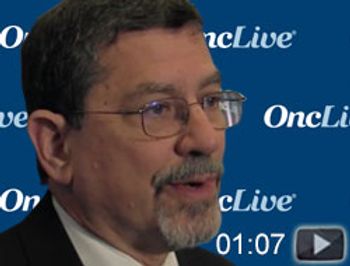
David Carbone, MD, PhD, director of the James Thoracic Center, and professor of Medicine at The Ohio State University Comprehensive Cancer Center, discusses the effectiveness of different therapies to treat patients with lung cancer.
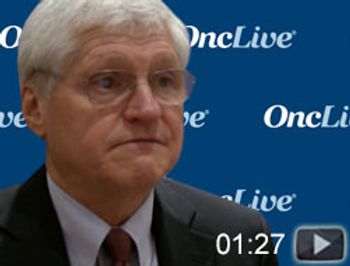
Mark G. Kris, MD, a medical oncologist at Memorial Sloan Kettering Cancer Center, discusses what the future holds for the development of immunotherapy and targeted therapy in the treatment of patients with lung cancer.
Plasma- and urine-based assays designed to detect actionable mutations in patients with non–small cell lung cancer are changing the face of treatment for these patients.
Molecular testing is done for patients with non–small cell lung cancer to determine what genetic abnormalities are present. If a common-enough mutation is detected—such as EGFR or ALK—then patients are able to receive a targeted agent matched to that driver.
Advertisement
Advertisement
Trending on OncLive
1
FDA Approves Tucatinib Plus Trastuzumab/Pertuzumab as First-Line Maintenance in Advanced HER2+ Breast Cancer
2
Iberdomide Plus Daratumumab/Dexamethasone Yields Significant PFS Benefit in R/R Myeloma
3
FDA Approves Atezolizumab Plus Chemo for Stage III dMMR Colon Cancer
4
VIR-5500 Receives FDA Fast Track Designation in mCRPC
5