



Lung Cancer
Latest News
Advertisement
Latest Videos






























































Advertisement
More News

John Haanen, MD, PhD, discusses why the best combination regimens and the ideal patient population for immunotherapy treatments in lung cancer are still largely unknown.
David P. Carbone, MD, PhD, shares insight on the CheckMate-032 and KEYNOTE-028 trials and others that are exploring immunotherapy in patients with small cell lung cancer.
After a decade of advances in the diagnosis and treatment of patients with adenocarcinoma non-small cell lung cancer, the prospect for further progress remains bright.

Clovis has stopped clinical development of rociletinib, its once promising EGFR inhibitor for the treatment of patients with EGFR T790M–mutated non–small cell lung cancer.

The Committee for Medicinal Products for Human Use has recommended the first-line approval of bevacizumab (Avastin) in combination with erlotinib (Tarceva) for patients with advanced or metastatic EGFR-mutant non–small cell lung cancer.

Everolimus (Afinitor) has received a positive recommendation from the EMA’s Committee for Medicinal Products for Human Use as a treatment for patients with progressive, unresectable or metastatic, well-differentiated nonfunctional gastrointestinal or lung neuroendocrine tumors.

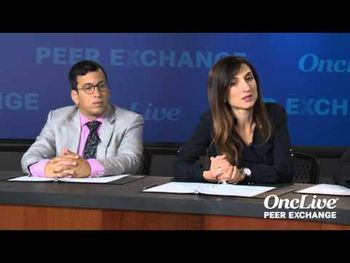

Treatment options for patients with squamous non–small cell lung cancer are expanding rapidly yet the field is still lagging in targeted therapies and curative strategies
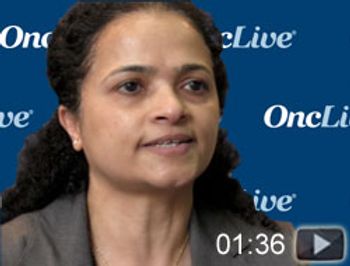
Sangeetha Palakurthi, PhD, head of the Cancer Biology and Pharmacology Group at the Belfer Center for Applied Cancer Science, Dana-Farber Cancer Institute, discusses a study that utilized non–small cell lung cancer (NSCLC) patient-derived xenografts from patients on osimertinib (AZD9291) clinical trials to further refine therapeutic strategies.

Fred R. Hirsch, MD, PhD, professor of medicine and pathology, University of Colorado Cancer Center, CEO, International Association for the Study of Lung Cancer (IASLC), discusses necitumumab for first-line treatment of advanced squamous non-small cell lung cancer (NSCLC).

Three currently available assays for PD-L1 expression exhibited a high degree of correlation in a comparative study involving archived lung cancer tissue.

Treatment with the novel multikinase inhibitor entrectinib achieved objective responses in 79% of patients with solid tumors associated with NTRK, ROS-1, or ALK rearrangements.
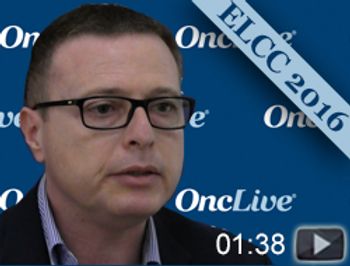
Nicola Normanno, MD, chief of the Cell Biology and Biotherapy Unit, INT-Fondazione Pascale, Naples, Italy, discusses the benefit of plasma genotyping to predict response to EGFR-targeted therapy in patients with non-small cell lung cancer (NSCLC).
Advertisement
Advertisement
Trending on OncLive
1
FDA Approves Tucatinib Plus Trastuzumab/Pertuzumab as First-Line Maintenance in Advanced HER2+ Breast Cancer
2
Iberdomide Plus Daratumumab/Dexamethasone Yields Significant PFS Benefit in R/R Myeloma
3
FDA Approves Atezolizumab Plus Chemo for Stage III dMMR Colon Cancer
4
VIR-5500 Receives FDA Fast Track Designation in mCRPC
5