




Lung Cancer
Latest News
Advertisement
Latest Videos




































































Advertisement
More News

The FDA has approved a non-alcohol formulation of docetaxel as a treatment for patients with breast cancer, non-small cell lung cancer, prostate cancer, gastric adenocarcinoma, and head and neck cancer.


The FDA has granted a breakthrough therapy designation to the third-generation EGFR TKI BI-1482694 as a potential treatment for patients with EGFR T790M-positive non–small cell lung cancer.

Frontline treatment with afatinib reduced the risk of progression or death by 27% compared with gefitinib for patients with EGFR-mutant non–small cell lung cancer.

Treatment with pembrolizumab reduced the risk of death by 29% compared with docetaxel for patients with PD-L1-positive non–small cell lung cancer.


The FDA has extended the review period for rociletinib in patients with EGFR T790M-positive non–small cell lung cancer by 3 months, to allow ample time to review additional data.

The FDA has granted an accelerated approval to alectinib as a treatment for patients with metastatic ALK-positive non–small cell lung cancer following progression on crizotinib.

The FDA has granted a priority review to crizotinib as a treatment for patients with ROS1-positive metastatic non–small cell lung cancer.
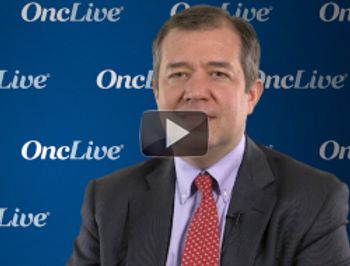
Gregory Riely, MD Medical Oncologist, Vice Chair, Clinical Trials Office, Department of Medicine, Memorial Sloan Kettering, discusses the benefits and challenges of using next-generation sequencing to identify mutations in lung cancer.

As the class of agents targeting the PD-1/PD-L1 pathway expands in non–small cell lung cancer, so does the potential population of patients who would be candidates for the groundbreaking immunotherapy.

Suresh Ramalingam, MD, discusses the evolving role of checkpoint inhibitors in lung cancer and what challenges still remain.

Naiyer A. Rizvi, MD, discusses results of a study looking at the combination of the anti-PD-L1 immune checkpoint inhibitor durvalumab (MEDI4736) with the anti–CTLA-4 monoclonal antibody tremelimumab in patients with advanced non–small cell lung cancer.
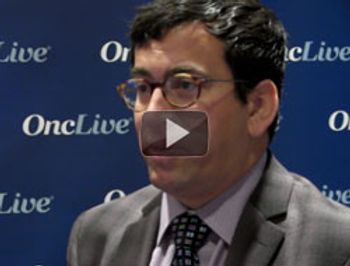
dward Garon, MD, assistant professor of Medicine, Department of Medicine, Division of Hematology/Oncology, Geffen School of Medicine at University of California, Los Angeles, discusses incorporating immunotherapies into the treatment of patients with lung cancer.

The efforts of the Kentucky LEADS Collaborative offer a unique opportunity to change the face of lung cancer in Kentucky by harnessing new lung cancer care and control strategies.
The FDA has approved necitumumab in combination with gemcitabine and cisplatin for the first-line treatment of patients with locally advanced or metastatic squamous non–small cell lung cancer.

The FDA has requested additional clinical trial data to support a new drug application for rociletinib as a potential therapy for pretreated patients with EGFR T790M mutation-positive NSCLC.
The FDA has granted an accelerated approval to osimertinib for patients with advanced EGFR T790M mutation positive non–small cell lung cancer following prior therapy on a prior EGFR TKI.
Thomas J. Lynch, MD, CEO, chairman, Massachusetts General Hospital Physicians Organization, discusses targeting EGFR mutation subtypes as a frontline treatment for lung cancer.
Advertisement
Advertisement
Trending on OncLive
1
FDA Approves Tucatinib Plus Trastuzumab/Pertuzumab as First-Line Maintenance in Advanced HER2+ Breast Cancer
2
Iberdomide Plus Daratumumab/Dexamethasone Yields Significant PFS Benefit in R/R Myeloma
3
FDA Approves Atezolizumab Plus Chemo for Stage III dMMR Colon Cancer
4
VIR-5500 Receives FDA Fast Track Designation in mCRPC
5