



Lung Cancer
Latest News
Advertisement
Latest Videos

































































Advertisement
More News


Pasi A. Jänne, MD, PhD, discuses the impact of gefitinib's reentry into the US market as a first-line treatment for patients with metastatic non–small cell lung cancer.

A new drug application has been submitted for rociletinib as a treatment for patients with EGFR T790M-positive metastatic non–small cell lung cancer following prior administration of an EGFR TKI.

Clinical trial designs are undergoing a dramatic transformation geared toward the discovery and validation of new predictive biomarkers.


Corey Langer, MD, discussed the therapeutic potential for anti-HER2 agents in non–small cell lung cancer in a presentation at the 2015 International Lung Cancer Congress.

A number of clinical trials are now assessing PD-1 and PD-L1 inhibitors in combination with chemotherapy, targeted therapies, and radiation therapy in an attempt to further improve outcomes for patients with non–small cell lung cancer.
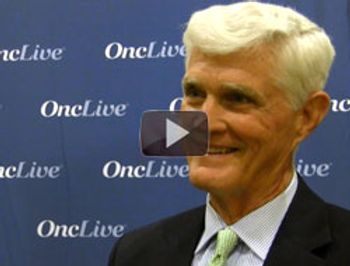
Paul A. Bunn, Jr., MD, distinguished professor, University of Colorado, Lung Cancer: Giant of Cancer Care, discusses the need to study drug combinations in lung cancer.
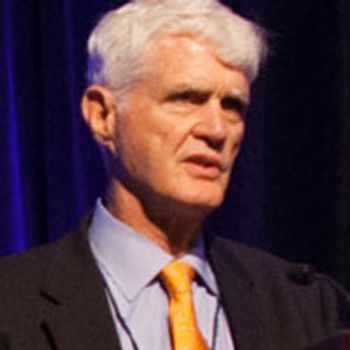
Paul Bunn, MD, discussed the latest translational advances in NSCLC at the 2015 International Lung Cancer Congress.

Highly effective next-generation therapies are currently in development for patients with oncogene-driven non–small cell lung cancer, specifically those with alterations in EGFR, ALK, ROS1, NTRK, or a variety of other gene.

The FDA has granted a breakthrough therapy designation to the combination of the BRAF inhibitor dabrafenib and the MEK inhibitor trametinib as a potential treatment for patients with BRAFV600E-mutant non-small cell lung cancer.

The European Commission has approved nivolumab as a treatment for patients with locally advanced or metastatic squamous non–small cell lung cancer following prior chemotherapy.

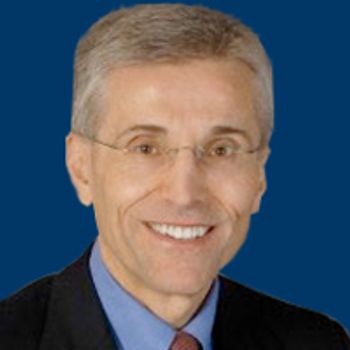
The FDA approved gefitinib for the frontline treatment of patients with metastatic, EGFR-positive non-small cell lung cancer.
Jennifer Temel, MD, Associate Professor, Medicine, Harvard Medical School Clinical Director, Thoracic Oncology, Massachusetts General Hospital, and Associate Director, Hematology/Oncology Fellowship Program, Dana-Farber, discusses a phase III study assessing the impact of anamorelin on body weight, lean body mass, and appetite in advanced non-small cell lung cancer (NSCLC) patients with anorexia and cachexia.

Stephen Liu, MD, discusses the results and purpose of the uniquely designed trial examining atezolizumab in combination with platinum-based doublet chemotherapy in treatment-naïve patients with advanced non–small cell lung cancer.
ODAC supported the approval of necitumumab in combination with gemcitabine and cisplatin for the first-line treatment of patients with locally advanced or metastatic squamous non–small cell lung cancer.

Rolling submission of a new drug application for rociletinib has been initiated for patients with EGFR T790M-positive metastatic non–small cell lung cancer following prior treatment with an EGFR-targeted therapy.

Advertisement
Advertisement
Trending on OncLive
1
FDA Approves Tucatinib Plus Trastuzumab/Pertuzumab as First-Line Maintenance in Advanced HER2+ Breast Cancer
2
VIR-5500 Receives FDA Fast Track Designation in mCRPC
3
Iberdomide Plus Daratumumab/Dexamethasone Yields Significant PFS Benefit in R/R Myeloma
4
FDA Approves Atezolizumab Plus Chemo for Stage III dMMR Colon Cancer
5