




Lung Cancer
Latest News
Advertisement
Latest Videos
































































Advertisement
More News

Eligibility criteria set by the Centers for Medicare & Medicaid Services for coverage of low-dose computed tomography for individuals deemed at high risk for lung cancer may actually exclude many potential lung cancer patients who would benefit from screening.
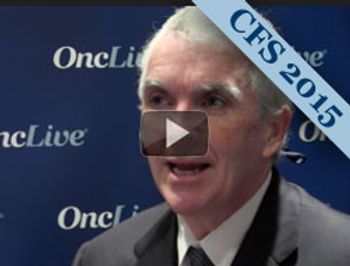
Thomas J. Lynch, MD, director, Yale Cancer Center, physician-in-chief, Smilow Cancer Hospital at Yale-New Haven, Giant of Lung Cancer Care, discusses expanding the number of molecular subsets in non-small cell lung cancer (NSCLC).

Increasing the minimum age of legal access (MLA) to tobacco products will prevent or delay initiation of tobacco use by adolescents and young adults, particularly those ages 15 to 17, and improve the health of Americans across the lifespan.


Prior cancer history should not exclude patients with advanced lung cancer from participating in clinical trials because it does not impact clinical outcomes.

OncLive sat down with Edward Kim, MD, to learn more about the impact of recent advances in NSCLC and what the future treatment paradigm might look like.

Acting 3 months ahead of schedule, the FDA approved nivolumab (Odivo) for patients with squamous non-small cell lung cancer.
The FDA has granted a priority review to nivolumab for use in patients with previously treated, advanced, squamous non–small cell lung cancer.


Advertisement
Advertisement
Trending on OncLive
1
FDA Approves Tucatinib Plus Trastuzumab/Pertuzumab as First-Line Maintenance in Advanced HER2+ Breast Cancer
2
VIR-5500 Receives FDA Fast Track Designation in mCRPC
3
Iberdomide Plus Daratumumab/Dexamethasone Yields Significant PFS Benefit in R/R Myeloma
4
FDA Approves Atezolizumab Plus Chemo for Stage III dMMR Colon Cancer
5