
Lung Cancer
Latest News
Advertisement
Latest Videos






























































Advertisement
More News



Molecular profiling has revealed several tumor markers that could be utilized as therapeutic targets for patients with small cell lung cancer (SCLC) or lung neuroendocrine tumors (NETs).

A new study suggests a knowledge gap in Primary Care Providers' familiarity with screening guidelines could also be a barrier to successful implementation.
Lecia V. Sequist, MD, medical oncologist, associate professor, Massachusetts General Hospital, Harvard Medical School, discusses the overall survival analysis of the LUX-Lung 3 and LUX-Lung 6 trials.
Biopsies were found to be the most costly tool used in lung cancer diagnosis, and may be performed too frequently based on negative test results and adverse events.
David R. Gandara, MD, from UC Davis Comprehensive Cancer Center, discusses the future of clinical trial designs.

The FDA has granted a breakthrough therapy designation to pembrolizumab (Keytruda), an anti-PD-1 therapy, for the treatment of patients with non-small cell lung cancer (NSCLC) who are EGFR mutation- or ALK rearrangement-negative and whose disease has progressed on or following platinum-based chemotherapy.

Suresh S. Ramalingam, MD, discusses results from a phase II trial exploring the potential of veliparib as a treatment for patients with squamous cell NSCLC.

The treatment of patients with non-small cell lung cancer (NSCLC) who harbor an actionable mutation in EGFR or ALK continues evolve, as clinical trials begin exploring next-generation agents and combination strategies.





ASCO has endorsed the CAP/IASLC/AMP guideline on molecular testing for patients with lung cancer, which recommends EGFR and ALK testing for all patients with lung adenocarcinoma or mixed histology with an adenocarcinoma component.
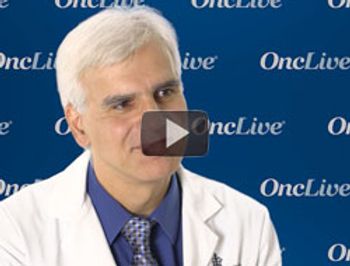
Balazs Halmos, MD, section chief of Thoracic Oncology at New York-Presbyterian Hospital/Columbia University Medical Center, comments on the detection of actionable mutations in patients with lung cancer.

A clinical trial collaboration between Novartis and BMS has resulted in the establishment of several novel combination trials involving the PD-1 inhibitor nivolumab and targeted therapies against ALK, c-MET, and T790M for patients with NSCLC.

The highly selective ALK inhibitor AP26113 has been granted a Breakthrough Therapy Designation by the FDA for the treatment of patients with ALK-positive metastatic NSCLC who received prior treatment with crizotinib.
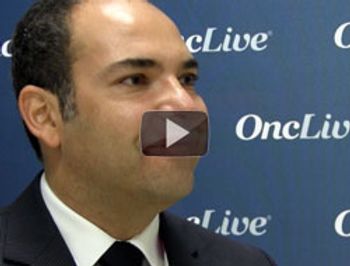
Christian Rolfo, MD, PhD, MHBA, head, phase I clinical trials unit, Antwerp University Hospital, Belgium, discusses the potential utility of ceritinib.
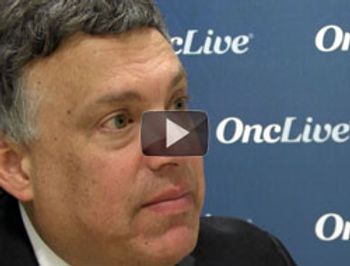
Roy S. Herbst, MD, PhD, professor, Yale Cancer Center, chief of medical oncology, Smilow Cancer Hospital at Yale-New Haven, discusses next generation lung cancer trials.

As director of the Yale Cancer Center and physician-in-chief of the Smilow Cancer Hospital at Yale-New Haven, Thomas J. Lynch Jr, MD, wears many hats. And, having built a career united around two abiding goals of clinical discovery and personalized patient care, that's just the way he likes it.
Advertisement
Advertisement
Trending on OncLive
1
FDA Approves Tucatinib Plus Trastuzumab/Pertuzumab as First-Line Maintenance in Advanced HER2+ Breast Cancer
2
VIR-5500 Receives FDA Fast Track Designation in mCRPC
3
Iberdomide Plus Daratumumab/Dexamethasone Yields Significant PFS Benefit in R/R Myeloma
4
FDA Approves Atezolizumab Plus Chemo for Stage III dMMR Colon Cancer
5