

Lung Cancer
Latest News

Advertisement
Latest Videos

































































Advertisement
More News




Bonnie Addario, a lung cancer survivor and founder of the Bonnie J. Addario Lung Cancer Foundation (BJALCF), discusses support groups for patients with lung cancer.

Nivolumab, the most advanced agent in the rapidly developing field of PD-1-targeting cancer immunotherapy, delivered durable clinical benefits across multiple solid tumor types.

Julie R. Brahmer, MD, from Johns Hopkins University School of Medicine, Sidney Kimmel Comprehensive Cancer Center, discusses the future of antibodies, including nivolumab, for the treatment of lung cancer.

David P. Carbone, MD, PhD, from the Ohio State University Comprehensive Cancer Center, discusses the exploration of immunotherapies as treatments for patients with advanced lung cancer.
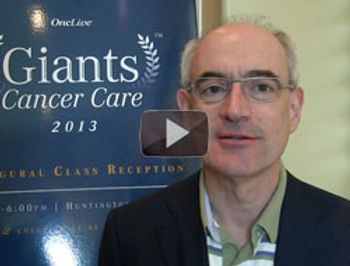
Everett E. Vokes, MD, Giant of Cancer Care in Head and Neck from University of Chicago Medicine and Biological Sciences, discusses multimodality therapy for lung cancer.
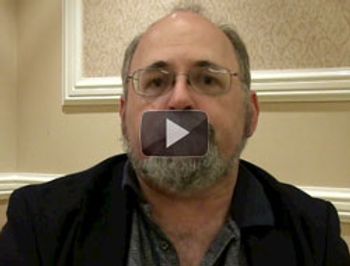
Corey J. Langer, MD, from the University of Pennsylvania, Abramson Cancer Center, discusses integrating the irreversible pan-HER inhibitor afatinib into the treatment paradigm for patients with advanced non-small cell lung cancer.
A phase III trial exploring necitumumab plus chemotherapy as a first-line therapy for patients with metastatic squamous non-small cell lung cancer has demonstrated an improvement in overall survival when compared to chemotherapy alone.

Tony S.K. Mok, BMSc, MD, FRCPC, from the Chinese University of Hong Kong, discusses different plasma testing approaches for patients with lung cancer.

Heather Wakelee, MD, from the Stanford University School of Medicine, describes two phase III trials that focused on the second-line nintedanib plus chemotherapy to treat patients with advanced non-small cell lung cancer.

Giorgio V. Scagliotti, MD, PhD, Head, from the University of Turin, Italy, discusses toxicities related to chemotherapy and surgery in patients with lung cancer.

Roy S. Herbst, MD, PhD, chief of Medical Oncology at Smilow Cancer Hospital at Yale-New Haven in Connecticut, discusses immunotherapy for patients with lung cancer.

The results of the first prospective multicenter trial of cryoablation in lung cancer show that this emerging treatment may be a safe, effective, and minimally invasive method of helping a specific group of patients with advanced disease.

Jeffrey D. Bradley, MD, Professor, Radiation Oncology, Washington University School of Medicine in St. Louis, discusses ongoing research involving radiation therapy for lung cancer.

Although crizotinib (Xalkori) is highly effective in treating patients with advanced ALK-positive non–small cell lung cancer (NSCLC), most patients develop resistance to the drug.

Thomas J. Lynch, Jr., MD, from the Yale Cancer Center, pioneered the use of molecular testing for EGFR mutations in lung cancer. In July 2013, he was honored by OncLive as one of the "Giants of Cancer Care."

David R. Gandara, MD, from the UC Davis Cancer Center, discusses the 2013 recipient of the Giants in Cancer Care award in the field of thoracic oncology: Thomas J. Lynch, Jr., MD.

David P. Carbone, MD, PhD, from the Ohio State University Comprehensive Cancer Center, describes variations in the accuracy and availability of genetic testing technologies.

Lead author, Alice T. Shaw, MD, PhD, from the Massachusetts General Hospital, reviews the first published results from a randomized phase III trial investigating crizotinib in patients with ALK-positive non-small cell lung cancer.

Suresh S. Ramalingam, MD, from the Winship Cancer Institute of Emory University, discusses the role of heat shock proteins in normal cells and their potential role in treating cancer.

Primo Lara, MD, and his son, Matthew Stephen Lara, discuss an analysis of predictors of survival for younger patients with non-small cell lung cancer.

The FDA has approved afatinib, along with a companion diagnostic, to treat patients with metastatic non-small cell lung cancer who express specific types of EGFR mutations.
Advertisement
Advertisement
Trending on OncLive
1
FDA Approves Tucatinib Plus Trastuzumab/Pertuzumab as First-Line Maintenance in Advanced HER2+ Breast Cancer
2
VIR-5500 Receives FDA Fast Track Designation in mCRPC
3
Iberdomide Plus Daratumumab/Dexamethasone Yields Significant PFS Benefit in R/R Myeloma
4
FDA Approves Atezolizumab Plus Chemo for Stage III dMMR Colon Cancer
5