

Lung Cancer
Latest News
Advertisement
Latest Videos

































































Advertisement
More News

The future of PD-1 and PD-L1 inhibition in non-small cell lung cancer is bright, with ongoing studies suggesting that the strategy will lead to a 'new world' in the treatment of the disease

Next-generation ALK inhibitors are being developed to address the unmet need of patients with non-small cell lung cancer who are becoming resistant to crizotinib.

While targeted and immunotherapy drugs have recently shown promise in non-small cell lung cancer (NSCLC), similar developments in small cell lung cancer (SCLC) have not materialized.
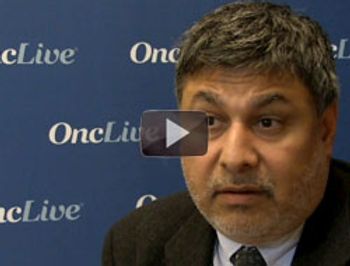
Naiyer A. Rizvi, MD, an associate attending physician, Memorial Sloan-Kettering Cancer Center, discusses PD-1 and PD-L1 antibodies in development for the treatment of lung cancer.
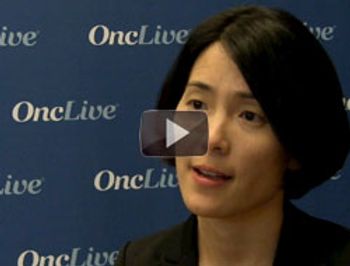
Alice T. Shaw, MD, PhD, an attending physician in the Center for Thoracic Cancers at Massachusetts General Hospital, discusses monitoring adverse events associated with crizotinib when treating patients with ALK-positive lung cancer

Leaders in thoracic medical oncology from major cancer centers will come together Saturday to discuss advances in the field of lung cancer treatment during the 8th Annual New York Lung Cancer Symposium® in New York City.

Paul A. Bunn, Jr, MD, professor of medicine in medical oncology, head of the division of medical oncology, University of Colorado, explains how patients with advanced-stage lung cancer benefit from tyrosine kinase inhibitors

The criteria that are presently used to determine whether patients with non-small cell lung cancer may be suitable for treatment with the ALK inhibitor crizotinib may overlook some patients who may benefit from the drug.

Laurie Gaspar, MD, professor and chair of the Department of Radiation Oncology, Grohne Chair in Clinical Oncology, University of Colorado School of Medicine, discusses the treatment of brain metastases in patients with lung cancer.

The PD-1 blocking antibody nivolumab continues to demonstrate sustained clinical activity in previously treated patients with advanced non-small cell lung cancer.












D. Ross Camidge, MD, PhD, from the University of Colorado Cancer Center, explains excitement over the potential role for next-generation sequencing in cancer care.

Five lung cancer experts discuss recent advances and current issues surrounding the treatment of non-small cell lung cancer

Governor Steve Beshear did not sugarcoat the data on May 9, 2013, when he said Kentucky would take an offer it couldn't refuse. With his state ranked worst in the nation in smoking and cancer deaths, and not far behind in heart disease, Beshear was "tired of being at the bottom."

Amid rapid progress in the treatment of advanced lung cancer, several leading organizations have joined in developing new guidelines for the optimal use of molecular testing to help select patients for therapy with tyrosine kinase inhibitors
Advertisement
Advertisement
Trending on OncLive
1
FDA Approves Tucatinib Plus Trastuzumab/Pertuzumab as First-Line Maintenance in Advanced HER2+ Breast Cancer
2
VIR-5500 Receives FDA Fast Track Designation in mCRPC
3
Iberdomide Plus Daratumumab/Dexamethasone Yields Significant PFS Benefit in R/R Myeloma
4
FDA Approves Atezolizumab Plus Chemo for Stage III dMMR Colon Cancer
5