

Lung Cancer
Latest News
Advertisement
Latest Videos































































Advertisement
More News
David P. Carbone, MD, PhD, a professor in the Division of Medical Oncology at the Ohio State University Comprehensive Cancer Center, discusses potential biomarkers in lung cancer.
The investigational immunotherapy MK-3475 has demonstrated an objective response rate of up to 24% in patients with previously treated non-small cell lung cancer
Lucio Crinò, MD, discusses the results of the PROFILE 1007 trial that compared crizotinib with standard chemotherapy as second-line therapy for advanced ALK+ non-small cell lung cancer
D. Ross Camidge, MD, PhD, Director, Thoracic Oncology Clinical Program, University of Colorado Cancer Center, discusses a phase I study looking at AZD9291 in patients with non-small cell lung cancer.
The first-in-human phase I/II dose-finding study of a novel ALK/EGFR inhibitor called AP26113 demonstrated promising results in both crizotinib-resistant and crizotinib-naïve patients with non-small cell lung cancer.

A phase I study has shown remarkable and durable responses with the engineered monoclonal antibody MPDL3280A in metastatic non-small cell lung cancer, including tumors with squamous and adenocarcinoma histology.
Silvia Novello, MD, PhD, assistant professor, Thoracic Oncology Unit, University of Turin, San Luigi Hospital, Orbassano, Italy, discusses some of the "gray areas" that require more research for the treatment of patients with lung cancer.
Julie R. Brahmer, MD, from Johns Hopkins University School of Medicine, Sidney Kimmel Comprehensive Cancer Center, discusses the management of adverse events (AEs) from treatment with immunotherapies.
Harvey I. Pass, MD, Stephen E. Banner Professor of Thoracic Oncology, Vice-Chair Research, Department of Cardiothoracic Surgery, Division Chief, General Thoracic Surgery, NYU Langone Medical Center, discusses blood-based markers in lung cancer.

Giorgio V. Scagliotti, MD, PhD, head, Thoracic Oncology Unit, Department of Clinical and Biological Sciences, University of Turin, San Luigi Hospital, Orbassano, Italy, discusses treating epidermal growth factor receptor- (EGFR) mutated tumors with afatinib.
The optimal use of adjuvant chemotherapy for patients with early-stage non-small cell lung cancer remains unresolved, with several clinical trials under way in Europe aimed at identifying ways to better select patients for treatment
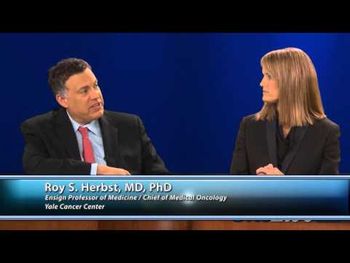
Roy S. Herbst, MD, PhD, professor of Medicine at Yale Cancer Center and chief of Medical Oncology at Smilow Cancer Hospital at Yale-New Haven in Connecticut, discusses the differences of targeting PD-1 and PD-L1 when treating patients with lung cancer.

The section of General Thoracic Surgery at UC Davis is offering Robotic Thoracic Surgery to further enhance our top regional minimally invasive thoracic surgery program.
Paul A. Bunn, Jr, MD, professor of medicine in medical oncology, head of the division of medical oncology, University of Colorado, discusses afatinib for patients with activating epidermal growth factor receptor (EGFR) mutation.
Silvia Novello, MD, PhD, assistant professor, Thoracic Oncology Unit, University of Turin, San Luigi Hospital, Orbassano, Italy, discusses immunotherapy and targeting the MAGE-A3 protein in lung cancer.
Tony S.K. Mok, BMSc, MD, FRCPC, professor, Department of Clinical Oncology, Chinese University of Hong Kong, Prince of Wales Hospital Hong Kong, China, discusses how to improve the strategy of developing treatments for lung cancer.

Heather Wakelee, MD, an assistant professor at the Stanford University School of Medicine and member of the Stanford Cancer Institute, discusses the results of the AVAPERL trial.
UC Davis CLSP is a multidisciplinary program for comprehensive lung cancer screening.

Laurie Gaspar, MD, Professor and Chair Department of Radiation Oncology, Grohne Chair in Clinical Oncology, University of Colorado School of Medicine, discusses reducing neurotoxicity in small cell lung cancer patients.
Harvey I. Pass, MD, from the NYU Langone Medical Center, discusses the challenges of treating patients with mesothelioma.
Brought to you by the UC Davis Section of General Thoracic Surgery: PulmaCalc PPO is a predicted post-operative pulmonary function calculator

Advertisement
Advertisement
Trending on OncLive
1
FDA Approves Tucatinib Plus Trastuzumab/Pertuzumab as First-Line Maintenance in Advanced HER2+ Breast Cancer
2
VIR-5500 Receives FDA Fast Track Designation in mCRPC
3
Iberdomide Plus Daratumumab/Dexamethasone Yields Significant PFS Benefit in R/R Myeloma
4
FDA Approves Atezolizumab Plus Chemo for Stage III dMMR Colon Cancer
5