
Lung Cancer
Latest News

Advertisement
Latest Videos
































































Advertisement
More News


Several updates highlighted at the 2012 American Society of Hematology Annual Meeting as well as other developments.

New discoveries about tumor biology suggest to many researchers that targeted therapies, when used in appropriate early-stage patients, might significantly boost cure rates and extend lives.

While the number of known mutations and matching targeted agents is relatively limited at present, clinical trials are being designed to identify effective therapies for specific mutations more efficiently.
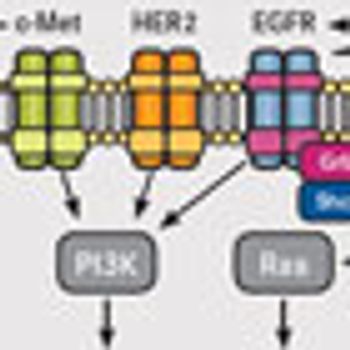
As therapy based on cell-signaling pathways has become a priority in cancer research, so has the concept of designing clinical trials that can better target patient populations more likely to benefit from a particular regimen.

Suresh S. Ramalingam, MD, from Emory University's Winship Cancer Institute, explains that a number of new cytotoxic drugs are being developed in combination with targeted therapies, such as EGFR inhibitors.

William T. DeRosa, DO, from Carol G. Simon Cancer Center at Morristown Memorial Hospital, discusses subset analyses from the phase III CA031 trial that examined nab-paclitaxel in non-small cell lung cancer.

Tianhong (Tina) Li, MD, PhD, from the UC Davis Comprehensive Cancer Center, discusses results from the LUX-Lung 3 trial that examined afatinib as a first-line treatment for patients with EGFR-positive advanced lung adenocarcinoma.
The FDA has accepted a NDA for afatinib to treat patients with locally advanced or metastatic NSCLC who have tested positive for an EGFR mutation that has been identified through a companion diagnostic test.
Corey J. Langer, MD, from the University of Pennsylvania, Abramson Cancer Center, discusses the EGFR-targeted tyrosine kinase inhibitor erlotinib for patients with non-small cell lung cancer.
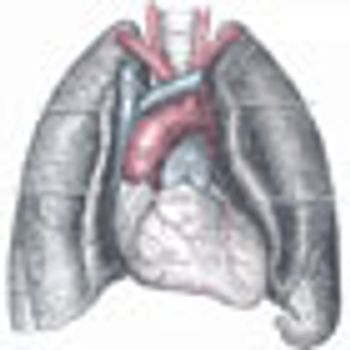
An ever-deeper understanding of the biology that drives NSCLC is sparking new treatment paradigms that include selecting targeted drugs based on patients' biomarkers.

The 7th edition TNM staging system for NSCLC is an exciting accomplishment, and will help the clinician to better understand the outcomes of lung cancer and offers an exciting advance to our specialty.

Despite missing its main goals, the PointBreak trial did provide guidance about how best to structure maintenance therapy in NSCLC, and it proved that an option besides paclitaxel is available.
The UC Davis Lung Cancer Chat Room is an interactive meeting of learning and support for patients, families, friends and caregivers affected by lung cancer.
Mark G. Kris, MD, chief of the Thoracic Oncology Service at Memorial Sloan-Kettering Cancer Center, discusses the importance of accurately determining a patient's performance status.
PS2 patients in focus at the 7th Annual New York Lung Cancer Symposium, hosted by Physicians' Education Resource, that took place in New York City.

Scott Gettinger, MD, associate professor of medicine (medical oncology), Yale School of Medicine, explains the development of immunotherapies in lung cancer.

Mark G. Kris, MD, offers insight into NSCLC related topics, including emerging therapeutic targets, the optimal application of TKIs, strategies for patients with poor performance status, maintenance therapies, and the treatment pipeline.

Local ablative therapy plus continuation on the same tyrosine kinase inhibitor could be utilized as a treatment alternative in metastatic non-small cell lung cancer.
Advertisement
Advertisement
Trending on OncLive
1
FDA Approves Tucatinib Plus Trastuzumab/Pertuzumab as First-Line Maintenance in Advanced HER2+ Breast Cancer
2
VIR-5500 Receives FDA Fast Track Designation in mCRPC
3
Iberdomide Plus Daratumumab/Dexamethasone Yields Significant PFS Benefit in R/R Myeloma
4
FDA Approves Atezolizumab Plus Chemo for Stage III dMMR Colon Cancer
5