






Mantle Cell Lymphoma
Latest News
Advertisement
Latest Videos






CME Content































Advertisement
More News
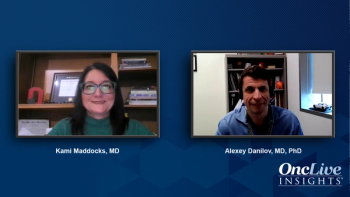
Drs Kami Maddocks and Alexey Danilov review the frontline therapy options for patients with mantle cell lymphoma based on risk status.
Kami Maddocks, MD, and Alexey Danilov, MD, PhD, provide an overview of mantle cell lymphoma, including prevalence and common risk factors.
Tycel Phillips, MD, MPH, discusses the implications of the FDA approval of pirtobrutinib in patients with relapsed/refractory mantle cell lymphoma.
Tycel Phillips, MD, MPH, discusses treatment options for patients with relapsed/refractory mantle cell lymphoma who have progressed on covalent BTK inhibitors.

Analysis Determines Predictive Biomarkers for Lenalidomide Survival Benefits in Mantle Cell Lymphoma
Polymorphic alleles of ABCB1 or VEGF were predictive of lenalidomide efficacy in patients with mantle cell lymphoma who received lenalidomide maintenance after autologous stem cell transplant.
Thomas M. Habermann, MD, discusses ongoing clinical trials in mantle cell lymphoma and marginal zone lymphoma.

Thomas M. Habermann, MD, expands on previous data that supported the initial accelerated approval of ibrutinib in marginal zone lymphoma and mantle cell lymphoma, phase 3 data leading to the agent’s voluntary withdrawal, and investigations of ibrutinib and other BTK inhibitors that could significantly change the treatment landscape in mantle cell lymphoma and marginal zone lymphoma.
Thomas M. Habermann, MD, discusses the data that led to the decision to withdraw the indication for ibrutinib for the treatment of patients with mantle cell lymphoma.
Thomas M. Habermann, MD, discusses the withdrawal of United States indications for ibrutinib in patients with mantle cell lymphoma who have previously received at least 1 therapy and in those with marginal zone lymphoma who require systemic treatment and have received at least 1 prior anti–CD20-based therapy.
Thomas M. Habermann, MD, discusses the evolving treatment landscape of mantle cell lymphoma.

The addition of venetoclax to lenalidomide and rituximab produced early evidence of clinical efficacy with a tolerable safety profile in previously untreated patients with mantle cell lymphoma.
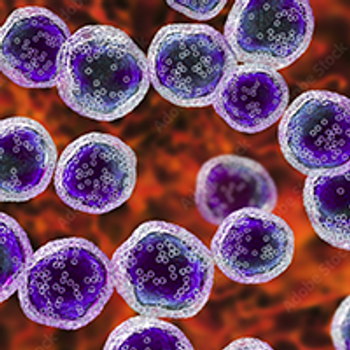
Lisocabtagene maraleucel elicited statistically significant and clinically meaningful responses in patients with relapsed or refractory follicular lymphoma and mantle cell lymphoma, meeting the primary end point of the phase 2 TRANSCEND FL and phase 1 TRANSCEND NHL 001 trials, respectively.
Zachary Epstein-Peterson, MD, discusses the use of CAR T-cell therapy in mantle cell lymphoma and highlights questions that remain to be answered within the treatment landscape.

AbbVie has announced the intention to voluntarily withdraw indications for ibrutinib in patients with mantle cell lymphoma who have previously received at least 1 therapy and in those with marginal zone lymphoma who require systemic treatment and have received at least 1 prior anti–CD20-based therapy.
Zachary Epstein-Peterson, MD, discusses available treatment approaches for patients with mantle cell lymphoma who are transplant eligible or ineligible.

Nirav N. Shah, MD, discusses the investigation of lentiviral bispecific CAR T cells targeting CD20 and CD19 B-cell antigens in patients with relapsed or refractory mantle cell lymphoma.

Venetoclax, alone or in combination with a BTK inhibitor, improved overall response rate in patients with pretreated, high-risk mantle cell lymphoma, according to findings from a retrospective study. However, the BCL-2 inhibitor was associated with short durations of progression-free survival.

Acalabrutinib has received conditional approval from the National Medical Products Administration in China for the treatment of patients with mantle cell lymphoma who have received at least one prior therapy.
A real-world analysis exploring the outcomes of inpatient vs outpatient administration of CAR T-cell therapy in patients with mantle cell lymphoma and follicular lymphoma demonstrated both similarities and some differences between the 2 patient populations.

Consolidative autologous stem cell transplant was associated with a statistically significant lower overall mortality risk and higher overall survival probability in patients with mantle cell lymphoma vs those who did not receive consolidation.
ASCT Following First Complete Remission Does Not Improve Real-World Survival in Mantle Cell Lymphoma
First-line consolidative autologous stem cell transplant following first complete remission, with or without maintenance rituximab, did not result in improved overall survival for patients with mantle cell lymphoma.
Akash Mukherjee, MD, discusses the use of post-transplant maintenance rituximab in patients with mantle cell lymphoma who have received autologous stem cell transplant and considerations for using bendamustine/rituximab or BR plus cytarabine in elderly patients who are unfit for transplant.
Zachary Epstein-Peterson, MD, discusses important updates in mantle cell lymphoma treatment, including the safety and feasibility of disease observation in patients with indolent MCL and the treatment of patients with TP53-mutated MCL.

Nirav N. Shah, MD, explains the choice to evaluate LV20.19 CAR in MCL, key efficacy and safety data from the follow-up study of this agent, and ongoing efforts to potentially expand its use across other B-cell malignancies.
Andre H. Goy, MD, discusses the appropriate monitoring and management of patients with mantle cell lymphoma who display genetic abnormalities but are not considered to be high risk.
Advertisement
Advertisement
Trending on OncLive
1
Long-Term Cilta-Cel Data Show Low Rates of PFS Events in Standard-Risk R/R Myeloma
2
FDA Updates Axi-Cel Label to Remove Limitation of Use in R/R PCNSL
3
Real-World Data Support Clinical Benefit With Lifileucel in Previously Treated Advanced Melanoma
4
Single-Center, Retrospective Data Show Low Rate of Lifileucel Infusion Following Referral in Advanced Melanoma
5