





Mantle Cell Lymphoma
Latest News
Advertisement
Latest Videos



































































Advertisement
More News

Experts in hematologic malignancies conclude their discussion by discussing BTK degraders and other targets in the treatment of mantle cell lymphoma.
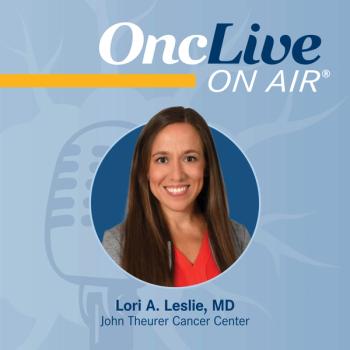
Dr Leslie discusses the FDA approval of pirtobrutinib in patients with MCL previously treated with a BTK inhibitor, key efficacy and safety findings from the BRUIN trial, and potential treatment sequencing strategies in patients with resistance to covalent BTK inhibitors.
A comprehensive look at the role of bispecific antibodies, including glofitamab, in the treatment of mantle cell lymphoma.
Bijal D. Shah, MD, and Matthew J. Matasar, MD, discuss how they approach treating patients with MCL who rapidly progress on BTK inhibitors.

Bispecific CAR T-cell therapy targeting both CD20 and CD19 cells induced a 90-day complete response rate of 92% in patients with relapsed/refractory mantle cell lymphoma.

Nirav N. Shah, MD, discusses findings from a phase 1/2 study of lentiviral bispecific CAR T cells targeting CD20 and CD19 B-cell antigens in patients with relapsed or refractory mantle cell lymphoma.

Martin Dreyling, MD, discusses the key safety data from the phase 3 TRIANGLE trial in younger patients with mantle cell lymphoma.

Treatment with brexucabtagene autoleucel in the standard-of-care relapsed/refractory mantle cell lymphoma setting provided an efficacy and safety profile consistent with data reported in the phase 2 ZUMA-2 trial.
A panel of experts in hematologic malignancies analyze clinical studies and real-world data of brexucabtagene autoleucel in mantle cell lymphoma.
Alexey V. Danilov, MD, PhD, presents a second patient profile of a 60-year-old patient with MCL, and the panel discusses using CAR T-cell therapy to treat MCL.

Tycel Phillips, MD, MPH, discusses the key implications of investigating glofitamab monotherapy in patients with relapsed/refractory mantle cell lymphoma.
Andre H. Goy, MD, discusses key findings from an assessment of durable responses in the phase 2 ZUMA-2 trial in relapsed/refractory mantle cell lymphoma.
A comprehensive discussion on ways to approach treating patients with high-risk mantle cell lymphoma.
A detailed look at how to select the appropriate BTK inhibitor to treat patients with MCL and the potential role of the non-covalent BTK inhibitor pirtobrutinib in MCL.

Mitul Gandhi, MD, discusses key findings from part C of the phase 2 SGN35-027 trial in Hodgkin lymphoma.

Martin Dreyling, MD, discusses the safety and efficacy data from the TRIANGLE study done in patients with previously untreated MCL who are younger than 66 years, and the impact of these results on the use of ASCT in this population.

Michael L. Wang, MD, discusses the efficacy of the noncovalent BTK inhibitor pirtobrutinib, as well as safety data from the phase 1/2 BRUIN trial in mantle cell lymphoma.
Experts in hematologic malignancies review the role of BTK inhibitors and other therapies in patients with relapsed/refractory mantle cell lymphoma.
A panel of experts in hematologic malignancies discuss the SHINE study, which looked at ibrutinib with bendamustine and rituximab in elderly patients with MCL.

Tycel Phillips, MD, discusses the significance of the FDA approval of pirtobrutinib in mantle cell lymphoma.

The FDA has approved pirtobrutinib (Jaypirca) for the treatment of adult patients with relapsed or refractory mantle cell lymphoma following at least 2 lines of systemic therapy, including a BTK inhibitor.
Autologous stem cell transplant had no effect on real-world time to next treatment and overall survival compared with maintenance rituximab following induction with bendamustine and rituximab or R-CHOP, for patients with mantle cell lymphoma according to findings from a retrospective study.
Matthew J. Matasar, MD, discusses the prospect of using minimal residual disease to guide treatment decisions in mantle cell lymphoma.
Boyu Hu, MD, and Bijal D. Shah, MD, provide their thoughts on the TRIANGLE study looking at ibrutinib versus stem cell transplant in MCL.
A patient profile of a 74-year-old man diagnosed with mantle cell lymphoma who receives treatment with a non-covalent BTK inhibitor is presented by Alexey V. Danilov, MD, PhD.
Advertisement
Advertisement
Trending on OncLive
1
NAPISTAR-1-01 Data Support Rapid TUB-040 Development in Biomarker-Unrestricted Ovarian Cancer
2
FDA Grants Fast Track Designation to LYT-200 in R/R High-Risk MDS
3
Japan Approves Subcutaneous Pembrolizumab for All Approved Pembrolizumab Indications
4
Updated NCCN Guidelines Recommend Rusfertide Across Polycythemia Vera
5