


Mantle Cell Lymphoma
Latest News
Advertisement
Latest Videos




































































Advertisement
More News

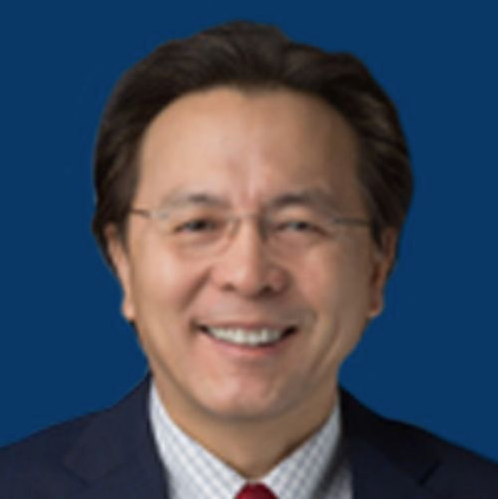
Michael Wang, MD, discusses the evolving treatment landscape of mantle cell lymphoma.

Despite the breakthroughs in the development of therapeutic regimens for patients with mantle cell lymphoma, variability in treatment pathways presents a unique hurdle in determining the appropriate course of care following disease progression.

Tycel Jovelle Phillips, MD, discusses the current role of ibrutinib in mantle cell lymphoma.
The global biopharmaceutical company Incyte has decided to withdraw the new drug application for parsaclisib for the treatment of patients with relapsed or refractory follicular lymphoma, marginal zone lymphoma, and mantle cell lymphoma.
A brief review of CAR T-cell therapy in relapsed/refractory mantle cell lymphoma as studied in the ZUMA-2 clinical trial of brexucabtagene autoleucel.
Moving to second-line therapy for mantle cell lymphoma, experts discuss available BTK inhibitors, including the novel agent pirtobrutinib.
Dr Wang discusses the clinical experience with ibrutinib in mantle cell lymphoma, its present role in the management of MCL, and ongoing research that may affect its use as a single agent.
Tycel Jovelle Phillips, MD, discusses ongoing research with BTK inhibitors in mantle cell lymphoma.

Matthew S. McKinney, MD, discusses the potential for curative-intent therapies in mantle cell lymphoma.
The combination of ibrutinib and rituximab produced a high overall response rate and durable survival in elderly patients with mantle cell lymphoma.
Mazyar Shadman, MD, MPH, discusses the utility of MB-106 for the treatment of patients with relapsed/refractory B-cell non-Hodgkin lymphoma (B-NHL) and chronic lymphocytic leukemia.
The FDA has agreed upon key elements, including design features and operational details, for the phase 3 ZILO-301 trial, which will evaluate zilovertamab in combination with ibrutinib in patients with relapsed or refractory mantle cell lymphoma.

Peter Riedell, MD, discusses unique data points of a landmark analysis conducted in mantle cell lymphoma.
Tycel Jovelle Phillips, MD, discusses the importance of considering age during treatment selection for BTK inhibitors in mantle cell lymphoma.
Benjamin Heyman, MD, discusses the evolution of BTK inhibitors in relapsed/refractory mantle cell lymphoma.
Tycel Jovelle Phillips, MD, discusses navigating treatment selection with BTK inhibitors in mantle cell lymphoma.
Dr Phillips discusses the utility of ibrutinib, acalabrutinib, and zanubrutinib in mantle cell lymphoma, the impact of long-term follow-up data with ibrutinib, and findings from the phase 3 SYMPATICO trial that could shake up the treatment paradigm.
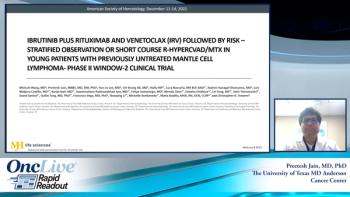
Expert perspectives on the phase II clinical trial assessing IRV triplet therapy in young patients with previously untreated mantle cell lymphoma to help minimize chemotherapy exposure.

Peter Riedell, MD, discusses the patient population and design of a dynamic landmark analysis conducted in patients with mantle cell lymphoma.
Benjamin Heyman, MD, discusses the phase 3 SYMPATICO trial examining the combination of ibrutinib and venetoclax vs ibrutinib alone in patients with relapsed or refractory mantle cell lymphoma.
Peter Riedell, MD, discusses the effects of time to relapse on outcomes in mantle cell lymphoma.

The addition of lenalidomide to rituximab maintenance treatment significantly improved progression-free survival compared with rituximab alone following first-line chemoimmunotherapy in patients with mantle cell lymphoma.

The potent, highly selective, next-generation PI3Kδ inhibitor parsaclisib demonstrated activity and an acceptable safety profile in patients with Bruton tyrosine kinase inhibitor-naïve relapsed/refractory mantle cell lymphoma.

Matthew S. McKinney, MD, discusses the emergence of CAR T-cell therapy in relapsed/refractory mantle cell lymphoma.
Benjamin Heyman, MD, discusses future therapeutic directions in mantle cell lymphoma.
Advertisement
Advertisement
Trending on OncLive
1
NAPISTAR-1-01 Data Support Rapid TUB-040 Development in Biomarker-Unrestricted Ovarian Cancer
2
FDA Grants Fast Track Designation to LYT-200 in R/R High-Risk MDS
3
Japan Approves Subcutaneous Pembrolizumab for All Approved Pembrolizumab Indications
4
Updated NCCN Guidelines Recommend Rusfertide Across Polycythemia Vera
5