




Mantle Cell Lymphoma
Latest News
Advertisement
Latest Videos

CME Content
































Advertisement
More News
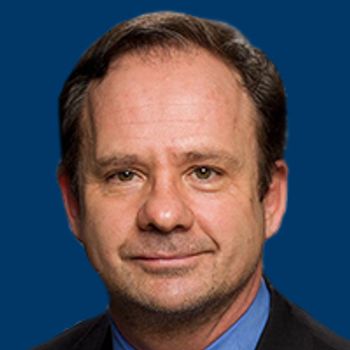
Andre Goy, MD, discusses the agents that are currently available for the treatment of patients with relapsed/refractory mantle cell lymphoma, explains the prevalence of high-risk features in this population, and emphasizes the importance of enrolling patients into clinical trials to move the needle forward.

Initial induction therapy with the immunomodulatory agent lenalidomide plus the anti-CD20 monoclonal antibody rituximab led to prolonged, durable responses with a manageable safety profile in patients with previously untreated mantle cell lymphoma.

The FDA has placed a partial clinical hold on the phase 1 NX-2127-001 trial investigating the novel BTK degrader NX-2127 in patients with relapsed/refractory B-cell malignancies.

Brexucabtagene autoleucel demonstrated an improvement in overall survival vs standard of care therapy in patients with relapsed/refractory mantle cell lymphoma following prior exposure to a BTK inhibitor, according to data from an indirect treatment comparison of findings from the phase 2 ZUMA-2 trial and retrospective SCHOLAR-2 trial.
Maintenance ibrutinib following frontline induction therapy was proven to be effective in patients with treatment-naïve mantle cell lymphoma , according to findings from a phase 2 trial published in Blood Advances.
The combination of ibrutinib and bortezomib elicited durable responses in patients with relapsed or refractory mantle cell lymphoma and high-risk features such as a Ki-67 over 30%, blastoid or pleomorphic variant, p53 overexpression, and TP53 mutations and/or deletions.

Ricardo D. Parrondo, MD, discusses the current treatment landscape of mantle cell lymphoma and highlights ongoing areas of investigation in other hematologic malignancies.
Muhamad Alhaj Moustafa, MD, MS, discusses the evolution of treatment options for patients with mantle cell lymphoma.

Nausheen Ahmed, MD, discusses the rationale and design of a subgroup analysis of real-world outcomes with brexucabtagene autoleucel in patients with relapsed/refractory mantle cell lymphoma.
Muhamad Alhaj Moustafa, MD, MS, discusses the phase 3 SHINE trial, which evaluated ibrutinib given with bendamustine and rituximab in patients with mantle cell lymphoma.
Muhamad Alhaj Moustafa, MD, MS, has improved the treatment of patients with mantle cell lymphoma, and the role that this agent has in the current treatment landscape.
Brad S. Kahl, MD, discusses ongoing and planned investigations within the landscape of mantle cell lymphoma.

Tycel Phillips, MD, discusses current and emerging therapeutic treatment strategies for patients with mantle cell lymphoma.

Tycel Phillips, MD, MPH, discusses the use of bispecific antibodies and CAR T-cell therapy across hematologic malignancies, including in patients with mantle cell lymphoma and follicular lymphoma.
Tycel Phillips, MD, MPH, discusses treatment with bispecific antibodies and CAR T-cell therapy in patients with mantle cell lymphoma, and other non-Hodgkin lymphomas.

Brad S. Kahl, MD, discusses the evolving role of BTK inhibitors in the treatment of patients with mantle cell lymphoma, expands on key ongoing trials investigating these agents in earlier settings and in different combinations, and expands on what the addition of pirtobrutinib to the treatment arsenal has meant for this population.

Monica D. Mead, MD, discusses the importance of addressing unanswered questions in the treatment of patients with mantle cell lymphoma.

Brad S. Kahl, MD, discusses the potential for BTK inhibitors to shift the frontline treatment setting in mantle cell lymphoma.

Treatment with the PI3Kδ inhibitor parsaclisib led to responses with a manageable safety profile in patients with relapsed/refractory mantle cell lymphoma, according to findings from the phase 2 CITADEL-205 trial.
Tycel Phillips, MD, MPH, discusses the ongoing phase 3 ECHO trial of acalabrutinib plus bendamustine and rituximab in the front line for patients with mantle cell lymphoma.

Swetha Kambhampati, MD, discusses the rationale for evaluating outcomes with in a subgroup anlaysis of patients with relapsed/refractory mantle cell lymphoma, and how prior data from the phase 3 ZUMA-2 study supported the inception of this trial.
Swetha Kambhampati, MD, discusses how findings from a subgroup analysis of investigating the use of brexucabtagene autoleucel in relapsed/refractory mantle cell lymphoma may support the continued exploration of this agent in earlier lines of therapy.
Prioty Islam, MD, MSc, discusses the exploration of novel roles for BTK inhibitors in the treatment of patients with mantle cell lymphoma and chronic lymphocytic leukemia.
Monica D. Mead, MD, discusses the efficacy and safety differences between the second-generation BTK inhibitor zanubrutinib and the first-generation BTK inhibitor ibrutinib in patients with mantle cell lymphoma.
Monica D. Mead, MD, discusses reasons for the declining use of the BTK inhibitor ibrutinib in patients with mantle cell lymphoma.
Advertisement
Advertisement
Trending on OncLive
1
Single-Center, Retrospective Data Show Low Rate of Lifileucel Infusion Following Referral in Advanced Melanoma
2
Real-World Data Support Clinical Benefit With Lifileucel in Previously Treated Advanced Melanoma
3
Outcomes With Bridging Therapy Correlate With Cilta-Cel Efficacy, Safety in Multiple Myeloma
4
Long-Term Cilta-Cel Data Show Low Rates of PFS Events in Standard-Risk R/R Myeloma
5