


Multiple Myeloma
Latest News
Advertisement
Latest Videos

CME Content




































Advertisement
More News

Pooja Phull, MD, discusses real-world responses and survival outcomes with cilta-cel vs ide-cel in patients with relapsed/refractory multiple myeloma.
Marcella Ali Kaddoura, MD, discusses challenges in integrating whole genome sequencing into routine clinical practice for myeloma.
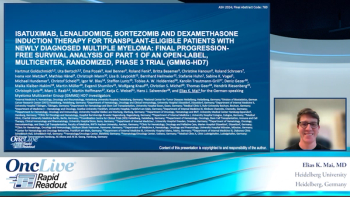
Dr. Elias K. Mai presents final progression-free survival results from the Phase 3 GMMG-HD7 trial, demonstrating that adding isatuximab to lenalidomide, bortezomib, and dexamethasone (Isa-RVd) significantly improves minimal residual disease negativity and reduces the risk of progression or death in transplant-eligible patients with newly diagnosed multiple myeloma.
David Samuel Dicapua Siegel, MD, discusses the current and future role for mezigdomide in the multiple myeloma treatment paradigm.
Mansi R. Shah, MD, highlights the data on the effects of IVIG on infections in patients with relapsed/refractory multiple myeloma treated with teclistamab.
Panelists discuss the challenges and barriers that remain when considering early referral for chimeric antigen receptor (CAR) T-cell therapy in patients with relapsed/refractory multiple myeloma (R/R MM).
Ira Zackon, MD, discusses the real-world use of bispecific antibodies for patients with R/R multiple myeloma in the community oncology setting.
The EMA’s CHMP has approved isatuximab in combination with VRd for transplant-ineligible patients with newly diagnosed multiple myeloma.
Robert M. Rifkin, MD, FACP, offers advice to colleagues about belantamab mafodotin as a treatment option for patients with relapsed/refractory multiple myeloma.
Panelists discuss the evolution of chimeric antigen receptor (CAR) T-cell therapy for patients with relapsed/refractory multiple myeloma (R/R MM), the factors that inform its use, and how treatment approaches differ for standard-risk vs functional high-risk patients.

Rahul Banerjee, MD, FACP, discusses treatment de-escalation strategies with the use of bispecific antibodies in patients with relapsed multiple myeloma.
Ira Zackon, MD, discusses real-world observational data on bispecific antibody use in community oncology in patients with relapsed/refractory multiple myeloma.

David S. Siegel, MD, PhD, discusses early safety and efficacy data that support further development of mezigdomide-based combinations in multiple myeloma.
Syed Abbas Ali, MBBS, discusses the identification of novel targets for patients with multiple myeloma who previously progressed on BCMA-targeted agents.
Panelists discuss how the future treatment landscape for transplant-ineligible/deferred NDMM is evolving toward more personalized approaches with quadruplet regimens, while acknowledging remaining challenges in optimizing duration of therapy, managing toxicities, and improving access to novel combinations.
China’s NMPA has approved isatuximab plus pomalidomide and dexamethasone in adult patients with pretreated multiple myeloma.
Sunvozertinib gets priority review in EGFR-mutated NSCLC, iparomlimab/tuvonralimab combination elicits responses in cervical cancer, and more.

Subcutaneous isatuximab plus Pd led to a noninferior ORR and observed concentration before dosing at steady state vs IV isatuximab plus Pd in RRMM.
Panelists discuss how patient selection for quadruplet therapy in transplant-ineligible/deferred NDMM requires careful consideration of multiple factors, including fitness level and comorbidities, while highlighting daratumumab-VRd’s potential advantages such as subcutaneous administration and demonstrated efficacy in the CEPHEUS trial despite increased complexity and cost considerations.
Anitocabtagene autoleucel generated durable response in patients with relapsed/refractory multiple myeloma.
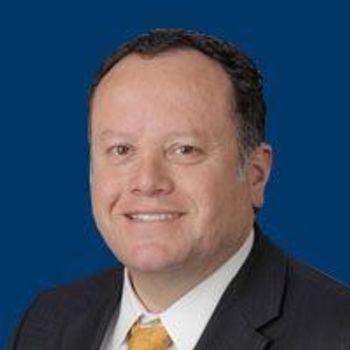
A Mayo Clinic “lifer” who did not consider medicine as a career path until his later teenage years grew into a powerhouse who touched nearly every aspect of the multiple myeloma field, and he continues to push the boundaries of what is possible.
Panelists discuss how current treatment approaches for transplant-ineligible newly diagnosed multiple myeloma patients are evolving with the addition of anti-CD38 therapies to standard VRd backbone, while examining unmet needs and the role of MRD negativity as an endpoint through recent trial data including CEPHEUS.
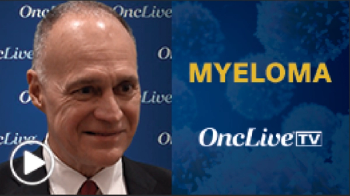
Michael R. Bishop, MD, discusses 34-month data from the iMMagine-1 trial of anitocabtagene autoleucel in relapsed/refractory myeloma.
Fixed-duration acalabrutinib combination improves PFS in CLL, imlunestrant ± abemaciclib boosts PFS in ESR1-mutated ER+ breast cancer, and more.
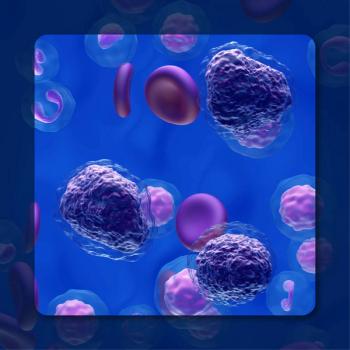
Cilta-cel without induction therapy in high-risk smoldering myeloma marked the first study of CAR T-cell therapy in a precursor cancer setting.
Advertisement
Advertisement
Trending on OncLive
1
Five Under 5: Top Oncology Videos for the Week of 8/31/26
2
FDA Approves Camizestrant Plus a CDK4/6 Inhibitor for Emergent ESR1-Mutated HR+, HER2– Advanced Breast Cancer
3
B7-H4–Targeted ADCs Signal a New Frontier for Platinum-Resistant Ovarian and Endometrial Cancer
4
The OncFive: Top Oncology Articles for the Week of 8/30
5