






Multiple Myeloma
Latest News
Advertisement
Latest Videos





CME Content










































Advertisement
More News

Panelists discuss how they approach sequencing therapy for relapsed/refractory multiple myeloma, considering all approved and investigational agents, and the factors that guide their treatment choices. They also explore the future directions of the later-stage relapsed/refractory multiple myeloma space, time permitting.
The CHMP has recommend the approval of subcutaneous daratumumab plus VRd for newly diagnosed multiple myeloma.
The CHMP has issued a positive opinion for linvoseltamab in relapsed/refractory multiple myeloma.
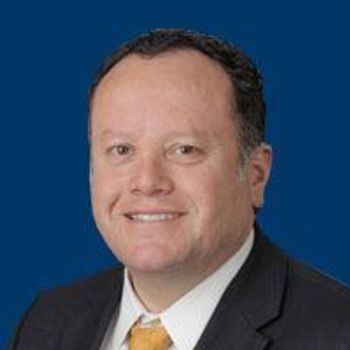
Multiple myeloma experts offer their perspectives on the evolution of the treatment landscape over the past 10 years and look towards the future of care.
Step-up dosing with etentamig produced responses and low rates of CRS in relapsed/refractory multiple myeloma.

Isatuximab plus VRd has been approved in Japan for transplant-ineligible, newly diagnosed multiple myeloma.
Panelists briefly discuss the results of studies evaluating additional bispecific regimens in the later-stage relapsed/refractory multiple myeloma space, including cevostamab, ABBV-383 plus daratumumab-dexamethasone (Dd), and linvoseltamab in the LINKER-MM1 trial.
Panelists comment on recent updates from the International Myeloma Society/ American Society of Hematology (IMS/ASH) 2024 annual meetings, discussing the efficacy of approved bispecific antibodies in relapsed/refractory multiple myeloma (R/R MM), including teclistamab (MajesTEC-1), elranatamab (MagnetisMM-3), and talquetamab (MonumenTAL-1).

The top 5 videos of the week cover insights in prostate cancer, multiple myeloma, RCC, urothelial carcinoma, and LBCL.
Panelists provide a high-level overview of the treatment landscape for later-stage relapsed/refractory multiple myeloma (R/R MM), discussing the latest therapies and emerging treatment options for this patient population.
Panelists discuss the key toxicities influencing chimeric antigen receptor (CAR) T-cell therapy selection for early relapsed/refractory multiple myeloma (R/R MM), the transition to community care post treatment, strategies for managing toxicities, the future of CAR T in early R/R MM, and the impact of emerging data on treatment sequencing, along with insights from the DREAMM-7 and DREAMM-8 studies and improving the CAR T process in academic and community settings.

Ide-cel proved feasible and effective in boosting response in patients with myeloma with suboptimal response to standard frontline therapy.
The top 5 videos of the week cover insights in plexiform neurofibromas, melanoma, myeloma, leukemia, and LBCL.
Cilta-cel led to rapid and deep MRD negativity in patients with lenalidomide-refractory multiple myeloma.

Janine Joseph, MS, MBA, discusses the effects of resistance training interventions on fatigue and pain levels in patients with multiple myeloma.
P-BCMA-ALLO1 displayed early efficacy and safety data in relapsed/refractory multiple myeloma.
OPN-6602, a small molecule EP300/CBP inhibitor, received orphan drug designation for multiple myeloma.

A resubmitted biologics license application for linvoseltamab in relapsed/refractory multiple myeloma is under review by the FDA.
Panelists discuss how recent data from the KarMMa-3 study influence the decision to treat early-stage relapsed/refractory multiple myeloma (R/R MM) with idecabtagene vicleucel (ide-cel), as well as the key toxicities considered when selecting chimeric antigen receptor (CAR) T-cell therapy. They also explore how these toxicities impact the transition of patients back to the community setting post CAR T and share strategies for managing early- and late-stage toxicities.
Panelists discuss how recent data from the KarMMa-3 study inform the decision to treat early-stage relapsed/refractory multiple myeloma (R/R MM) with idecabtagene vicleucel (ide-cel), including insights from the updated analysis.
The top 5 videos of the week cover insights in lung cancer, multiple myeloma, breast cancer, and follicular lymphoma.

Yi Lin, MD, PhD, discuses cilta-cel vs standard of care in patients with lenalidomide-refractory multiple myeloma.

Pooja Phull, MD, highlights differences between real-world vs clinical trial data for cilta-cel vs ide-cel in relapsed/refractory multiple myeloma.
Experts break down emerging data for the use of quadruplet regimens in newly diagnosed multiple myeloma.
Panelists discuss the latest efficacy data from the CARTITUDE-4 study evaluating ciltacabtagene autoleucel (cilta-cel) in relapsed/refractory multiple myeloma (R/R MM), the significance of minimal residual disease (MRD) negativity, and how real-world and patient-reported outcomes influence the decision to use chimeric antigen receptor (CAR) T-cell therapy for early-stage R/R MM. They also compare standard-of-care idecabtagene vicleucel (ide-cel) and cilta-cel in this patient population.
Advertisement
Advertisement
Trending on OncLive
1
Five Under 5: Top Oncology Videos for the Week of 8/31/26
2
FDA Approves Camizestrant Plus a CDK4/6 Inhibitor for Emergent ESR1-Mutated HR+, HER2– Advanced Breast Cancer
3
B7-H4–Targeted ADCs Signal a New Frontier for Platinum-Resistant Ovarian and Endometrial Cancer
4
The OncFive: Top Oncology Articles for the Week of 8/30
5