



Multiple Myeloma
Latest News


Anitocabtagene Autoleucel Elicits Deep Responses in Relapsed/Refractory Multiple Myeloma
By Kristi Rosa

Isa-RVd Induction Provides Significant PFS Benefit in Newly Diagnosed Multiple Myeloma
By Kristi Rosa
Advertisement
Latest Videos







CME Content










































Advertisement
More News

The GPRC5D-targeting CAR T-cell therapy arlocabtagene autoleucel also yielded a 53% complete response rate in relapsed/refractory multiple myeloma.

Cilta-cel boosted MRD-negativity rates in lenalidomide-refractory multiple myeloma, according to updated results from CARTITUDE-4.
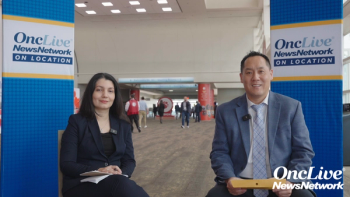
S. Vincent Rajkumar, MD, of Mayo Clinic; Nosha Farhadfar, MD, of Methodist Physician Practices; and Sonali Smith, MD, of University of Chicago Medicine, sit down with Chandler Park, MD, FACP, to discuss the latest in multiple myeloma, graft-vs-host disease, and non-Hodgkin lymphoma, respectively, from the 2024 ASH Annual Meeting.

C. Ola Landgren, MD, PhD, discusses tocilizumab prophylaxis in relapsed/refractory myeloma treated with teclistamab, elranatamab, or talquetamab.
Isatuximab plus initial VRd and Rd maintenance demonstrated deep responses and MRD negativity in transplant-ineligible newly diagnosed multiple myeloma.

Belantamab mafodotin plus bortezomib/dexamethasone improved OS over daratumumab plus bortezomib/dexamethasone in relapsed/refractory multiple myeloma.

Robert M. Rifkin, MD, FACP, discusses the safety and efficacy of the phase 3 Dreamm-7 trial in patients with relapsed/refractory multiple myeloma.

Maintenance therapy with teclistamab with or without lenalidomide was safe and efficacious in newly diagnosed multiple myeloma.

David Samuel Dicapua Siegel, MD, discusses preliminary findings from the phase 1/2 CA057-003 trial of mezigdomide in relapsed/refractory multiple myeloma.

Subcutaneous daratumumab reduced the risk for disease progression or death vs active monitoring in intermediate- or high-risk smoldering multiple myeloma.

Marcella Ali Kaddoura, MD, discusses genomic determinants of clinical outcomes in myeloma with t(11;14)(CCND1;IGH) treated with venetoclax.

Daratumumab plus VRd improved MRD responses and progression-free survival in transplant-ineligible or -deferred newly diagnosed multiple myeloma.

Muhamed Baljevic, MD, FACP and Jorge Cortes, MD, discuss upcoming studies and emerging data being presented at the 2024 ASH Annual Meeting.

Shaji Kumar, MD, discusses notable therapy considerations for multiple myeloma following the 2024/early 2025 NCCN guidelines update.

Belantamab mafodotin is under FDA review in multiple myeloma, and Suneel Kamath, MD, highlights pancreatic cancer awareness month.

Shaji Kumar, MD, discusses 2024 updates made to the NCCN guidelines for multiple myeloma treatment, as well as the first 2025 updates.

Health Canada has approved cilta-cel for use in patients with relapsed/lenalidomide-refractory multiple myeloma following 1 to 3 prior lines of therapy.

The FDA accepted a BLA for 2 belantamab mafodotin–based combinations in relapsed/refractory multiple myeloma.

Syed Abbas Ali, MBBS, discusses how CAR T-cell therapies and bispecific antibodies have altered treatment in relapsed/refractory multiple myeloma.
New datopotamab deruxtecan BLA in NSCLC filed to FDA, radiopharmaceutical meets rPFS end point in PSMA+ prostate cancer, and more.
The CHMP has recommended the EU approval of isatuximab plus VRd for newly diagnosed, transplant-ineligible multiple myeloma.
Belantamab mafodotin plus bortezomib and dexamethasone met the key secondary end point of OS in relapsed/refractory multiple myeloma in the DREAMM-7 study.

Douglas W. Sborov, MD, MS, discusses long-term treatment outcomes for patients with myeloma who received CAR T-cell therapy vs another treatment option.

Applications have been submitted to the FDA and EMA seeking approval for daratumumab in high-risk smoldering multiple myeloma.

The FDA has granted orphan drug designation to LBL-034 for the treatment of patients with multiple myeloma.
Advertisement
Advertisement
Trending on OncLive
1
Five Under 5: Top Oncology Videos for the Week of 8/31/26
2
FDA Approves Camizestrant Plus a CDK4/6 Inhibitor for Emergent ESR1-Mutated HR+, HER2– Advanced Breast Cancer
3
B7-H4–Targeted ADCs Signal a New Frontier for Platinum-Resistant Ovarian and Endometrial Cancer
4
The OncFive: Top Oncology Articles for the Week of 8/30
5