


Multiple Myeloma
Latest News
Advertisement
Latest Videos









































































Advertisement
More News


The FDA has granted a priority review designation to daratumumab in combination with bortezomib, melphalan, and prednisone for the treatment of patients with newly diagnosed multiple myeloma who are ineligible for autologous stem cell transplant.

Jeffrey Wolf, MD, clinical professor, Department of Medicine, director, Myeloma Program, University of California, San Francisco Helen Diller Family Comprehensive Cancer Center, details the role maintenance therapy has in treating patients with myeloma.
Joshua Richter, MD, a hematologist/oncologist specializing in multiple myeloma at the John Theurer Cancer Center discusses symptom management in patients with multiple myeloma.

The FDA has approved a supplemental new drug application that adds overall survival data from the phase III ENDEAVOR trial to the label for carfilzomib for use in patients with relapsed or refractory multiple myeloma.

Thomas G. Martin, MD, discusses emerging advancements in the treatment landscape of multiple myeloma.

Thomas G. Martin, MD, clinical professor of medicine, Adult Leukemia and Bone Marrow Transplantation Program, and associate director, Myeloma Program, University of California, San Francisco; co-leader, Hematopoietic Malignancies Program, Helen Diller Family Comprehensive Cancer Center, discusses choosing treatments for patients with multiple myeloma.

Cristina Gasparetto, MD, assistant professor of medicine, member of the Duke Cancer Institute, discusses the next steps with selinexor and daratumumab (Darzalex) in multiple myeloma.

Thomas G. Martin, MD, clinical professor of medicine, Adult Leukemia and Bone Marrow Transplantation Program, and associate director, Myeloma Program, University of California, San Francisco; co-leader, Hematopoietic Malignancies Program, Helen Diller Family Comprehensive Cancer Center, discusses the FDA approval of denosumab (Xgeva) for the prevention of skeletal-related events in patients with multiple myeloma.
The FDA has approved denosumab (Xgeva) for the prevention of skeletal-related events in patients with multiple myeloma.

Andrew L. Pecora, MD, president of the Physician Services Division and chief innovation officer at Hackensack Meridian Health, discusses the combination of CTLA-4 and PD-1 inhibitors for the treatment of patients with multiple myeloma.
Saad Z. Usmani, MD, Department of Hematologic Oncology and Blood Disorders, Levine Cancer Institute/Carolinas HealthCare System, discusses the phase III Gimema-MMY-3006 study for patients with multiple myeloma.

Progression-free survival remained superior over time in patients with relapsed/refractory multiple myeloma treated treated with combination therapy that included the anti-CD38 antibody daratumumab (Darzalex).
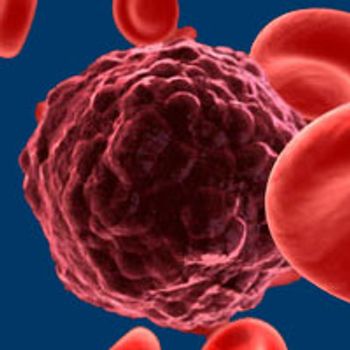
The United Kingdom's National Institute for Health and Care Excellence has issued guidance recommending ixazomib in for patients with relapsed/refractory multiple myeloma.
Cristina Gasparetto, MD, assistant professor of medicine, member of the Duke Cancer Institute, discusses a phase Ib study of the combination of selinexor and daratumumab (Darzalex) in patients with relapsed/refractory multiple myeloma.

Selinexor combined with weekly bortezomib and low-dose dexamethasone produced rapid and durable responses in a dose escalation/expansion trial of patients with relapsed/refractory multiple myeloma.
Ajai Chari, MD, associate professor, Mount Sinai Hospital, discusses challenges in sequencing agents for patients with multiple myeloma.

The addition of carfilzomib to lenalidomide and dexamethasone for relapsed/refractory multiple myeloma led to a statistically significant 21% reduction in the risk for death compared with lenalidomide and dexamethasone.

The B-cell maturation antigen antibody-drug conjugate GSK2857916 induced an overall response rate of 60% in heavily pretreated patients with multiple myeloma.

Maintenance therapy with elotuzumab (Empliciti) and lenalidomide (Revlimid) after autologous stem cell transplant improves the quality of response achieved with induction therapy in patients with multiple myeloma.

Daratumumab (Darzalex) displayed single-agent activity in intermediate- and high-risk smoldering multiple myeloma, according to results from the phase II CENTAURUS study.

The addition of daratumumab to bortezomib, melphalan, and prednisone (VMP) reduced the risk of progression or death by 50% compared with VMP alone for transplant-ineligible patients with newly diagnosed multiple myeloma.

Cristina Gasparetto, MD, associate professor, head of the myeloma program, Duke University Medical Center, discusses a phase 1b study to assess the combination of selinexor and daratumumab (Darzalex) in patients with relapsed/refractory multiple myeloma previously exposed to proteasome inhibitors and immunomodulatory drugs during the 2017 ASH Annual Meeting. Selinexor is an interesting new drug that inhibits Exportin 1 (XPO1), which reactivates some of the tumor suppressor proteins. In the phase 1b portion of the study, investigators aimed to identify the optimal dose of selinexor in combination with daratumumab. Gasparetto says the study included a small number of patients, but demonstrated very encouraging data.
A novel approach demonstrated durable responses in the treatment of patients with smoldering multiple myeloma, according to results from a single-arm, phase II trial.

Treatment with the BCMA-directed CAR T-cell therapy bb2121 induced complete remissions for 56% of patients with relapsed/refractory multiple myeloma.
Advertisement
Advertisement
Trending on OncLive
1
RELATIVITY-1093 Trial Aims to Advance Nivolumab Plus Relatlimab and Chemo in Nonsquamous NSCLC
2
Dostarlimab Monotherapy Elicits Durable cCRs in dMMR/MSI-H Locally Advanced Rectal Cancer
3
NEXERA-303 Trial Aims to Bring TGFβR2×PD-1 Bispecific Antibody INCA33890 Into First-Line MSS CRC
4
The OncFive: Top Oncology Articles for the Week of 10/25
5